-
Shop
- Adidas
- Advanced Technologies
- AI Skills Mastery 2026 Collection
- Best-Sellers
- Calvin Klein
- Car Accessories
- Confidence
- Dating & Social Skills
- Digital Resources
- AI & Technology
- AI Skills
- Beauty
- Budgeting & Saving
- Car Buying & Ownership
- Cozy Feast Collection
- Electronics & Technology
- Entrepreneurship & Business Growth
- Financial Education
- Financial Independence
- Financial Mindset & Psychology
- Goal Setting
- Hobbies
- Home Styling & Organization
- Kitchen & Recipes
- Leadership
- Mindset
- Online Business
- Parenting & Child Development
- Personal Style & Fashion
- Pet Lifestyle & Wellness
- Positive Thinking
- Sleep Improvement
- Stress Management & Relaxation
- Travel Planning
- Yoga & Fitness
- Yoga & Mind-Body Practices
- Education & Learning
- Family & Parenting
- Fashion
- Alexander McQueen
- Bags
- Bags & Wallets
- Balenciaga
- Belts
- Blazers
- Bottega Veneta
- Brunello Cucinelli
- Burberry
- Chanel
- Chloé
- Dior
- Dolce & Gabbana
- Dresses
- Etro
- Fendi
- Gucci
- Hats & Hair Accessories
- Hoodies & Sweatshirts
- Jacquemus
- Jewelry
- Jil Sander
- Keychains
- Kiton
- Luggage
- Miu Miu
- Off-White
- Prada
- Rick Owens
- Saint Laurent
- Socks & Tights
- Sweaters & Cardigans
- The Row
- Tom Ford
- Tops & Shirts
- Valentino
- Valentino Garavani
- Versace
- Vivienne Westwood
- Watches
- Furniture
- Gadgets
- Health & Beauty
- Health & Wellness
- Home & Garden
- Kids & Babies
- Kitchen
- Lighting
- Patio, Lawn & Garden
- Personal Growth
- Pet Care
- Pet Supplies
- Pets
- Shoes
- Smart Home Living Guides
- Sport & Outdoors
- Stress Relief & Relaxation
- TikTok Growth & Monetization Mastery
- Travel
- Travel & Adventure
- Wealth
- Wellness
- YouTube Shorts Best-Sellers
- Popular
- Best deals
Car Theft Prevention Checklist: Park, Lock, Recover
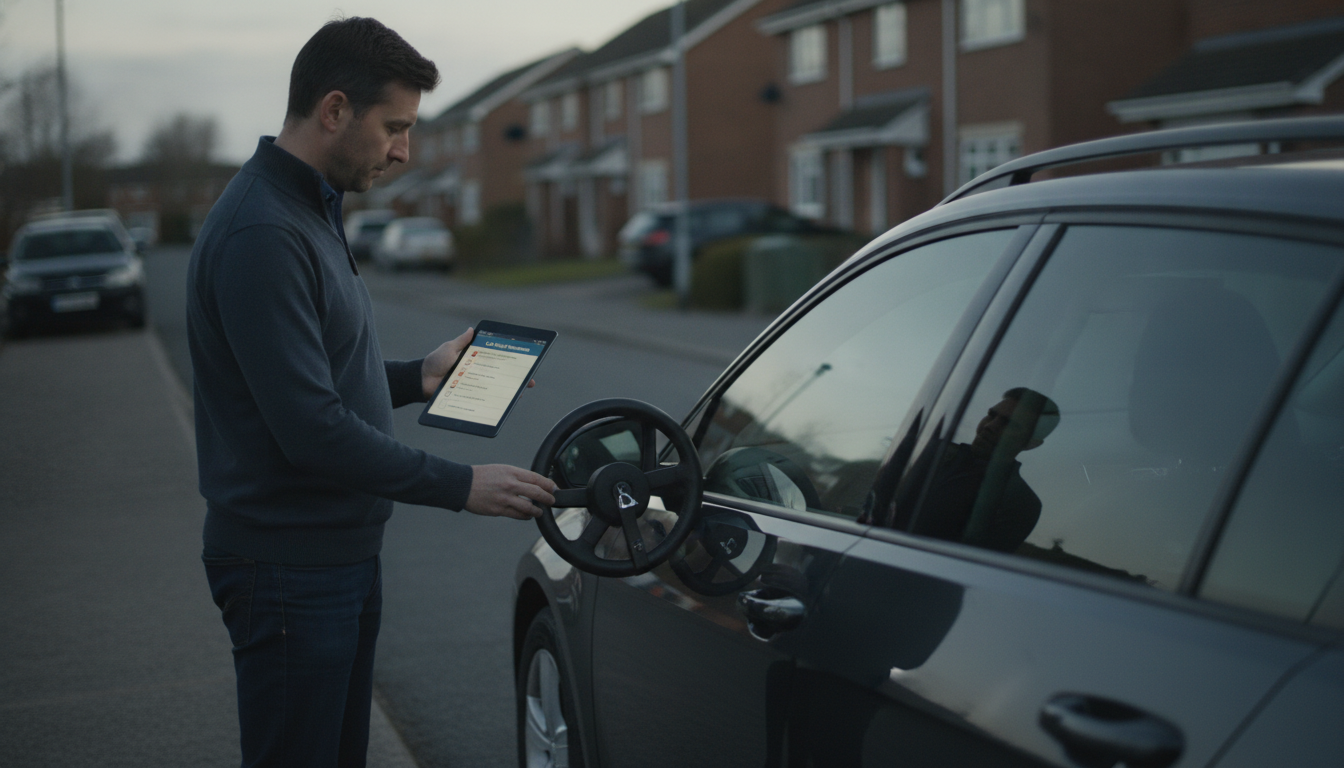
Lock It Before It’s Gone: A Practical Car Theft Prevention Checklist for Drivers and Travelers
Car theft and break-ins often happen in moments of routine: a quick stop for gas, a hotel parking lot, a crowded event, or a driveway overnight. A clear, repeatable security routine reduces opportunity for thieves—before, during, and after every trip. This guide organizes prevention into simple layers: habits, parking choices, vehicle settings, and the right tools.
Why cars get stolen (and what thieves look for)
Most vehicle crimes are about speed, low risk, and easy access. Thieves look for the fastest path to a payoff—whether that’s the whole car, parts, or whatever is visible inside.
- Speed and low risk: unlocked doors, keys left inside, running vehicles, and poorly lit parking spots make the job quick and quiet.
- High-demand targets: certain makes/models, catalytic converters, wheels/tires, and anything valuable left in plain sight.
- Signal and access tactics: key fob relay attacks, smash-and-grab break-ins, and opportunistic “door checking” in neighborhoods and lots.
- Travel patterns that raise risk: unfamiliar areas, fatigue, distractions, and luggage left in view (even briefly) can signal an easy score.
For broader context on trends and reporting, review the National Insurance Crime Bureau (NICB) vehicle theft resources and the FBI Crime Data Explorer.
The layered approach: make the car harder to take, harder to enter, and easier to recover
Strong vehicle security doesn’t rely on a single device. It stacks small protections so the effort and risk rise quickly for a thief—often enough to make them move on.
- Deterrence: visible obstacles such as steering wheel locks and clear warning decals for alarms/trackers.
- Delay: physical barriers that increase time and noise (wheel locks, pedal locks, hood locks where applicable).
- Detection: alarms, motion sensing, and timely alerts to a phone when the vehicle moves unexpectedly.
- Recovery: GPS trackers, VIN documentation, photos, and quick-report readiness.
Security layers at a glance
| Layer | Goal | Examples | Best for |
|---|---|---|---|
| Deterrence | Convince thieves to skip the car | Steering wheel lock, visible camera, alarm sticker | Street parking, public lots |
| Delay | Increase time/noise to defeat defenses | Wheel lock, pedal lock, hood lock | Overnight parking, high-risk areas |
| Detection | Trigger alerts and attention quickly | Alarm, glass-break sensor, motion alerts | Apartment lots, hotels |
| Recovery | Find the car and prove ownership | GPS tracker, VIN records, photos, police report readiness | Everyone, especially travelers |
Daily parking checklist (60 seconds before walking away)
The best checklist is the one that’s fast enough to use every time—especially when you’re tired, carrying bags, or rushing. Do this sequence before you step away from the car.
- Close everything: windows, sunroof, and trunk. Then verify doors actually locked (listen and visually confirm).
- Remove keys/fobs: keep them out of the cabin. Never leave a spare key hidden on the vehicle.
- Hide everything: bags, jackets, cords, coins, garage remotes, and mail. “Empty-looking” beats “covered.”
- Park smart: use well-lit areas; park near entrances and camera coverage when possible; avoid isolated end spaces.
- Use factory protections: enable auto-lock, alarm, immobilizer features, and anti-theft settings supported by your model.
- Add one visible deterrent: for anything longer than a truly quick stop, make the car look annoying to steal.
A simple habit that helps consistency: park, lock, check handles, scan seats/floor, walk away.
Travel-focused security: hotels, rentals, road trips, and airports
Travel creates predictable windows of vulnerability—arrival, check-in, luggage transfers, and long-term parking. Small changes in timing and placement can remove the “easy opportunity” factor.
- Hotels: choose well-lit areas near the lobby; avoid end spaces with low foot traffic; ask about camera coverage when checking in.
- Road trips: keep luggage out of sight before you arrive. Repack at the last stop (like a gas station), not in the hotel lot.
- Rental cars: treat them as high-risk targets. Remove rental paperwork from view and lock the glovebox if available.
- Airports/long-term lots: use a steering wheel lock and a tracker; photograph your parked location (level/row/landmark).
- Rest stops: stay aware during loading/unloading; lock the car between trips to the trunk, even if you’re only a few feet away.
For additional safety and security guidance related to vehicles and equipment, the NHTSA safety and security resources are a helpful reference point.
Protecting against key fob and modern “no-entry” theft methods
Modern theft isn’t always a broken window. Some theft rings aim to capture or extend a key signal, or gain electronic access through programming pathways.
If a theft or break-in happens: quick actions that improve outcomes
A ready-to-use anti-theft routine for real life
Security guide and checklist (downloadable format)
- Lock It Before It’s Gone | Car Theft Prevention Guide, Vehicle Security eBook, Smart Anti-Theft Checklist for Drivers & Travelers (downloadable reference for pre-trip, parking, overnight, and emergency steps)
- Solid Wood Coffee Table with Storage Drawers (a practical home “landing zone” for keeping keys/fobs out of sight and away from entry points)
FAQ
What are the most effective anti-theft steps that cost little or nothing?
Stick to consistent habits: lock and confirm, remove or hide anything visible, choose well-lit parking near activity, and keep keys/fobs secured. Avoid leaving the car running unattended, even for “just a minute.”
Do steering wheel locks and visible devices still help?
Yes. Visible devices add deterrence and delay, which often pushes thieves toward easier targets—especially when your car also looks empty and well-parked.
How can key fob relay theft be reduced at home and while traveling?
Store fobs away from doors and windows, and use signal-blocking storage when needed. If your vehicle is known to be vulnerable, disabling passive entry can reduce the chance of signal-based theft.
Recommended for you


Tom Ford Emerald Green Blouse: Long-Sleeve Styling
Jun 21, 2026













Leave a comment