-
Shop
- Adidas
- Advanced Technologies
- AI Skills Mastery 2026 Collection
- Best-Sellers
- Calvin Klein
- Car Accessories
- Confidence
- Dating & Social Skills
- Digital Resources
- AI & Technology
- AI Skills
- Beauty
- Budgeting & Saving
- Car Buying & Ownership
- Cozy Feast Collection
- Electronics & Technology
- Entrepreneurship & Business Growth
- Financial Education
- Financial Independence
- Financial Mindset & Psychology
- Goal Setting
- Hobbies
- Home Styling & Organization
- Kitchen & Recipes
- Leadership
- Mindset
- Online Business
- Parenting & Child Development
- Personal Style & Fashion
- Pet Lifestyle & Wellness
- Positive Thinking
- Sleep Improvement
- Stress Management & Relaxation
- Travel Planning
- Yoga & Fitness
- Yoga & Mind-Body Practices
- Education & Learning
- Family & Parenting
- Fashion
- Alexander McQueen
- Bags
- Bags & Wallets
- Balenciaga
- Belts
- Blazers
- Bottega Veneta
- Brunello Cucinelli
- Burberry
- Chanel
- Chloé
- Dior
- Dolce & Gabbana
- Dresses
- Etro
- Fendi
- Gucci
- Hats & Hair Accessories
- Hoodies & Sweatshirts
- Jacquemus
- Jewelry
- Jil Sander
- Keychains
- Kiton
- Luggage
- Miu Miu
- Off-White
- Prada
- Rick Owens
- Saint Laurent
- Socks & Tights
- Sweaters & Cardigans
- The Row
- Tom Ford
- Tops & Shirts
- Valentino
- Valentino Garavani
- Versace
- Vivienne Westwood
- Watches
- Furniture
- Gadgets
- Health & Beauty
- Health & Wellness
- Home & Garden
- Kids & Babies
- Kitchen
- Lighting
- Patio, Lawn & Garden
- Personal Growth
- Pet Care
- Pet Supplies
- Pets
- Shoes
- Smart Home Living Guides
- Sport & Outdoors
- Stress Relief & Relaxation
- TikTok Growth & Monetization Mastery
- Travel
- Travel & Adventure
- Wealth
- Wellness
- YouTube Shorts Best-Sellers
- Popular
- Best deals
Natural Gas Tankless Water Heater Sizing & Efficiency Guide
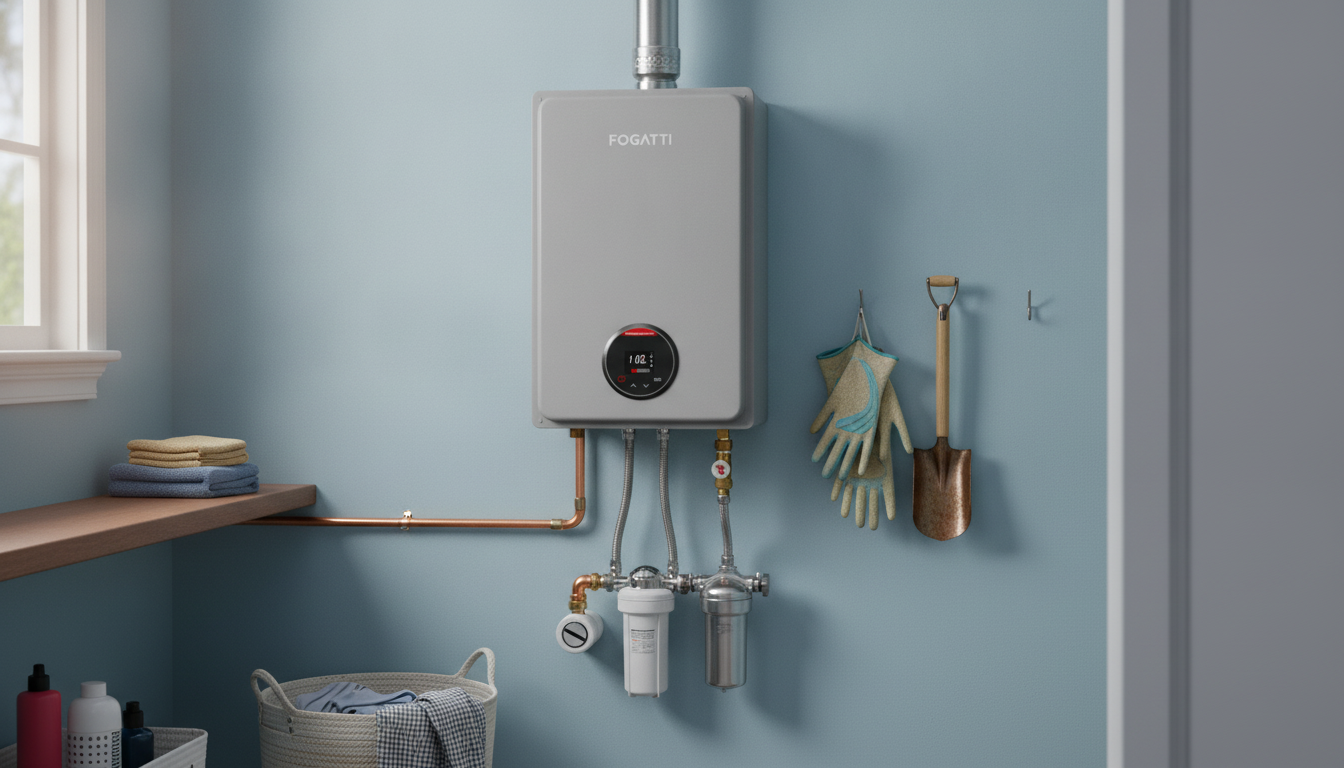
Natural Gas Tankless Water Heater: Sizing, Efficiency, and What to Expect
A natural gas tankless water heater delivers hot water on demand without storing a full tank, which can reduce standby energy loss and free up space. Performance depends heavily on proper sizing, gas supply, venting, and water conditions, so understanding the basics helps prevent temperature swings, low flow issues, or installation surprises.
How a tankless gas water heater works
Tankless gas units heat water only when you call for it. When a hot-water tap opens, cold water flows through a heat exchanger while a gas burner fires to raise the water to the set temperature. A flow sensor and control board continuously modulate the burner to help maintain a steady outlet temperature as the flow rate changes.
Most models still need electricity for ignition, safety controls, and (on many installations) a fan for power-venting. Two specs strongly affect comfort: the minimum activation flow (too low and the unit may not fire) and the maximum flow rate at a given temperature rise (exceed it and you’ll notice cooler water or reduced flow as the unit hits its firing limit).
Benefits and trade-offs compared with a storage tank
Many households choose tankless to reclaim space and avoid keeping dozens of gallons hot all day. That said, tankless performance is more sensitive to installation details—especially gas line sizing and venting—and hot-water wait time at the tap still depends on how far the fixture is from the heater.
Tankless vs. tank water heaters (quick comparison)
| Category | Natural gas tankless | Storage tank |
|---|---|---|
| Hot water availability | Continuous within rated flow | Limited by tank capacity and recovery rate |
| Energy use at idle | Low (no stored hot water) | Higher (standby heat loss) |
| Installation complexity | Higher (venting, gas line, sometimes condensate) | Lower (often simpler venting and piping) |
| Maintenance | Descaling and inlet filter checks recommended | Flushing and anode rod checks recommended |
| Footprint | Small, wall-mounted | Large floor footprint |
Sizing basics: flow rate and temperature rise
Correct sizing starts with two numbers: how much hot water you’ll need at once (flow rate in gallons per minute, or GPM) and how much the unit must heat the water (temperature rise). Temperature rise is the difference between incoming cold water temperature and the desired outlet temperature. In colder regions, the incoming water is cooler, so the heater must work harder and may deliver fewer GPM at higher setpoints.
A practical approach is to list the fixtures likely to run simultaneously—such as one or two showers plus a dishwasher fill or laundry cycle—and estimate peak demand. If the heater can’t keep up, symptoms often include lukewarm water during overlap periods, a noticeable temperature drop when a second fixture opens, or the unit throttling flow to protect the heat exchanger.
Typical hot-water flow ranges (approximate)
| Use | Typical flow range (GPM) |
|---|---|
| Bathroom sink | 0.5–1.5 |
| Kitchen faucet | 1.0–2.2 |
| Shower (modern efficient head) | 1.5–2.0 |
| Shower (standard) | 2.0–2.5 |
| Dishwasher fill (intermittent) | 1.0–2.0 |
| Clothes washer (intermittent) | 1.5–3.0 |
Efficiency, venting, and condensate considerations
Efficiency varies by design. High-efficiency condensing models pull additional heat from the exhaust stream, which can improve overall efficiency compared with non-condensing units. The trade-off is condensate: moisture that can be mildly acidic and may need a drain connection and, in some installs, a neutralizer to protect plumbing and meet local requirements.
Venting details are not interchangeable between models. Vent diameter, total length, number of elbows, clearances, and termination location must follow the manufacturer’s instructions to prevent backdrafting, nuisance shutdowns, or unsafe operation. Non-condensing models typically have hotter exhaust and may require different vent materials than condensing systems.
For homes bothered by long waits at distant fixtures, recirculation can help. Dedicated return lines are typically the most effective, while crossover valves can be simpler to add in some situations. Both approaches involve trade-offs in complexity and energy use, so it’s worth matching the solution to your household’s routine.
Installation checkpoints that affect performance and safety
Care and longevity: simple routines that matter
Product spotlight: Natural Gas Tankless Water Heater
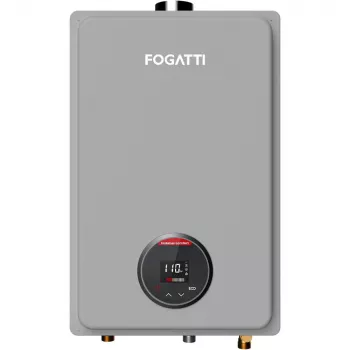
For households replacing a traditional tank or adding hot-water capacity where space is limited, the Natural Gas Tankless Water Heater offers on-demand operation with a compact footprint. To get the best results, confirm your expected simultaneous hot-water demand, verify gas line capacity, and plan a venting route that matches the installation requirements before purchase.
At-a-glance
| Item | Details |
|---|---|
| Product | Natural Gas Tankless Water Heater |
| Price | 1033.49 USD |
| Availability | In stock |
| Product page | https://lustrina.com/natural-gas-tankless-water-heater/ |
More in-stock home upgrades
Helpful resources
For deeper guidance on how demand-type water heaters perform and where savings come from, review the
U.S. Department of Energy overview on tankless water heaters.
For reducing hot-water use at fixtures (which also reduces heating load), see
EPA WaterSense.
FAQ
Can a natural gas tankless water heater run out of hot water?
It doesn’t store hot water, so it can run continuously, but only up to its rated flow at the required temperature rise. If multiple fixtures push demand beyond its capacity, you may see cooler outlet temperatures or reduced flow.
Does a tankless gas water heater need electricity?
Most models need electricity for ignition, controls, and often the vent fan. During a power outage, hot water is usually unavailable unless the unit is supplied by backup power.
How often should a tankless water heater be descaled?
In hard-water areas, descaling is often recommended about once per year, while softer-water homes may be able to go longer. Follow the manufacturer’s schedule and descale sooner if you notice fluctuating temperatures, reduced flow, or scale-related error codes.
Recommended for you
Car Theft Prevention Checklist: Park, Lock, Recover
Jun 21, 2026
Early Pet Behavior Changes: Signs in Dogs & Cats
Jun 22, 2026













Leave a comment