-
Shop
- Adidas
- Advanced Technologies
- AI Skills Mastery 2026 Collection
- Best-Sellers
- Calvin Klein
- Car Accessories
- Confidence
- Dating & Social Skills
- Digital Resources
- AI & Technology
- AI Skills
- Beauty
- Budgeting & Saving
- Car Buying & Ownership
- Cozy Feast Collection
- Electronics & Technology
- Entrepreneurship & Business Growth
- Financial Education
- Financial Independence
- Financial Mindset & Psychology
- Goal Setting
- Hobbies
- Home Styling & Organization
- Kitchen & Recipes
- Leadership
- Mindset
- Online Business
- Parenting & Child Development
- Personal Style & Fashion
- Pet Lifestyle & Wellness
- Positive Thinking
- Sleep Improvement
- Stress Management & Relaxation
- Travel Planning
- Yoga & Fitness
- Yoga & Mind-Body Practices
- Education & Learning
- Family & Parenting
- Fashion
- Alexander McQueen
- Bags
- Bags & Wallets
- Balenciaga
- Belts
- Blazers
- Bottega Veneta
- Brunello Cucinelli
- Burberry
- Chanel
- Chloé
- Dior
- Dolce & Gabbana
- Dresses
- Etro
- Fendi
- Gucci
- Hats & Hair Accessories
- Hoodies & Sweatshirts
- Jacquemus
- Jewelry
- Jil Sander
- Keychains
- Kiton
- Luggage
- Miu Miu
- Off-White
- Prada
- Rick Owens
- Saint Laurent
- Socks & Tights
- Sweaters & Cardigans
- The Row
- Tom Ford
- Tops & Shirts
- Valentino
- Valentino Garavani
- Versace
- Vivienne Westwood
- Watches
- Furniture
- Gadgets
- Health & Beauty
- Health & Wellness
- Home & Garden
- Kids & Babies
- Kitchen
- Lighting
- Patio, Lawn & Garden
- Personal Growth
- Pet Care
- Pet Supplies
- Pets
- Shoes
- Smart Home Living Guides
- Sport & Outdoors
- Stress Relief & Relaxation
- TikTok Growth & Monetization Mastery
- Travel
- Travel & Adventure
- Wealth
- Wellness
- YouTube Shorts Best-Sellers
- Popular
- Best deals
Grounding Skills for Anxiety: 60-Second Calm Reset Guide
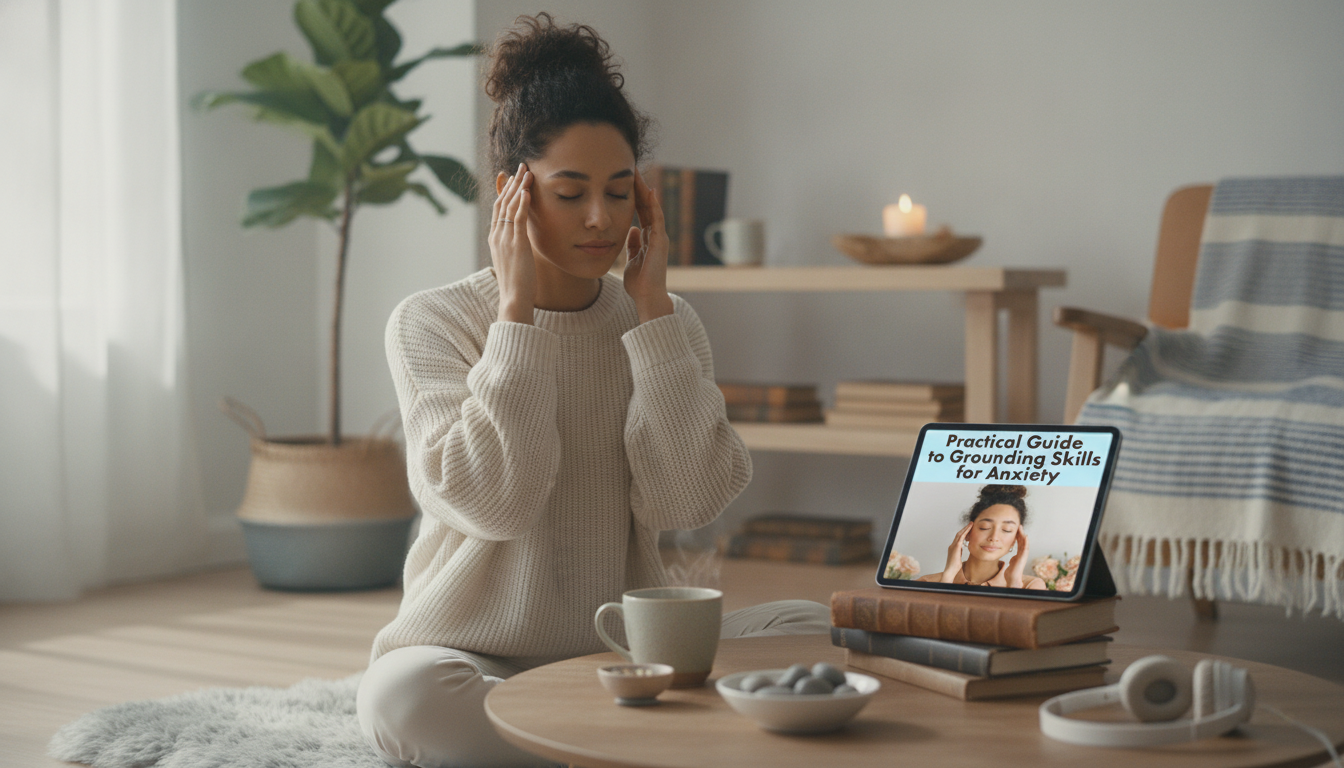
Grounding Skills for Anxiety: A Practical Digital Guide for Calmer Moments
Grounding skills are simple, repeatable techniques that help attention return to the present when anxiety, panic, or overwhelm spikes. A digital grounding guide can make those tools easier to learn, practice, and revisit—especially during stressful moments when it’s hard to remember what to do next.
What Grounding Is (and When It Helps Most)
Grounding is the practice of redirecting attention away from anxious thoughts and physical alarm signals and toward what is happening right now—in the body and in the immediate environment. Instead of arguing with fear, grounding gives the mind something concrete to “hold onto,” which can reduce the sense of spiraling.
It can be especially useful during:
- Racing thoughts, rumination loops, or “what if” mental replay
- Panic symptoms (tight chest, dizziness, tingling, fast heartbeat)
- Dissociation or feeling “floaty,” unreal, or disconnected
- Stress spirals at work, in public, or in social situations
- Pre-sleep worry that ramps up the moment you lie down
Grounding isn’t about forcing emotions away. It’s about creating enough steadiness to choose a next step—breathing, a coping statement, reaching out for support, or returning to one small task. For ongoing anxiety disorders or trauma-related symptoms, grounding can be even more effective when paired with professional care and evidence-based treatment. For background reading, see the American Psychological Association (APA) overview of anxiety and the National Institute of Mental Health (NIMH) page on anxiety disorders.
A Quick Reset Routine (60–180 Seconds)
When anxiety hits, complex plans can feel impossible. This short routine is designed to be doable even when your brain is loud.
- Name the moment: silently label what’s happening (for example, “anxiety wave” or “stress surge”). A label can reduce cognitive overload and help you shift into “observe mode.”
- Orient: look around and identify three neutral details (colors, shapes, light sources, edges, textures). Keep it factual—no analysis.
- Plant the feet: press toes into the floor for 5 seconds, release, and repeat three times. Notice the pressure, then the release.
- Exhale longer than you inhale: try inhale 4, exhale 6 for 3–5 rounds. The longer exhale can support a downshift in arousal.
- Choose a next step: a sip of water, a brief walk, texting a support person, or returning to one small task (one email, one dish, one page).
Grounding Skills Toolkit: Sensory, Body, and Thought-Based Options
Different moments call for different anchors. If one technique feels irritating or ineffective, that’s not failure—it’s useful data. Rotate until you find a few that feel natural in your real life.
Go-to grounding options
Grounding Techniques at a Glance
| Technique | Best for | How long | What to focus on |
|---|---|---|---|
| 5-4-3-2-1 senses scan | Racing thoughts, panic sensations | 2–5 min | Neutral sensory details |
| Feet press + release | Restlessness, agitation | 1–2 min | Pressure and release in the feet |
| Cool temperature cue | High arousal, overheating feeling | 30–90 sec | Cold sensation and slow breathing |
| Wall push / hand press | Dissociation, feeling unsteady | 30–60 sec | Muscle effort and body position |
| Category listing | Rumination loops | 2–4 min | Simple mental task without judgment |
Making Grounding Stick: Practice Plans That Fit Real Life
If stress is constant or layered with major life demands, it can also help to build recovery time into your environment and routine. For general stress support resources, the SAMHSA coping and mental health information offers practical starting points.
How a Digital Grounding Guide Can Support Anxiety Relief
Product Spotlight: Practical Guide to Grounding Skills for Anxiety (Digital eBook)
If you prefer having techniques written out in a consistent format, a dedicated resource can make practice easier to maintain. The Practical Guide to Grounding Skills for Anxiety | Digital Grounding Skills Guide for Anxiety Relief, Coping Techniques & Stress Support eBook is designed as a practical, easy-to-reference digital resource for grounding skills and stress support.
Optional comfort-support picks for a calmer environment
- Infrared Sauna for One Person for a quiet, private reset routine that encourages slower breathing and a dedicated wind-down window.
- Earth Design Kids Rug as a soft, sensory-friendly floor space for stretches, breathing, or a simple 5-4-3-2-1 scan with touch cues.
When to Get Extra Help
FAQ
What’s the difference between grounding and breathing exercises?
Grounding focuses on present-moment orientation using sensory, body, or thought anchors, while breathing exercises focus on regulating arousal through breath patterns. They often work well together—many people pair a grounding anchor (like feet pressure) with a longer exhale.
Which grounding technique works fastest during a panic spike?
Fast options include feet press-and-release, a condensed 5-4-3-2-1 scan (even just “5 things I see”), or a cool temperature cue like cold water on wrists. The “fastest” technique is usually the one you’ve practiced ahead of time and can do safely in your setting.
How often should grounding skills be practiced to be effective?
Aim for brief daily practice when calm (about 1–5 minutes), plus as-needed use during stress spikes. Tracking what you tried and how much it helped can make it easier to refine your personal set of go-to techniques.
Recommended for you


Clear Team Goals: SMART Alignment & Weekly Scorecard
Jun 25, 2026













Leave a comment