-
Shop
- Adidas
- Advanced Technologies
- AI Skills Mastery 2026 Collection
- Best-Sellers
- Calvin Klein
- Car Accessories
- Confidence
- Dating & Social Skills
- Digital Resources
- AI & Technology
- AI Skills
- Beauty
- Budgeting & Saving
- Car Buying & Ownership
- Cozy Feast Collection
- Electronics & Technology
- Entrepreneurship & Business Growth
- Financial Education
- Financial Independence
- Financial Mindset & Psychology
- Goal Setting
- Hobbies
- Home Styling & Organization
- Kitchen & Recipes
- Leadership
- Mindset
- Online Business
- Parenting & Child Development
- Personal Style & Fashion
- Pet Lifestyle & Wellness
- Positive Thinking
- Sleep Improvement
- Stress Management & Relaxation
- Travel Planning
- Yoga & Fitness
- Yoga & Mind-Body Practices
- Education & Learning
- Family & Parenting
- Fashion
- Alexander McQueen
- Bags
- Bags & Wallets
- Balenciaga
- Belts
- Blazers
- Bottega Veneta
- Brunello Cucinelli
- Burberry
- Chanel
- Chloé
- Dior
- Dolce & Gabbana
- Dresses
- Etro
- Fendi
- Gucci
- Hats & Hair Accessories
- Hoodies & Sweatshirts
- Jacquemus
- Jewelry
- Jil Sander
- Keychains
- Kiton
- Luggage
- Miu Miu
- Off-White
- Prada
- Rick Owens
- Saint Laurent
- Socks & Tights
- Sweaters & Cardigans
- The Row
- Tom Ford
- Tops & Shirts
- Valentino
- Valentino Garavani
- Versace
- Vivienne Westwood
- Watches
- Furniture
- Gadgets
- Health & Beauty
- Health & Wellness
- Home & Garden
- Kids & Babies
- Kitchen
- Lighting
- Patio, Lawn & Garden
- Personal Growth
- Pet Care
- Pet Supplies
- Pets
- Shoes
- Smart Home Living Guides
- Sport & Outdoors
- Stress Relief & Relaxation
- TikTok Growth & Monetization Mastery
- Travel
- Travel & Adventure
- Wealth
- Wellness
- YouTube Shorts Best-Sellers
- Popular
- Best deals
New Puppy First-Day Checklist: Setup, Potty & Sleep
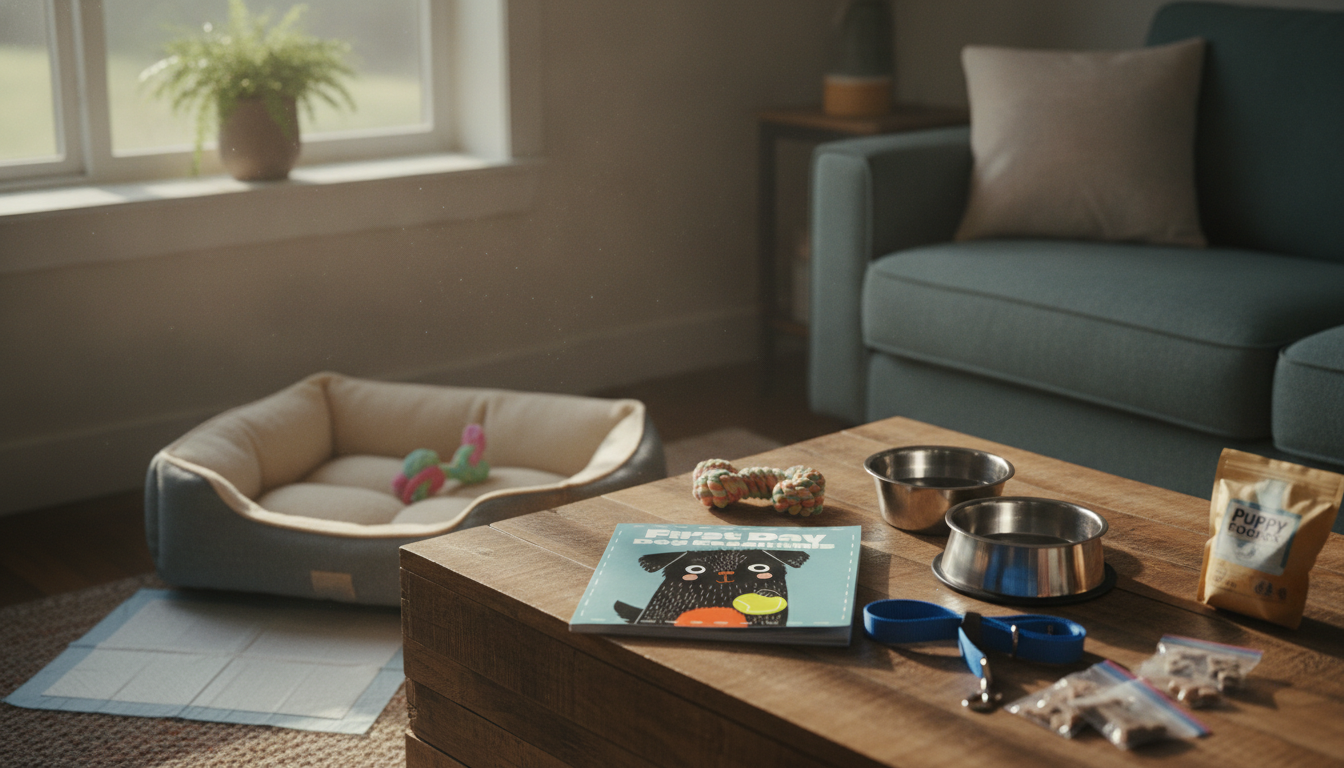
First-Day Puppy Essentials: A Calm, Practical Checklist for Bringing a New Dog Home
The first 24 hours with a new puppy can feel like a lot: new smells, new people, new rules, and a brand-new routine. A few well-chosen essentials—and a simple plan—help reduce stress for both puppy and owner. This guide organizes what to set up before arrival, what to do in the first hour, and what to track during the first day so nothing important is missed.
Set up a safe landing zone before the puppy arrives
A puppy’s first impression of your home should be “small, safe, and predictable.” Instead of giving full-house access, start with one quiet area away from heavy foot traffic—either a single puppy-proofed room or a gated zone.
- Pick the calmest spot possible. Choose a space where the puppy can rest without constant noise, kids running through, or doorbells and deliveries.
- Add containment and comfort. A crate or playpen with a washable blanket helps your puppy settle and keeps supervision simple. Add one puppy-safe chew to redirect nervous mouthing and help self-soothing.
- Puppy-proof thoroughly. Remove cords, small objects, shoes, and anything swallowable. Secure toxic plants and block stairs if needed. Close off access to trash and food storage.
- Stage cleaning supplies. Keep enzyme cleaner, paper towels, and a small trash bag right in the zone so accidents are handled fast and without lingering odor.
- Set bowls in a consistent place. Put food and water bowls in one spot and keep that area low-traffic on day one to encourage drinking and eating.
First-Day Essentials Checklist (Quick Scan)
| Category | What to have ready | Why it matters on day one |
|---|---|---|
| Safety & containment | Crate or playpen, baby gates, ID tag/collar | Prevents roaming, supports rest, reduces accident risk |
| Comfort | Blanket, bed, covered crate option | Provides a predictable “safe place” during transition |
| Feeding | Same food as breeder/shelter, measuring scoop, bowls | Avoids stomach upset; supports consistent routine |
| Potty | Leash, poop bags, enzyme cleaner, designated potty spot | Builds house-training habits from the first hour |
| Chewing & enrichment | Puppy-safe chew, simple toy, lick mat (optional) | Reduces anxiety and redirects mouthing |
| Health basics | Vet contact info, vaccination/medical records, nail trim/grinder (optional) | Makes it easy to act fast if concerns arise |
If you want a ready-to-print checklist and an easy way to keep everyone in the household consistent, A Guide to First Day Dog Essentials | Printable Pet Owner’s Handbook (Digital Download) can be kept on your phone or taped to the fridge for the first week.
The first hour at home: a simple, low-pressure sequence
Think “quiet and structured,” not “grand tour.” The goal is to build trust and start a routine without overwhelming your puppy.
- Go straight to the potty area. Carry your puppy if needed, then wait calmly. Reward after they go (soft praise, small treat if you’re using them).
- Keep greetings small. Let the puppy approach at their pace. Limit visitors and excessive handling for the first few hours.
- Offer water, then decompression time. Allow sniffing and gentle exploration inside the safe zone—no chasing, no noisy toys.
- Introduce the crate/playpen positively. Toss a treat inside, place a soft blanket, and let curiosity do the work. Avoid forcing entry.
- Start supervision immediately. If your puppy is awake, someone should be watching. If not, your puppy rests safely in the zone.
Feeding on day one: keep it familiar and predictable
New environments often mean lower appetite and more sensitive stomachs. Familiar food and timing reduce the chance of an upset belly.
- Use the same food and schedule provided by the breeder or shelter for several days before making changes.
- Measure portions. Overfeeding can trigger loose stool right when you’re trying to build potty habits.
- If appetite is low, don’t panic. Keep the area quiet and offer the next scheduled meal rather than leaving food down all day.
- Skip novelty on day one. Avoid rich chews, table scraps, and lots of new treats until your puppy is settled.
Potty plan for the first day (and night)
Comfort, sleep, and preventing “first-night panic”
To make the landing zone feel cozy and defined—especially on slippery floors—some families like to place an easy-to-spot “home base” under the pen. The Earth Design Kids Rug can help visually mark the puppy’s area (and make it easier to notice tiny messes quickly).
Health and safety checks to do right away
For additional general guidance, review puppy-care resources from the American Veterinary Medical Association (AVMA), training prep from the American Kennel Club (AKC), and household health basics from the CDC.
A printable plan makes the first day easier to manage
To keep supplies from migrating around the house during the first week, a dedicated storage spot helps. The Solid Wood Coffee Table with Storage Drawers can work as a grab-and-go home for poop bags, wipes, a measuring scoop, and your puppy’s paperwork—so you’re not searching mid-accident.
FAQ
What should be done first when a new puppy gets home?
Start with a calm potty break in the designated spot, then move into a limited, puppy-proofed area. Keep greetings quiet, offer water, and introduce the crate/playpen gently with treats.
How often should a puppy go out to potty on the first day?
Plan for frequent trips: after waking, after meals or drinking, after play, and about every 1–2 hours while the puppy is awake. Nighttime breaks are common for very young puppies.
Should a new puppy sleep in a crate the first night?
Crate or playpen sleep can help with safety and routine. Place the crate near the sleeping area at first, keep bedtime calm, and ensure the puppy has had a potty break before settling.
Recommended for you



S925 Moissanite Cross Ring for Men: Shine & Meaning
Jun 28, 2026












Leave a comment