-
Shop
- Adidas
- Advanced Technologies
- AI Skills Mastery 2026 Collection
- Best-Sellers
- Calvin Klein
- Car Accessories
- Confidence
- Dating & Social Skills
- Digital Resources
- AI & Technology
- AI Skills
- Beauty
- Budgeting & Saving
- Car Buying & Ownership
- Cozy Feast Collection
- Electronics & Technology
- Entrepreneurship & Business Growth
- Financial Education
- Financial Independence
- Financial Mindset & Psychology
- Goal Setting
- Hobbies
- Home Styling & Organization
- Kitchen & Recipes
- Leadership
- Mindset
- Online Business
- Parenting & Child Development
- Personal Style & Fashion
- Pet Lifestyle & Wellness
- Positive Thinking
- Sleep Improvement
- Stress Management & Relaxation
- Travel Planning
- Yoga & Fitness
- Yoga & Mind-Body Practices
- Education & Learning
- Family & Parenting
- Fashion
- Alexander McQueen
- Bags
- Bags & Wallets
- Balenciaga
- Belts
- Blazers
- Bottega Veneta
- Brunello Cucinelli
- Burberry
- Chanel
- Chloé
- Dior
- Dolce & Gabbana
- Dresses
- Etro
- Fendi
- Gucci
- Hats & Hair Accessories
- Hoodies & Sweatshirts
- Jacquemus
- Jewelry
- Jil Sander
- Keychains
- Kiton
- Luggage
- Miu Miu
- Off-White
- Prada
- Rick Owens
- Saint Laurent
- Socks & Tights
- Sweaters & Cardigans
- The Row
- Tom Ford
- Tops & Shirts
- Valentino
- Valentino Garavani
- Versace
- Vivienne Westwood
- Watches
- Furniture
- Gadgets
- Health & Beauty
- Health & Wellness
- Home & Garden
- Kids & Babies
- Kitchen
- Lighting
- Patio, Lawn & Garden
- Personal Growth
- Pet Care
- Pet Supplies
- Pets
- Shoes
- Smart Home Living Guides
- Sport & Outdoors
- Stress Relief & Relaxation
- TikTok Growth & Monetization Mastery
- Travel
- Travel & Adventure
- Wealth
- Wellness
- YouTube Shorts Best-Sellers
- Popular
- Best deals
Small Space Layouts: Multifunctional Rooms, Less Clutter
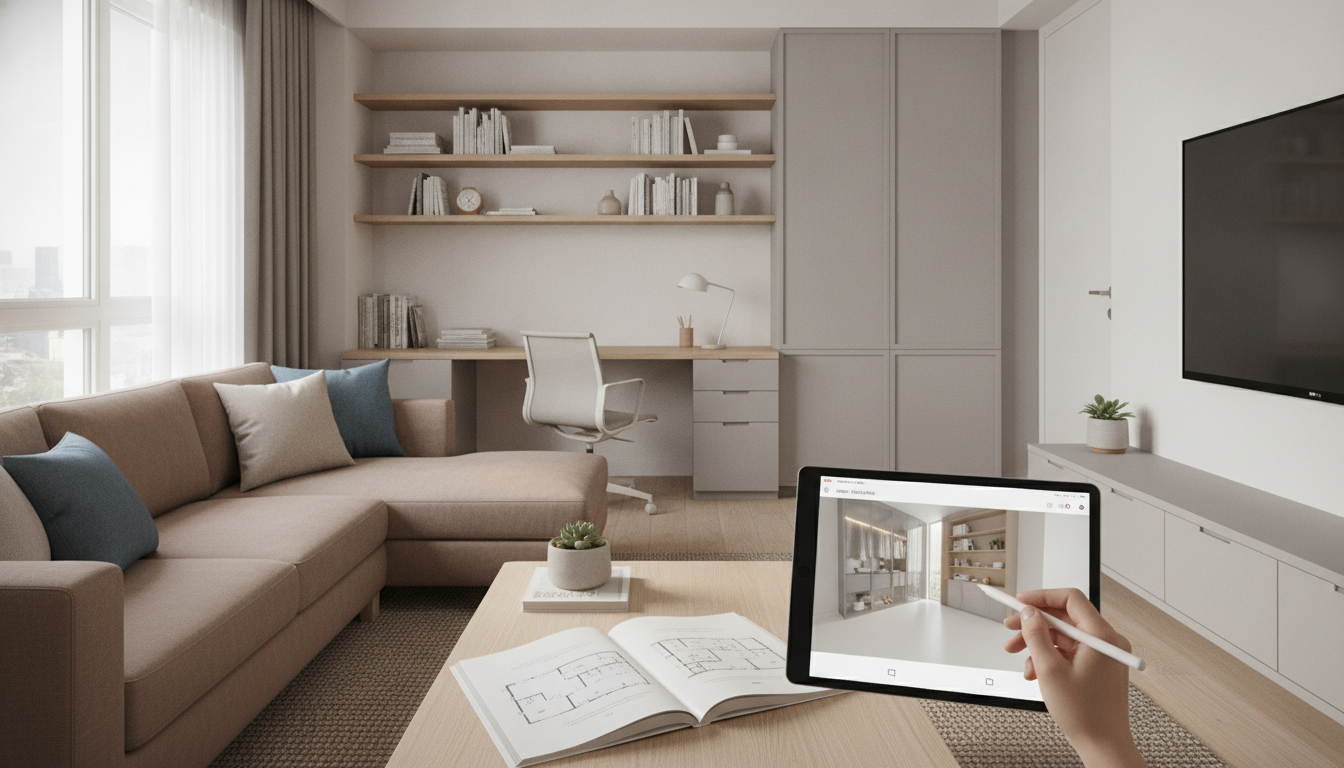
Maximize Function, Minimize Clutter: Multifunctional Room Layouts for Small Spaces
Small rooms feel bigger when every zone has a job, every pathway stays clear, and storage is built into the layout—not added as an afterthought. The goal isn’t to cram in more furniture; it’s to make daily life smoother with fewer visual “interruptions.” Below are practical room plans, space-saving furniture moves, and a few smart-home upgrades that help reduce clutter while increasing function.
Start with function zones, not furniture
A layout works best when it’s planned around what you do, not what you own. In a small space, one item can support multiple activities—but only if the room is organized into clear purpose zones.
- List the 3–5 activities the room must support (sleep, work, relax, eat, play, exercise) and assign each a “zone,” even if zones overlap.
- Use one primary anchor piece per zone (sofa, bed, desk), then keep secondary pieces lightweight, slim, or foldable.
- Define boundaries with rugs, lighting, or a simple wall color block instead of adding shelves or bulky dividers.
- Maintain clear circulation: keep main walkways open and avoid placing storage where it forces detours or creates pinch points.
As a quick clearance check, keep the main route from entry to the “most used” zone as direct as possible, and avoid placing any furniture that makes you turn sideways to pass. If a path feels tight, remove the smallest piece first—often a spare chair, plant stand, or extra side table.
The clutter equation: reduce surfaces, increase hidden capacity
Clutter tends to multiply on open surfaces. The fix is surprisingly simple: reduce the number of flat “landing pads” while increasing closed or hidden storage where items naturally accumulate.
- Treat open horizontal surfaces as clutter magnets; limit to one display surface per zone (for example, one coffee table or one console).
- Prefer closed storage at eye level to reduce visual busyness; reserve open shelves for a small, consistent set of items.
- Choose storage that replaces furniture (ottoman with storage, bed with drawers, coffee table with compartments) rather than adding extra bins.
- Use a one-in/one-out rule for décor objects and small appliances in tiny kitchens and living areas.
Quick swaps that cut clutter without losing function
| Common setup | Clutter issue | Better swap | What improves |
|---|---|---|---|
| Side tables + baskets | More footprints and mixed containers | One storage coffee table | Fewer pieces, larger hidden volume |
| Open coat hooks | Visual pile-up at entry | Slim closed shoe/coat cabinet | Cleaner sightline, contained mess |
| Multiple task lamps | Cord clutter and surface crowding | Wall-mounted swing arm light | Frees surfaces, better lighting aim |
| Extra chairs | Crowded walkways | Foldable or stackable seating | Flexible seating without permanent bulk |
Room layout recipes that work in real apartments
Multifunctional layout ideas by room
| Room | Primary goal | Layout move | Space-saving furniture idea | Smart-home tweak |
|---|---|---|---|---|
| Studio | Separate sleep and lounge | Use a sofa back or low shelf as a soft divider | Storage ottoman + narrow console desk | Smart bulbs for “work/relax/sleep” scenes |
| Living room | Relax + host | Keep one clear path from entry to seating | Coffee table with drawers or lift-top | Smart plug for a single “all off” routine |
| Bedroom | Sleep + get ready | Nightstand alternatives on wall to free floor | Under-bed drawers or storage bed frame | Motion night light for low-glare navigation |
| Kitchen | Prep + store | Group zones: prep, cook, clean in a tight triangle | Wall rail system + slim rolling cart | Timer/voice reminders to reduce counter gadgets |
| Kids’ room | Play + study + sleep | Place desk at window; toys near play rug edge | Bins inside a bench + low book ledges | Smart speaker for routines and calm playlists |
Space-saving furniture: what to prioritize (and what to skip)
If the living zone is where clutter gathers, a single anchor surface with hidden compartments can replace multiple small “drop spots.” The Solid Wood Coffee Table with Storage Drawers keeps remotes, chargers, and notebooks out of sight while staying sturdy enough for daily use.
For kids’ spaces, a clear play boundary helps toys stay in their zone. A washable, defined rug can act like a “parking space” for play and building—try the Earth Design Kids Rug to visually separate play from sleep without adding any extra furniture.
Smart home ideas that reduce mess and mental load
For broader guidance on safer, more accessible pathways, review universal design concepts from the National Institute of Building Sciences. For practical energy-conscious smart-home tips, the U.S. Department of Energy is a solid reference.
A simple reset plan that keeps clutter from coming back
If walkways or bedside areas are tight, prioritize safety: clear the route you take at night, keep floors free of cables, and use low-glare lighting. The CDC’s fall prevention basics offer helpful reminders that apply to any home—especially small ones where obstacles add up fast.
A guided layout plan for faster results
For a ready-made framework that ties zoning, storage swaps, and smart routines together, explore Maximize Function, Minimize Clutter | Multifunctional Room Layouts eBook.
FAQ
What is the best way to arrange furniture in a small room without feeling cramped?
Start by zoning the room around 3–5 real activities, then place one anchor piece per zone and keep one clear pathway through the space. Choose visually lighter furniture (slim profiles, legs, open bases) and limit flat surfaces so clutter has fewer places to land.
Which multifunctional furniture is worth buying first?
Buy the pieces that do two jobs every day, such as a storage coffee table or ottoman, a bed with drawers, or wall-mounted lighting that frees up surfaces. Avoid complicated transforms that require frequent heavy rearranging, since they tend to go unused.
How can smart home upgrades help reduce clutter?
Lighting scenes and smart routines can replace extra lamps, switches, and devices, reducing what sits on counters and tables. A smarter cord and charging strategy—placed where items naturally land—also prevents cables and “temporary piles” from spreading.
Recommended for you



Buy Commercial Property: The 5-Step Buyer Toolkit
Jun 29, 2026
Plush Quick-Dry Cotton Towel (14×29) for Gym & Guest
Jun 30, 2026









Leave a comment