-
Shop
- Adidas
- Advanced Technologies
- AI Skills Mastery 2026 Collection
- Best-Sellers
- Calvin Klein
- Car Accessories
- Confidence
- Dating & Social Skills
- Digital Resources
- AI & Technology
- AI Skills
- Beauty
- Budgeting & Saving
- Car Buying & Ownership
- Cozy Feast Collection
- Electronics & Technology
- Entrepreneurship & Business Growth
- Financial Education
- Financial Independence
- Financial Mindset & Psychology
- Goal Setting
- Hobbies
- Home Styling & Organization
- Kitchen & Recipes
- Leadership
- Mindset
- Online Business
- Parenting & Child Development
- Personal Style & Fashion
- Pet Lifestyle & Wellness
- Positive Thinking
- Sleep Improvement
- Stress Management & Relaxation
- Travel Planning
- Yoga & Fitness
- Yoga & Mind-Body Practices
- Education & Learning
- Family & Parenting
- Fashion
- Alexander McQueen
- Bags
- Bags & Wallets
- Balenciaga
- Belts
- Blazers
- Bottega Veneta
- Brunello Cucinelli
- Burberry
- Chanel
- Chloé
- Dior
- Dolce & Gabbana
- Dresses
- Etro
- Fendi
- Gucci
- Hats & Hair Accessories
- Hoodies & Sweatshirts
- Jacquemus
- Jewelry
- Jil Sander
- Keychains
- Kiton
- Luggage
- Miu Miu
- Off-White
- Prada
- Rick Owens
- Saint Laurent
- Socks & Tights
- Sweaters & Cardigans
- The Row
- Tom Ford
- Tops & Shirts
- Valentino
- Valentino Garavani
- Versace
- Vivienne Westwood
- Watches
- Furniture
- Gadgets
- Health & Beauty
- Health & Wellness
- Home & Garden
- Kids & Babies
- Kitchen
- Lighting
- Patio, Lawn & Garden
- Personal Growth
- Pet Care
- Pet Supplies
- Pets
- Shoes
- Smart Home Living Guides
- Sport & Outdoors
- Stress Relief & Relaxation
- TikTok Growth & Monetization Mastery
- Travel
- Travel & Adventure
- Wealth
- Wellness
- YouTube Shorts Best-Sellers
- Popular
- Best deals
Linen Closet Organization System: Declutter, Zone, Maintain
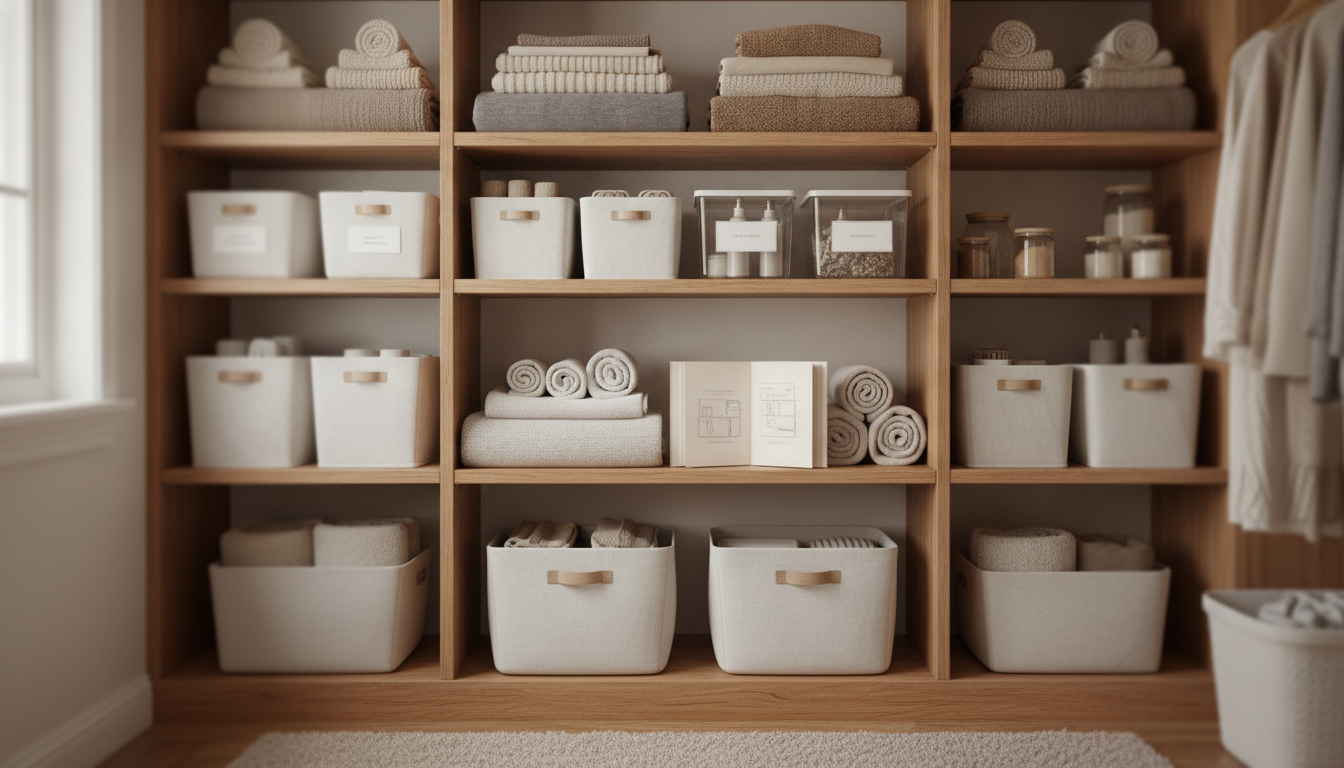
Calm and Order Behind Every Door: A Simple System for a Perfectly Organized Linen Closet
A linen closet can feel like a small space with outsized impact: it affects daily routines, guest readiness, and how tidy the whole home appears. A calm closet comes from a repeatable system—declutter, assign zones, standardize folding, and maintain a steady restock rhythm—so towels, sheets, and extras are easy to find and easy to put away.
Start with a fast reset: empty, sort, and surface the “hidden clutter”
Instead of pulling everything out at once, clear one shelf at a time so the project stays contained. Keep a laundry basket nearby for items that belong elsewhere (and a bag for donations).
- Sort into simple piles: bath towels, hand towels, washcloths, sheets, blankets, toiletries/first-aid, guest items, and “unknown/misc.”
- Remove obvious space-stealers: duplicate travel-size bottles, expired medicine, old cosmetics, stained linens, and single orphaned pillowcases.
- Use quick decision rules: keep what is used, loved, and fits; donate extras in good condition; recycle worn textiles when possible.
- Wipe shelves and check for moisture issues before refilling (especially in closets near bathrooms).
Quick keep limits for a typical household
| Category | Suggested amount to keep accessible | Notes |
|---|---|---|
| Bath towels | 2–4 per person | Store the rest as backup or donate |
| Hand towels | 2–3 per bathroom | Add a small guest stack if needed |
| Washcloths | 6–12 total | More if used for cleaning routines |
| Sheet sets | 2 per bed | One on the bed, one ready to swap |
| Blankets/throws | 1–2 per room | Bulky extras go to under-bed or bins |
| Guest essentials | 1 small bin | Mini kit: fresh towels + spare toiletries |
Create zones that match real life (not the label maker fantasy)
The best linen closet zones reflect how your household actually moves through a week. Prioritize reach, not perfection, and make it obvious where items return.
- Use the easiest-to-reach shelves for daily items: towels and washcloths for the most-used bathroom.
- Assign one shelf per bed size (queen/king/twin) or one shelf per bedroom to prevent sheet mixing.
- Keep backstock and rarely used items higher up: extra tissue, seasonal blankets, spare pillows.
- Dedicate one “staging area” for restocking bathrooms: a small basket that can be carried room to room.
- Separate toiletries and first-aid from linens to avoid spills and to keep fabric smelling fresh.
If you’re unsure where something belongs, decide based on the “first place you’d look” rule. That location becomes the home base, and the label simply confirms it.
Make the space work harder with a few high-impact tools
You don’t need a full closet renovation; you need a few supports that prevent piles from turning into avalanches.
- Use containers to stop micro-piles: shallow bins for small items (washcloths), deeper bins for backup paper goods.
- Choose clear bins for backstock or opaque bins for a calmer look—either works if labels are consistent.
- Add shelf dividers to prevent towel stacks from slumping and turning into a re-folding chore.
- Use vertical space: under-shelf baskets can hold wipes, cotton rounds, or travel kits.
- Pick a label style that can be updated: removable labels or simple tags reduce rework when routines change.
For households short on closet space, overflow storage elsewhere can help keep the linen closet reserved for true essentials. A living-room piece with concealed storage—like the Solid Wood Coffee Table with Storage Drawers—can hold spare throws or seasonal linens without creating visible clutter.
Fold and store for speed: the “one-touch” linen closet
The goal is “grab and go” and “put away without thinking.” The more uniform your folding and stacking, the less time you’ll spend redoing it later.
For simple, repeatable folding and zoning layouts, keep a step-by-step reference handy like the Calm and Order Behind Every Door digital linen closet guide, especially if multiple people restock the same shelves.
A simple replenishment rhythm that keeps shelves from exploding again
When you restock toiletries and cleaning items, prioritize products and routines that support a healthier home. Helpful references include the EPA Safer Choice program for selecting safer cleaning products and the American Cleaning Institute’s laundry basics for maintaining towels and sheets.
Common linen closet problems (and quick fixes that actually stick)
- Problem: Mixed sheet sizes. Fix: dedicate one shelf per bed or store sets inside labeled bins by size.
- Problem: Towering towel stacks that tip. Fix: shorter stacks + shelf divider; backups behind the main stack.
- Problem: Too many “just in case” items. Fix: set a firm keep limit per category and define overflow as donation.
- Problem: Small items drifting everywhere. Fix: one shallow bin per category (hair tools, first aid, travel, dental).
- Problem: Closet smells musty. Fix: declutter expired items, improve airflow, and avoid storing damp towels or washcloths; for cleaning guidance, follow the CDC’s recommendations for cleaning.
Follow-along plan for a calm linen closet in one afternoon
FAQ
How many sheet sets should be kept for each bed?
Two sets per bed is a practical baseline: one in use and one clean and ready. Consider a third only if laundry cycles are infrequent or allergies require more frequent changes.
What is the easiest way to keep sheet sets together?
Fold the fitted and flat sheet with the pillowcases, then tuck the bundle into one pillowcase or wrap it with a fabric band so the entire set can be grabbed at once.
How can a linen closet stay organized with kids in the house?
Use lower shelves for kid-access items, keep towel stacks short so they don’t collapse, and rely on labeled bins for small categories. Backups can live higher up, supported by a quick 5-minute weekly reset.















Leave a comment