-
Shop
- Adidas
- Advanced Technologies
- AI Skills Mastery 2026 Collection
- Best-Sellers
- Calvin Klein
- Car Accessories
- Confidence
- Dating & Social Skills
- Digital Resources
- AI & Technology
- AI Skills
- Beauty
- Budgeting & Saving
- Car Buying & Ownership
- Cozy Feast Collection
- Electronics & Technology
- Entrepreneurship & Business Growth
- Financial Education
- Financial Independence
- Financial Mindset & Psychology
- Goal Setting
- Hobbies
- Home Styling & Organization
- Kitchen & Recipes
- Leadership
- Mindset
- Online Business
- Parenting & Child Development
- Personal Style & Fashion
- Pet Lifestyle & Wellness
- Positive Thinking
- Sleep Improvement
- Stress Management & Relaxation
- Travel Planning
- Yoga & Fitness
- Yoga & Mind-Body Practices
- Education & Learning
- Family & Parenting
- Fashion
- Alexander McQueen
- Bags
- Bags & Wallets
- Balenciaga
- Belts
- Blazers
- Bottega Veneta
- Brunello Cucinelli
- Burberry
- Chanel
- Chloé
- Dior
- Dolce & Gabbana
- Dresses
- Etro
- Fendi
- Gucci
- Hats & Hair Accessories
- Hoodies & Sweatshirts
- Jacquemus
- Jewelry
- Jil Sander
- Keychains
- Kiton
- Luggage
- Miu Miu
- Off-White
- Prada
- Rick Owens
- Saint Laurent
- Socks & Tights
- Sweaters & Cardigans
- The Row
- Tom Ford
- Tops & Shirts
- Valentino
- Valentino Garavani
- Versace
- Vivienne Westwood
- Watches
- Furniture
- Gadgets
- Health & Beauty
- Health & Wellness
- Home & Garden
- Kids & Babies
- Kitchen
- Lighting
- Patio, Lawn & Garden
- Personal Growth
- Pet Care
- Pet Supplies
- Pets
- Shoes
- Smart Home Living Guides
- Sport & Outdoors
- Stress Relief & Relaxation
- TikTok Growth & Monetization Mastery
- Travel
- Travel & Adventure
- Wealth
- Wellness
- YouTube Shorts Best-Sellers
- Popular
- Best deals
Growth Hacking eBook: Weekly Experiments for Startups

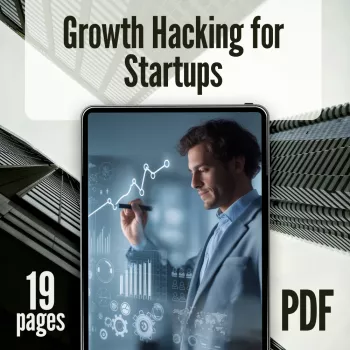
Growth Hacking for Startups: A Practical eBook for Founders and Small Business Owners
Sustainable startup growth comes from focused experiments, sharp positioning, and repeatable systems—not random tactics. This digital eBook download is built for entrepreneurs, founders, and small business owners who want a clear, step-by-step approach to finding traction, improving conversion, and building growth loops that compound over time. Instead of chasing every channel or copying whatever worked for someone else, you’ll learn how to pick a direction, test it quickly, and keep what moves the numbers. For more guidance, see Complete Book List (eBooks & Print Books) – Research Guides.
Who this guide is for (and what it helps solve)
This guide is designed for operators who want measurable progress without bloated plans or endless “brand awareness” projects. For further reading, see The Essential Guide to Becoming a Successful Web Entrepreneur in ….
- Early-stage founders validating acquisition channels while protecting runway
- Small business owners who need measurable marketing wins without large teams
- Product builders improving activation, retention, and referrals—not just traffic
- Common blockers addressed: unclear messaging, low conversion, weak retention, inconsistent lead flow, lack of testing discipline
If growth feels unpredictable—some weeks are “good,” others are quiet—the missing piece is usually a system for learning. A repeatable process turns marketing and product changes into a steady stream of small, compounding improvements.
What’s inside the Growth Hacking for Startups eBook
The eBook is structured to move from principles to execution, with a practical cadence that can be run by a solo founder or a lean team.
- A structured growth process: research → hypotheses → experiments → analysis → iteration
- Frameworks for understanding the customer journey from first touch to repeat usage
- Practical ideas for acquisition, activation, retention, revenue, and referral
- Templates and checklists for prioritizing tests and tracking outcomes
- Guidance for choosing one metric that matters and aligning efforts around it
For deeper context on disciplined experimentation and evaluation, it pairs well with resources like the Harvard Business Review refresher on A/B testing and product-focused guidance from the Y Combinator Startup Library.
A simple growth model founders can run weekly
The fastest way to create momentum is to stop treating growth like an occasional project. Run it weekly, like finance or shipping product.
- Start with a baseline: current traffic, conversion rate, activation rate, retention, and revenue per customer
- Identify the narrowest constraint (the bottleneck) before adding more top-of-funnel spend
- Create a pipeline of experiments sized for available time and engineering capacity
- Set a weekly cadence: 1) review numbers, 2) pick 1–3 tests, 3) ship, 4) measure, 5) document learnings
- Use guardrails: define success metrics and stopping rules before launching tests
This approach prevents a common failure mode: pouring more traffic into a leaky funnel. Improving the “middle” (activation and retention) often outperforms new acquisition—because the gains keep paying you back.
Experiment ideas by stage: acquisition to referral
Not every experiment fits every stage. The best tests match your current bottleneck and your customer’s real decision process.
Acquisition
- Channel focus (one primary channel) and audience clarity
- Landing page message testing (headline, proof, offer)
- Partner swaps and co-marketing with adjacent brands
- Directory listings and targeted communities
Activation
- Onboarding simplification and faster time-to-value
- Clearer next steps and welcome sequences
- In-product guidance that reduces confusion and drop-off
Retention
- Habit triggers and lifecycle messaging
- Feature adoption prompts and lightweight support workflows
- Win-back sequences for churn risks
Revenue
- Pricing tests and packaging improvements
- Annual plan prompts and value-based upsells
- Checkout friction removal
Referral
- Share prompts at moments of success
- Ambassador programs and invite loops
- Post-purchase sharing prompts when satisfaction is highest
When optimizing user experience and conversion, UX-focused CRO guidance can help teams avoid “pretty changes” that don’t move outcomes; see Nielsen Norman Group’s overview of conversion rate optimization and UX.
Prioritizing growth tests without guessing
Good ideas are easy to generate; choosing what to ship is the hard part. A lightweight scoring system reduces bias and keeps the backlog grounded in outcomes.
Experiment Prioritization Scorecard (quick reference)
| Experiment | Target metric | Impact (1-10) | Confidence (1-10) | Effort (1-10) | Priority notes |
|---|---|---|---|---|---|
| Landing page headline test | Signup conversion | 7 | 6 | 2 | Fast to ship; isolate messaging |
| Onboarding checklist + progress | Activation rate | 8 | 5 | 4 | Measure time-to-value change |
| Lifecycle email to reduce churn | 30-day retention | 6 | 6 | 3 | Segment by new vs. existing users |
| Referral prompt after success event | Invites per user | 7 | 4 | 3 | Trigger at a clear ‘win’ moment |
How to use the eBook as a 30-day growth sprint
Digital download details and what to expect
Recommended picks (in stock)
- Growth Hacking for Startups eBook (PDF digital download) — a practical playbook for weekly experiments, funnels, and compounding growth loops.
- Elegant Casual Leather Tote Bag for Everyday Style — a polished everyday carry option for meetings, coworking days, and travel.
- Heart Shaped Crystal Ceiling Light — an upgrade for a home office or studio space when presentation and atmosphere matter.
FAQ
Is this eBook suitable for pre-launch startups?
Yes. It’s especially useful pre-launch for tightening positioning, clarifying the audience, and running lightweight demand tests like waitlists, landing pages, and targeted outreach before scaling acquisition.
What’s the difference between growth hacking and traditional marketing?
Growth hacking emphasizes rapid, measurable experimentation across the full funnel—activation and retention included—using data, iteration, and tight feedback loops rather than relying mainly on top-of-funnel campaigns.
Do these methods work for service businesses, not just apps?
Yes. The same stages map cleanly to leads, consultations, proposals, retention, and referrals, and the experiments can be adapted to service-friendly channels like email, partnerships, and local search.















Leave a comment