-
Shop
- Adidas
- Advanced Technologies
- AI Skills Mastery 2026 Collection
- Best-Sellers
- Calvin Klein
- Car Accessories
- Confidence
- Dating & Social Skills
- Digital Resources
- AI & Technology
- AI Skills
- Beauty
- Budgeting & Saving
- Car Buying & Ownership
- Cozy Feast Collection
- Electronics & Technology
- Entrepreneurship & Business Growth
- Financial Education
- Financial Independence
- Financial Mindset & Psychology
- Goal Setting
- Hobbies
- Home Styling & Organization
- Kitchen & Recipes
- Leadership
- Mindset
- Online Business
- Parenting & Child Development
- Personal Style & Fashion
- Pet Lifestyle & Wellness
- Positive Thinking
- Sleep Improvement
- Stress Management & Relaxation
- Travel Planning
- Yoga & Fitness
- Yoga & Mind-Body Practices
- Education & Learning
- Family & Parenting
- Fashion
- Alexander McQueen
- Bags
- Bags & Wallets
- Balenciaga
- Belts
- Blazers
- Bottega Veneta
- Brunello Cucinelli
- Burberry
- Chanel
- Chloé
- Dior
- Dolce & Gabbana
- Dresses
- Etro
- Fendi
- Gucci
- Hats & Hair Accessories
- Hoodies & Sweatshirts
- Jacquemus
- Jewelry
- Jil Sander
- Keychains
- Kiton
- Luggage
- Miu Miu
- Off-White
- Prada
- Rick Owens
- Saint Laurent
- Socks & Tights
- Sweaters & Cardigans
- The Row
- Tom Ford
- Tops & Shirts
- Valentino
- Valentino Garavani
- Versace
- Vivienne Westwood
- Watches
- Furniture
- Gadgets
- Health & Beauty
- Health & Wellness
- Home & Garden
- Kids & Babies
- Kitchen
- Lighting
- Patio, Lawn & Garden
- Personal Growth
- Pet Care
- Pet Supplies
- Pets
- Shoes
- Smart Home Living Guides
- Sport & Outdoors
- Stress Relief & Relaxation
- TikTok Growth & Monetization Mastery
- Travel
- Travel & Adventure
- Wealth
- Wellness
- YouTube Shorts Best-Sellers
- Popular
- Best deals
New Puppy Week 1 Routine: Calm Care Kit Setup
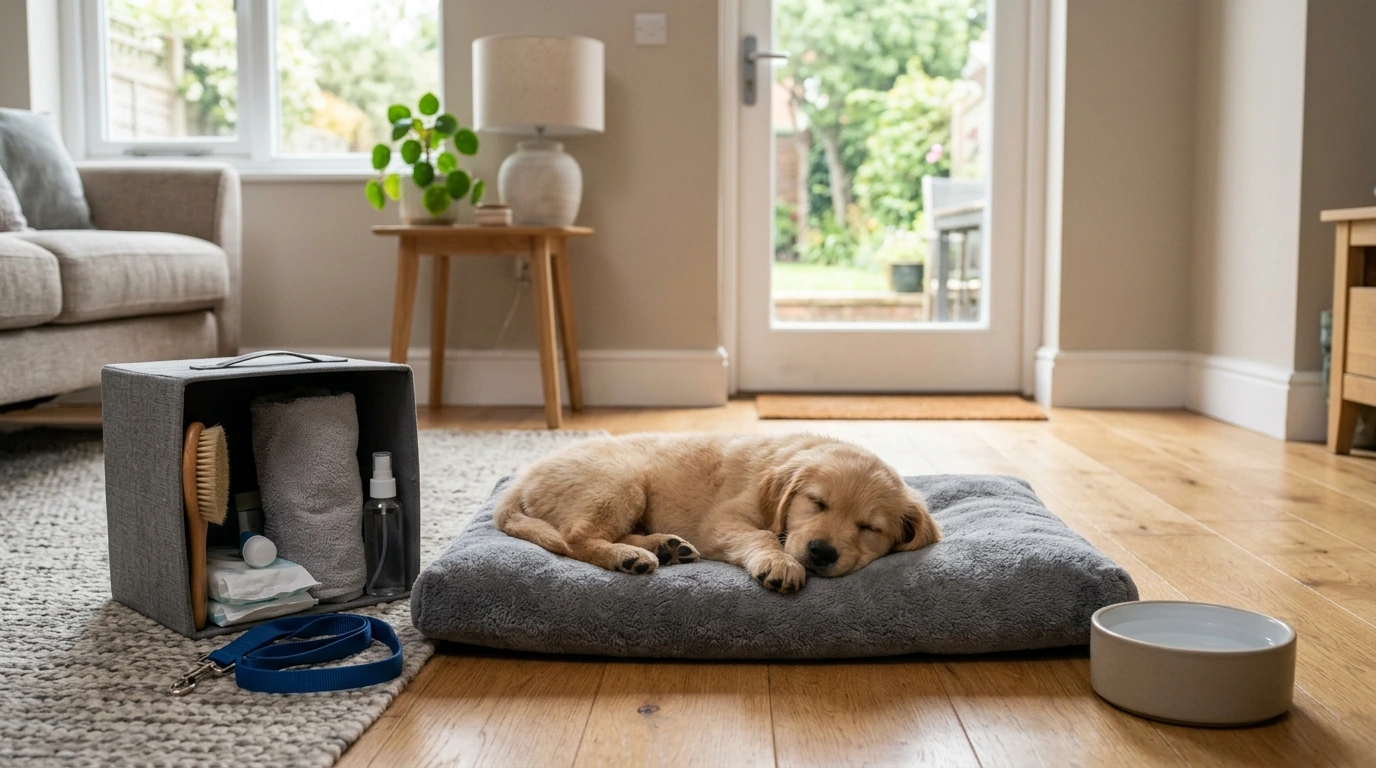
Welcome Home: A Calm, Complete Start for New Puppy Care
Those first days with a puppy are equal parts joy and “what do I do next?” Feeding, potty routines, sleep, safe exploration, and basic grooming all begin at once—often before a family has every essential on hand. Our The First-Weeks Puppy Care Toolkit | 5-in-1 Bundle for New Puppy Care is built to simplify the setup: one coordinated kit that supports daily care habits from day one, while keeping your home cleaner and your puppy more comfortable as routines take shape.
What the first weeks really demand (and why kits help)
The early weeks aren’t about doing everything perfectly. They’re about building repeatable patterns your puppy can understand and you can maintain—especially on short sleep.
- Consistency beats perfection: puppies learn fastest when mealtimes, potty trips, and rest are predictable.
- Cleanliness is health: quick cleanup and basic hygiene reduce odors, stains, and stress—especially during house-training.
- Comfort drives behavior: a puppy that can settle, rest, and self-regulate is easier to train and less likely to mouth or whine for attention.
- Safety is a daily practice: early puppyhood is constant exploration; having the right essentials ready reduces risky improvising.
- One coordinated bundle saves time: fewer last-minute store runs means more time building trust and routine.
First-week priorities and what to set up
| Priority | What to prepare at home | Daily rhythm to aim for |
|---|---|---|
| Potty routine | A consistent potty spot, cleaning supplies, a plan for accidents | Out after waking, after eating/drinking, after play, and every 1–2 hours |
| Feeding & hydration | Food storage, bowls, a quiet feeding area | 3–4 meals/day for young puppies (vet guidance varies), fresh water available |
| Sleep & settling | A safe sleep space, a calm evening routine | Short naps throughout the day; quiet time after active play |
| Grooming & handling | Simple tools, gentle daily touch practice | 1–3 minutes/day of calm handling (paws, ears, mouth) plus light grooming as needed |
| Home hygiene | Easy cleanup plan for floors, bedding, and puppy areas | Small cleanups immediately; a quick reset once per day |
The First-Weeks Puppy Care Toolkit: what it’s designed to do
When you’re learning your puppy’s signals, speed and simplicity matter. Our team designed the First-Weeks Puppy Care Toolkit to reduce friction in the moments that tend to pile up: an accident right after a nap, messy paws after a quick trip outside, or the sudden realization that “grooming” starts with a puppy who won’t hold still.
- Reduce decision fatigue by bundling the essentials that tend to be needed immediately.
- Support early routines so feeding, cleaning, and basic daily care are easier when supplies are always within reach.
- Keep the home manageable during the learning curve of house-training and teething.
- Encourage gentle, everyday handling so grooming and vet visits become less stressful over time.
- Provide a dependable starting point you can customize later to match your puppy’s size, coat type, and preferences.
If you like the idea of keeping all “puppy grab-and-go” items in one place, a simple organizer can help too. Some families use a dedicated tote to keep backups (like paper towels, a spare leash, or a travel towel) near the door; our Elegant Casual Leather Tote Bag for Everyday Style can work as a household carry-all for errands and quick exits.
A simple 7-day starter routine using a single bundle
The goal for week one is not strict scheduling—it’s repeatable cues. Keep your supplies accessible so you can respond quickly without turning accidents or grooming into a big event.
- Day 1–2: Set zones. Choose one sleep area, one feeding area, and one potty route. Store the toolkit where it’s easiest to grab fast (near the puppy zone).
- Day 3–4: Track patterns. Note potty timing after meals and naps; clean accidents immediately to prevent repeat marking.
- Day 5: Add calm handling. Briefly touch paws/ears, reward calm behavior, and introduce gentle grooming as appropriate.
- Day 6: Practice “settle.” After play, guide your puppy to rest; a predictable wind-down reduces evening overstimulation.
- Day 7: Reset and refine. Restock consumables, wash washable items, and adjust the schedule to what your puppy is actually doing—not what the clock says.
House-training support that keeps progress from slipping
For broader first-year care planning (including early checkups and common wellness considerations), the American Veterinary Medical Association (AVMA) puppy care overview is a helpful reference, and the AKC new puppy checklist can help you confirm your basics.
Daily comfort and basic grooming in the first month
As you map out the weeks ahead, ask your veterinarian about your puppy’s vaccine schedule and timing considerations for higher-risk environments. The AAHA canine vaccination guidelines provide useful context for those conversations.
Who this bundle fits best (and when to add extras)
A practical checklist before puppy arrives
FAQ
When should a puppy start a routine for potty, meals, and sleep?
Start on day one with a simple, repeatable schedule: potty trips after waking, after eating/drinking, and after play, plus consistent mealtimes and a calm wind-down before bed. As your puppy grows, timing may shift, so let your puppy’s patterns and your veterinarian’s guidance shape the routine.
How can accidents be cleaned so a puppy doesn’t return to the same spot?
Clean promptly and thoroughly so odor cues don’t linger and attract repeat accidents. Keeping your cleanup supplies ready helps you respond quietly and consistently, without turning the moment into attention or excitement.
Is it okay to begin grooming in the first week home?
Yes—keep it short, gentle, and positive, focusing on brief handling of paws, ears, and mouth paired with rewards. Follow your veterinarian’s advice on bathing frequency and any sensitive areas to avoid irritation.















Leave a comment