-
Shop
- Adidas
- Advanced Technologies
- AI Skills Mastery 2026 Collection
- Best-Sellers
- Calvin Klein
- Car Accessories
- Confidence
- Dating & Social Skills
- Digital Resources
- AI & Technology
- AI Skills
- Beauty
- Budgeting & Saving
- Car Buying & Ownership
- Cozy Feast Collection
- Electronics & Technology
- Entrepreneurship & Business Growth
- Financial Education
- Financial Independence
- Financial Mindset & Psychology
- Goal Setting
- Hobbies
- Home Styling & Organization
- Kitchen & Recipes
- Leadership
- Mindset
- Online Business
- Parenting & Child Development
- Personal Style & Fashion
- Pet Lifestyle & Wellness
- Positive Thinking
- Sleep Improvement
- Stress Management & Relaxation
- Travel Planning
- Yoga & Fitness
- Yoga & Mind-Body Practices
- Education & Learning
- Family & Parenting
- Fashion
- Alexander McQueen
- Bags
- Bags & Wallets
- Balenciaga
- Belts
- Blazers
- Bottega Veneta
- Brunello Cucinelli
- Burberry
- Chanel
- Chloé
- Dior
- Dolce & Gabbana
- Dresses
- Etro
- Fendi
- Gucci
- Hats & Hair Accessories
- Hoodies & Sweatshirts
- Jacquemus
- Jewelry
- Jil Sander
- Keychains
- Kiton
- Luggage
- Miu Miu
- Off-White
- Prada
- Rick Owens
- Saint Laurent
- Socks & Tights
- Sweaters & Cardigans
- The Row
- Tom Ford
- Tops & Shirts
- Valentino
- Valentino Garavani
- Versace
- Vivienne Westwood
- Watches
- Furniture
- Gadgets
- Health & Beauty
- Health & Wellness
- Home & Garden
- Kids & Babies
- Kitchen
- Lighting
- Patio, Lawn & Garden
- Personal Growth
- Pet Care
- Pet Supplies
- Pets
- Shoes
- Smart Home Living Guides
- Sport & Outdoors
- Stress Relief & Relaxation
- TikTok Growth & Monetization Mastery
- Travel
- Travel & Adventure
- Wealth
- Wellness
- YouTube Shorts Best-Sellers
- Popular
- Best deals
24-Inch Hand Swager: Check Wire and Fitting Compatibility
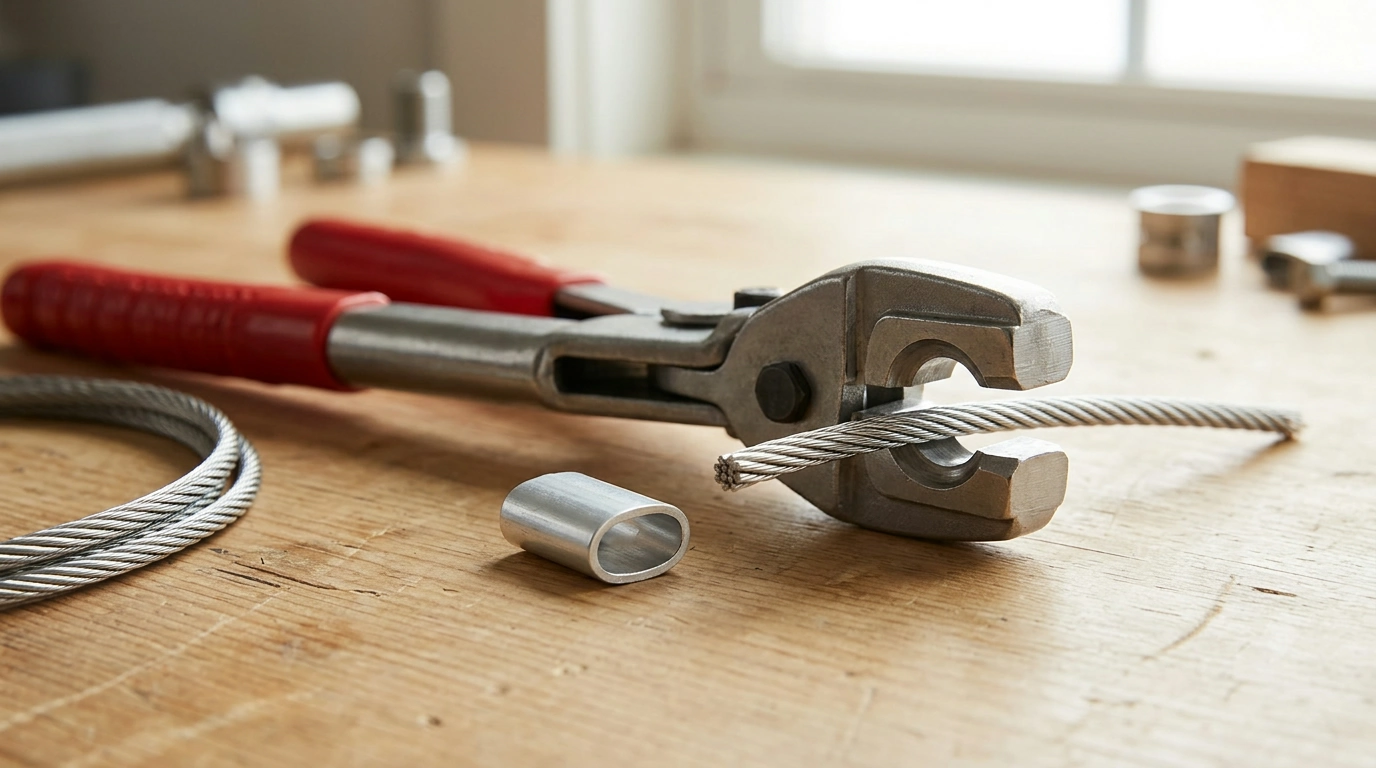
A secure crimp starts before the handles close. The wire, fitting, and tool must be compatible, and the finished connection must meet the fitting maker’s requirements. Our 24-inch hand swager is a hand-operated option for suitable copper and aluminum wire projects, but handle length and wire material alone cannot tell you whether it fits a particular job.
Start with the connection, not the tool
First, identify what the connection must do. Are you joining wire or cable with a mechanical sleeve, forming an eye, or making an electrical termination? Those jobs can call for different fittings, crimp profiles, and inspection methods. Our 24-Inch Hand Swager Crimping Tool for Copper & Aluminum Wire belongs in the discussion of suitable hand-swaged connections; its name does not establish every wire diameter, sleeve size, or fitting style it accepts.
That distinction matters especially with the word “wire.” Copper and aluminum can describe the material in a mechanical cable connection or an electrical conductor. Do not treat a hand swager as an electrical connector crimper unless the tool and connector are explicitly specified for that electrical use. Likewise, a sleeve that fits over a wire is not necessarily approved for its material, construction, or intended service.
Our team recommends working backward from the fitting instructions. Identify the approved wire, the required compression profile, and the tool opening or die before choosing a hand tool. If any one of those details is unavailable, pause rather than trying a close-looking combination.
Check these details before you crimp
A 24-inch handle can provide leverage, but leverage does not correct a mismatched sleeve or produce the wrong profile safely. Use this checklist to narrow down the connection before you begin:
| Check | What to confirm | Why it matters |
|---|---|---|
| Wire | Material, diameter, and construction | A sleeve must fit the wire it is intended to hold. |
| Sleeve or fitting | Approved wire size and material | A mismatched fitting may not form the intended connection. |
| Tool | Supported fitting sizes and crimp profile | A 24-inch handle does not establish die compatibility. |
| Application | Whether the connection is load-bearing, safety-critical, or electrical | Some uses require specified components, procedures, and testing. |
Pay attention to wire construction as well as its stated diameter. A fitting maker may specify particular cable types or constructions, not just a nominal size. Confirm that its instructions allow your wire and describe a compression profile the tool can make. If you are replacing an existing connection, do not assume the old sleeve provides a reliable template; identify its specifications before selecting a replacement.
Instructions may also call for a particular wire insertion depth, compression location, number of compressions, or spacing between them. Follow those directions rather than adding extra crimps or placing them where they seem convenient. The fitting maker’s inspection criteria are part of the choice: know how you will verify the result before you make it.
A careful hand-swaging workflow
Once the components are confirmed compatible, set up the work so you can control the tool throughout each compression. Read the fitting instructions in full, then prepare the wire as directed. If the instructions call for a clean cut, a specified length, or particular positioning, complete those steps before placing the wire in the fitting.
Seat the wire to the required position and place the fitting in the appropriate tool opening. Keep your fingers clear of the jaws and align the fitting as instructed. Apply steady pressure through each specified compression. A fitting that rocks, slips out of position, or will not sit correctly in the opening is a reason to stop and reassess the match—not to force the handles closed.
After crimping, inspect the connection using the fitting maker’s criteria. Look for the required compression locations and any visible damage, and perform specified measurements or tests. A visual check can reveal an obvious problem, but an attractive-looking crimp alone does not prove that the connection meets a required strength or load capacity.
General hand-tool precautions matter, too. Keep the work area stable, use the tool only for its intended task, and inspect it for damage before use. For broader guidance on safe tool use, see OSHA’s Hand and Power Tools guidance.
Know when the job needs a different approach
Lifting, overhead, structural, and other safety-critical connections leave little room for an unverified combination of wire, fitting, and tool. Use the applicable fitting specifications and consult a qualified professional for those projects. We do not suggest that this hand swager is rated for such work merely because it can compress a sleeve.
Electrical work calls for a separate decision. Use connectors and crimp tools specifically specified for the conductor material and electrical application, following the applicable instructions and requirements. For example, work involving equipment such as an instant wall-mounted electric water heater is not a reason to substitute a mechanical hand swager for an approved electrical termination tool. Have a qualified professional handle electrical work when required.
If your project is a suitable mechanical wire connection, we invite you to view our 24-inch hand swager. Before purchasing, confirm the supported fitting sizes and crimp profile against your wire, sleeve, and application. That compatibility decision is more valuable than choosing by handle length alone.
FAQ
Can this hand swager crimp both copper and aluminum wire?
It is offered for copper and aluminum wire, but compatibility depends on wire size, fitting, and required crimp profile. Confirm all three before use.
Is a 24-inch hand swager suitable for electrical wire connections?
Do not assume so. Electrical connections require connectors and crimp tools specified for the conductor material and application.
How can I check a finished crimp?
Follow the fitting maker’s inspection instructions, including any required measurements or tests. Appearance alone does not establish that a connection meets its requirements.
Recommended for you



A Smarter Way to Pack Your 17-Inch Business Backpack
Oct 24, 2026
Your Puppy’s First Day at Home: What to Do
Oct 24, 2026













Leave a comment