-
Shop
- Adidas
- Advanced Technologies
- AI Skills Mastery 2026 Collection
- Best-Sellers
- Calvin Klein
- Car Accessories
- Confidence
- Dating & Social Skills
- Digital Resources
- AI & Technology
- AI Skills
- Beauty
- Budgeting & Saving
- Car Buying & Ownership
- Cozy Feast Collection
- Electronics & Technology
- Entrepreneurship & Business Growth
- Financial Education
- Financial Independence
- Financial Mindset & Psychology
- Goal Setting
- Hobbies
- Home Styling & Organization
- Kitchen & Recipes
- Leadership
- Mindset
- Online Business
- Parenting & Child Development
- Personal Style & Fashion
- Pet Lifestyle & Wellness
- Positive Thinking
- Sleep Improvement
- Stress Management & Relaxation
- Travel Planning
- Yoga & Fitness
- Yoga & Mind-Body Practices
- Education & Learning
- Family & Parenting
- Fashion
- Alexander McQueen
- Bags
- Bags & Wallets
- Balenciaga
- Belts
- Blazers
- Bottega Veneta
- Brunello Cucinelli
- Burberry
- Chanel
- Chloé
- Dior
- Dolce & Gabbana
- Dresses
- Etro
- Fendi
- Gucci
- Hats & Hair Accessories
- Hoodies & Sweatshirts
- Jacquemus
- Jewelry
- Jil Sander
- Keychains
- Kiton
- Luggage
- Miu Miu
- Off-White
- Prada
- Rick Owens
- Saint Laurent
- Socks & Tights
- Sweaters & Cardigans
- The Row
- Tom Ford
- Tops & Shirts
- Valentino
- Valentino Garavani
- Versace
- Vivienne Westwood
- Watches
- Furniture
- Gadgets
- Health & Beauty
- Health & Wellness
- Home & Garden
- Kids & Babies
- Kitchen
- Lighting
- Patio, Lawn & Garden
- Personal Growth
- Pet Care
- Pet Supplies
- Pets
- Shoes
- Smart Home Living Guides
- Sport & Outdoors
- Stress Relief & Relaxation
- TikTok Growth & Monetization Mastery
- Travel
- Travel & Adventure
- Wealth
- Wellness
- YouTube Shorts Best-Sellers
- Popular
- Best deals
Minimalist Pet Setup: Declutter Supplies with Simple Zones
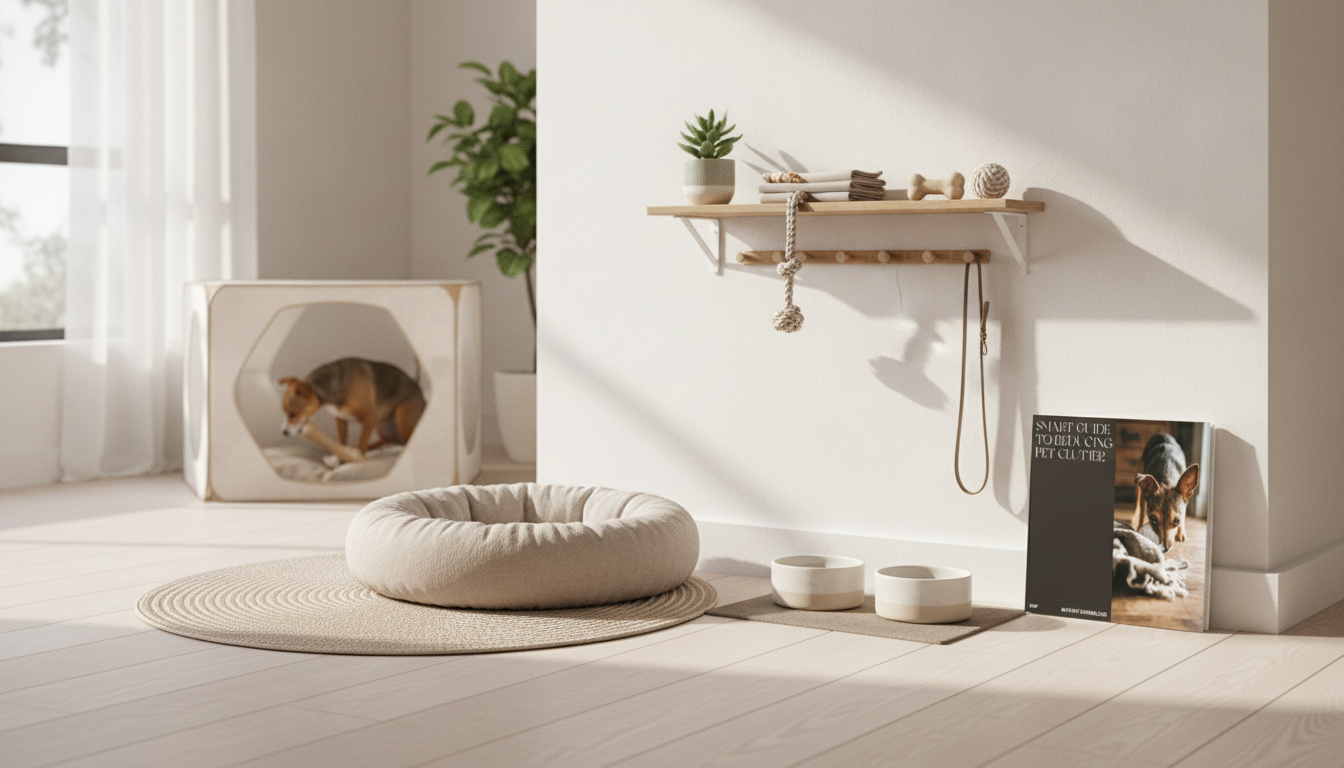
A calmer home starts with a simpler pet setup
Pet supplies have a way of quietly taking over: extra toys, half-used grooming tools, bulky beds, duplicate leashes, and a growing stack of food containers. A minimalist approach doesn’t mean owning less just to own less—it means keeping the right items, storing them where they’re used, and making it easy to reset the space daily. The payoff is real: faster cleanups, fewer “where is it?” moments, and a home that feels calm for both pets and people.
Why pet clutter builds up so fast
- Pet items are small but many. Treats, bags, brushes, meds, wipes, toys, and accessories multiply quickly—and they’re easy to drop on counters or floors.
- Multiple care zones create duplicates. One leash by the front door, one in the car, one in a drawer “just in case” becomes three leashes to manage.
- Packaging is bulky and awkward. Food bags, litter packaging, and toy bundles don’t stack neatly, so they sprawl into pantries, closets, and corners.
- Routine drift causes overflow. When daily resets stop, today’s mess becomes tomorrow’s normal—until it feels too big to tackle.
Set up “pet zones” that match real life
Instead of spreading supplies everywhere, create a few small “zones” that reflect what actually happens in your home. Each zone should have only what you need for that activity—no overflow storage.
Entry zone (walks and quick cleanups)
- Leash and collar/harness
- Poop bags
- Paw wipes
- A small towel for rainy days
Feeding zone (daily essentials only)
- Sealed food container and scoop
- Bowls and water station
- Training treats stored near the kitchen, not scattered around the house
Grooming/health zone (safe, contained, out of reach)
- Brush, nail clippers, shampoo, ear cleaner
- Flea/tick tools
- Meds and paperwork stored securely (especially important for households with kids)
For safety guidance around household products and potential toxins, reference the ASPCA Animal Poison Control resources.
Play zone (limit what’s “out”)
- One toy bin with a limited selection
- Rotate the rest to keep interest without keeping everything on the floor
Travel zone (grab-and-go)
- Carrier
- Seat cover
- Collapsible bowl
- A small go-bag for vet visits or weekends away
For broader preventive care and pet wellness planning, the AVMA pet owner resources are a solid reference.
Declutter pet items in one focused pass
A fast way to break the “clutter cycle” is to declutter by category, not by room. When you see every version of the same thing in one place, decisions get simpler.
- Gather by category. Pull every toy, leash, bowl, brush, and accessory into one sorting area.
- Use simple keep rules. Keep what is safe, fits, and gets used. Let go of duplicates and “maybe someday” items.
- Remove unsafe items immediately. Toss frayed ropes, cracked plastic, heavily chewed pieces, and expired products—especially items that are hard to sanitize.
- Create a replacement list. If discarding something reveals a true gap (like a dull nail clipper), write it down instead of impulse-buying mid-cleanup.
- Donate responsibly. Unopened supplies and clean, gently used items may be accepted by local shelters—confirm policies first.
A minimalist storage plan that stays tidy
Storage should make the “reset” almost automatic. The best systems reduce steps, limit volume, and make it obvious where things go.
| Item type | Best home | Reset rule |
|---|---|---|
| Leash + harness | Hook or basket by the door | Hang up immediately after walks |
| Poop bags + wipes | Small caddy at entry zone | Refill when last roll is opened |
| Food + scoop | Sealed container near feeding area | Top up container weekly; keep one backup bag |
| Toys | One bin in play zone | Anything outside the bin gets put away nightly |
| Grooming tools | Lidded bin or drawer in bathroom/laundry | Return to bin after use; sanitize monthly |
| Meds + records | High shelf or locked box | File paperwork the same day as vet visits |
A 10-minute daily reset and a 30-minute weekly refresh
Small-space solutions for apartments and multi-pet homes
Helpful home picks that support a cleaner pet routine
- A Smart Guide to Reducing Pet Clutter (digital eBook) for a structured, step-by-step approach you can repeat.
- Solid Wood Coffee Table with Storage Drawers to stash small pet essentials (like grooming wipes, treat pouches, or a spare leash) out of sight but close to where life happens.
- Earth Design Kids Rug as a soft “play zone” boundary that’s easy to visually reset—when toys are off the rug and back in the bin, you’re done.
FAQ
How many toys should a dog or cat have out at once?
A practical range is about 5–10 toys out at a time, adjusted for your pet’s play style and your space. Rotating toys weekly keeps novelty high while reducing mess, and it also makes it easier to spot and remove anything damaged or unsafe.
What should be stored near the front door for walks?
Keep a small walk kit: leash, harness/collar, poop bags, wipes, a small towel, and an optional treat pouch. Storing everything in one spot prevents duplicates and cuts down on last-minute scrambling.
How can pet clutter be controlled in a small apartment?
Use zone-based storage, vertical hooks, and a one-bin toy limit to keep surfaces clear. Choose sealed food containers, designate one drawer or shelf for pet items, and follow a one-backup-only rule for bulk supplies.
Recommended for you



Timberland Men’s Leather Boots: Fit, Grip & Care
Jun 20, 2026
Tom Ford Emerald Green Blouse: Long-Sleeve Styling
Jun 21, 2026











Leave a comment