-
Shop
- Adidas
- Advanced Technologies
- AI Skills Mastery 2026 Collection
- Best-Sellers
- Calvin Klein
- Car Accessories
- Confidence
- Dating & Social Skills
- Digital Resources
- AI & Technology
- AI Skills
- Beauty
- Budgeting & Saving
- Car Buying & Ownership
- Cozy Feast Collection
- Electronics & Technology
- Entrepreneurship & Business Growth
- Financial Education
- Financial Independence
- Financial Mindset & Psychology
- Goal Setting
- Hobbies
- Home Styling & Organization
- Kitchen & Recipes
- Leadership
- Mindset
- Online Business
- Parenting & Child Development
- Personal Style & Fashion
- Pet Lifestyle & Wellness
- Positive Thinking
- Sleep Improvement
- Stress Management & Relaxation
- Travel Planning
- Yoga & Fitness
- Yoga & Mind-Body Practices
- Education & Learning
- Family & Parenting
- Fashion
- Alexander McQueen
- Bags
- Bags & Wallets
- Balenciaga
- Belts
- Blazers
- Bottega Veneta
- Brunello Cucinelli
- Burberry
- Chanel
- Chloé
- Dior
- Dolce & Gabbana
- Dresses
- Etro
- Fendi
- Gucci
- Hats & Hair Accessories
- Hoodies & Sweatshirts
- Jacquemus
- Jewelry
- Jil Sander
- Keychains
- Kiton
- Luggage
- Miu Miu
- Off-White
- Prada
- Rick Owens
- Saint Laurent
- Socks & Tights
- Sweaters & Cardigans
- The Row
- Tom Ford
- Tops & Shirts
- Valentino
- Valentino Garavani
- Versace
- Vivienne Westwood
- Watches
- Furniture
- Gadgets
- Health & Beauty
- Health & Wellness
- Home & Garden
- Kids & Babies
- Kitchen
- Lighting
- Patio, Lawn & Garden
- Personal Growth
- Pet Care
- Pet Supplies
- Pets
- Shoes
- Smart Home Living Guides
- Sport & Outdoors
- Stress Relief & Relaxation
- TikTok Growth & Monetization Mastery
- Travel
- Travel & Adventure
- Wealth
- Wellness
- YouTube Shorts Best-Sellers
- Popular
- Best deals
Convertible Velvet U-Shaped Sectional Sofa + Chaise Guide
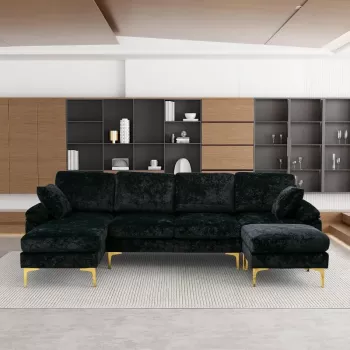
Convertible U-Shaped Sectional Sofa with Velvet Upholstery and Chaise
A U-shaped sectional has a way of making a living room feel instantly “ready”—ready for movie nights, ready for family catch-ups, and ready for guests who stay a little longer than planned. When you add a convertible layout, velvet upholstery, and a chaise, the result is a statement piece that’s both lounge-forward and surprisingly adaptable. Below is a practical guide to choosing and living with a convertible U-shaped sectional, including comfort cues, room-planning clearances, and velvet care habits that keep the finish looking smooth and intentional.
What a U-Shaped Sectional Adds to a Room
Unlike a standard sofa-and-chairs arrangement, a U-shape naturally organizes the space around the center of the room. That layout influences how people sit, talk, and move through the area.
- Creates a natural gathering zone by facing seats toward the center—great for conversation, game nights, and hosting.
- Delivers more usable seating than a typical sofa + loveseat setup, often reducing the need for extra accent chairs.
- Helps define open-plan spaces by visually separating living and dining areas while keeping the room cohesive.
- The chaise section supports stretching out without sacrificing upright seating for everyone else.
Convertible Design: Flexible Layout for Everyday Use
A convertible sectional is all about making the footprint work for the way a room is actually used. If you rearrange seasonally, move often, or reconfigure your living room for guests, a convertible design can keep the seating layout from locking you into one orientation.
- Convertible configurations often let the chaise or ottoman component shift sides or reorient, so the sectional adapts to different room shapes.
- Prioritize a design that can be rearranged without specialized tools—especially helpful in multipurpose spaces like a guest room/home office combo.
- If the sectional uses movable modules, check for connectors or locking hardware that keeps sections aligned and reduces “drift” on smooth floors.
- Plan pathways first: the converted layout shouldn’t block door swings, HVAC vents, or the primary walkway through the room.
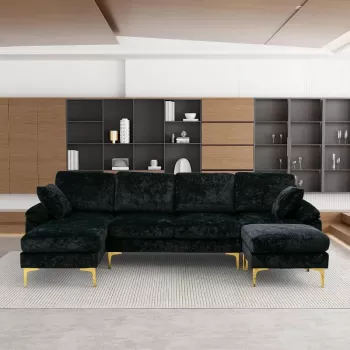
If you’re shopping for a versatile anchor piece, the Convertible U-Shaped Sectional Sofa with Velvet Upholstery and Chaise is designed around that flexible, lounge-friendly concept—ideal for households that want both structure and options.
Velvet Upholstery: Look, Feel, and Practical Considerations
Velvet stands out because it reflects light differently across the pile (the “nap”), which creates depth and a high-end finish. It can look dramatic in the evening and softer in daylight—sometimes on the very same cushion.
- Velvet offers a soft handfeel and a rich, light-catching finish that complements both modern and classic interiors.
- Because nap direction affects shading, occasional brushing helps maintain a more uniform appearance.
- For homes with pets, keep a velvet brush or lint roller handy and consider using throws on high-contact zones.
- Spot-cleaning should be gentle: blot quickly, avoid oversaturating, and follow manufacturer care guidance when available.
For general consumer guidance on safe, responsible use of upholstered furniture, visit the U.S. Consumer Product Safety Commission (CPSC). For fabric-care basics and stain-removal best practices, the American Cleaning Institute is a helpful reference.
Comfort and Support: What Determines the Sit
Two sectionals can look similar online and feel completely different at home. Comfort comes down to proportions and support materials—and U-shaped layouts add a few unique considerations.
- Seat depth affects posture: deeper seats invite lounging, while moderate depth tends to support upright conversation and easier standing.
- Cushion fill and density influence long-term comfort; higher-density foam typically resists sagging better over time.
- Back support is key on U-shaped designs because corner seats can become “dead zones” if cushions are too soft, too low, or poorly angled.
- If the chaise is the main attraction, look for stable support along the full length (no hollow feel near the end).
Tip for real-life testing: sit in the corner seat and then the chaise position back-to-back. If one spot feels noticeably less supported, it’s a clue that the internal structure or cushion design varies across modules.
Room Planning: Sizing, Placement, and Clearances
U-shaped sectionals typically need more width than L-shaped designs, so measuring is non-negotiable. Map the full footprint—including the chaise extension—and then build the rest of the room around comfortable circulation.
Quick Room-Planning Checklist
| Planning item | Why it matters | Target clearance to consider |
|---|---|---|
| Main walkway | Prevents bottlenecks and improves flow | Keep a comfortable path around seating |
| Coffee table spacing | Avoids cramped legroom | Leave enough space to sit/stand easily |
| Door swing zones | Prevents collisions and scuffs | Keep doors fully operable |
| Rug sizing | Unifies the seating area | Front legs of sectional can sit on the rug |
Care Tips to Keep Velvet Looking Fresh
Delivery, Assembly, and Everyday Practicalities
A Coordinated Living Room Setup
For a bold, coordinated focal point above the seating area, consider the Heart Shaped Crystal Ceiling Light, which can add sparkle and visual height—especially in rooms where the sectional’s wide footprint calls for a stronger vertical statement.
FAQ
Does velvet upholstery show marks or shading?
Yes—velvet’s nap can reflect light differently after pressure, creating temporary shading or “tracking.” Regular light brushing, rotating cushions, and consistent lighting placement help keep the surface looking more uniform.
How much space is needed for a U-shaped sectional with a chaise?
Measure the full footprint and then confirm you still have comfortable walkways, clear door swing zones, and enough clearance around the coffee table or ottoman. Planning the rug size at the same time helps prevent the seating zone from feeling crowded or visually disconnected.
What’s the best way to clean spills on velvet?
Blot immediately with a clean cloth, avoid rubbing, and use minimal moisture to keep from flattening the pile. Once dry, gently brush with the nap to restore the texture, and follow any care instructions provided with the upholstery.
Recommended for you
Key Fashion History Eras: From Ancient to Today
Aug 11, 2026










Leave a comment