-
Shop
- Adidas
- Advanced Technologies
- AI Skills Mastery 2026 Collection
- Best-Sellers
- Calvin Klein
- Car Accessories
- Confidence
- Dating & Social Skills
- Digital Resources
- AI & Technology
- AI Skills
- Beauty
- Budgeting & Saving
- Car Buying & Ownership
- Cozy Feast Collection
- Electronics & Technology
- Entrepreneurship & Business Growth
- Financial Education
- Financial Independence
- Financial Mindset & Psychology
- Goal Setting
- Hobbies
- Home Styling & Organization
- Kitchen & Recipes
- Leadership
- Mindset
- Online Business
- Parenting & Child Development
- Personal Style & Fashion
- Pet Lifestyle & Wellness
- Positive Thinking
- Sleep Improvement
- Stress Management & Relaxation
- Travel Planning
- Yoga & Fitness
- Yoga & Mind-Body Practices
- Education & Learning
- Family & Parenting
- Fashion
- Alexander McQueen
- Bags
- Bags & Wallets
- Balenciaga
- Belts
- Blazers
- Bottega Veneta
- Brunello Cucinelli
- Burberry
- Chanel
- Chloé
- Dior
- Dolce & Gabbana
- Dresses
- Etro
- Fendi
- Gucci
- Hats & Hair Accessories
- Hoodies & Sweatshirts
- Jacquemus
- Jewelry
- Jil Sander
- Keychains
- Kiton
- Luggage
- Miu Miu
- Off-White
- Prada
- Rick Owens
- Saint Laurent
- Socks & Tights
- Sweaters & Cardigans
- The Row
- Tom Ford
- Tops & Shirts
- Valentino
- Valentino Garavani
- Versace
- Vivienne Westwood
- Watches
- Furniture
- Gadgets
- Health & Beauty
- Health & Wellness
- Home & Garden
- Kids & Babies
- Kitchen
- Lighting
- Patio, Lawn & Garden
- Personal Growth
- Pet Care
- Pet Supplies
- Pets
- Shoes
- Smart Home Living Guides
- Sport & Outdoors
- Stress Relief & Relaxation
- TikTok Growth & Monetization Mastery
- Travel
- Travel & Adventure
- Wealth
- Wellness
- YouTube Shorts Best-Sellers
- Popular
- Best deals
3 Ton Triple Bag Air Jack: Wheels, Long Handle Guide
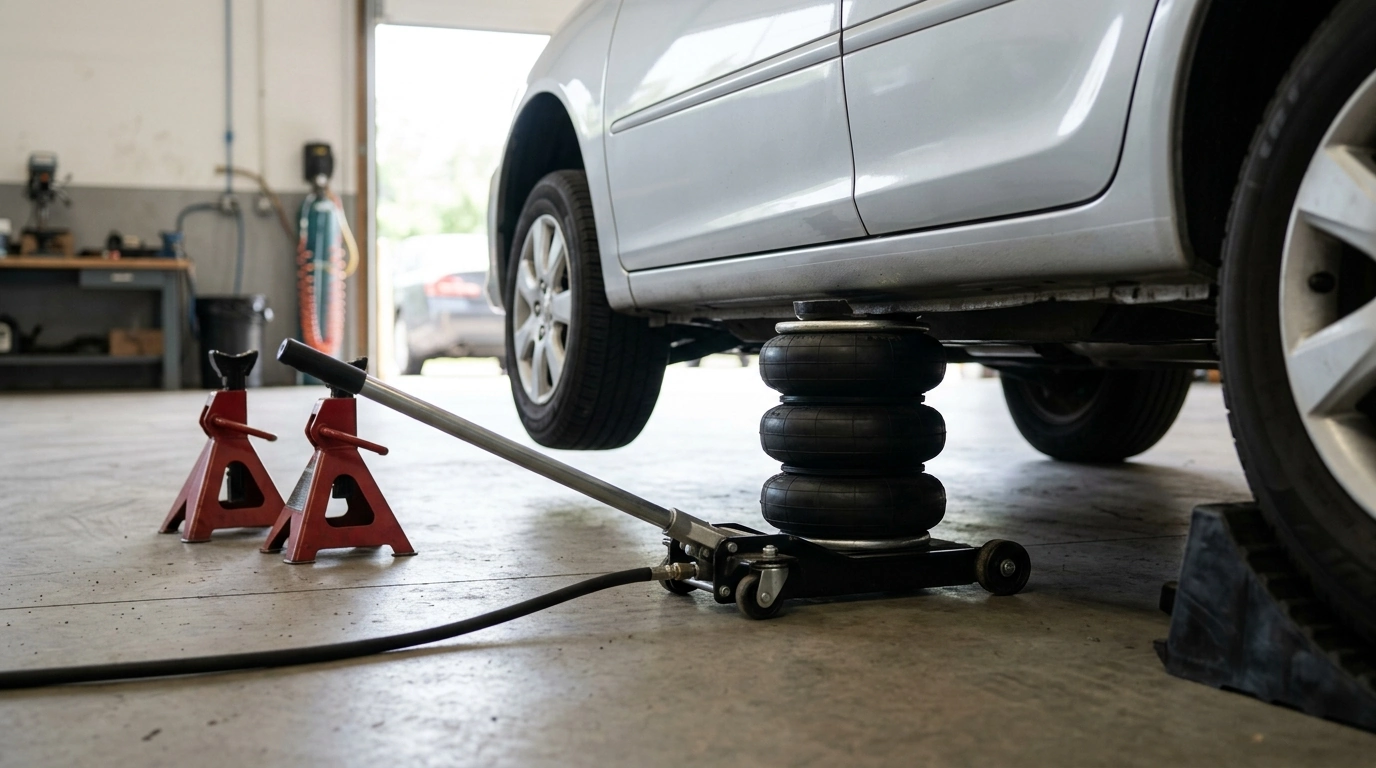
3 Ton Triple Bag Pneumatic Air Jack with Wheels & Long Handle
For quick, repeatable lifts in the garage or shop, an air-powered jack can take the strain out of getting vehicles off the ground. Our 3 Ton Triple Bag Pneumatic Air Jack with Wheels & Long Handle is built around a triple-bag design and a mobile frame, so it’s easier to position, faster to raise, and simpler to handle when you’re working under time pressure. Below is a practical guide to where it fits, how to set it up, and how to use it safely alongside proper support stands.
What this air jack is designed to do
- Lift up to a 3-ton capacity for common automotive tasks such as wheel and tire work, brake service, suspension checks, and underbody inspections.
- Use compressed air to raise the load, reducing manual pumping effort and helping keep your workflow consistent across repeated lifts.
- Roll into position more easily thanks to integrated wheels, then control placement with the long handle—especially useful when reaching under bumpers or side skirts.
- Support the vehicle after lifting with appropriately rated jack stands; treat the air jack as the lifting tool, not the long-term support.
Triple bag lifting: why it matters in day-to-day use
With a triple-bag setup, the lifting force is spread across multiple air chambers. In practical terms, that can help the jack feel steadier as it rises and settles under load, especially during those moments when you’re watching for full contact at the lift point.
- A triple-bag design helps the jack feel stable through the lift cycle.
- It can be helpful on shop floors and driveways where tiny surface variations make positioning more finicky.
- It’s well-suited to faster lifting cycles—raise, service, lower, repeat—when you pair it with safe support habits.
Wheels and long handle: easier positioning and control
Getting a jack under the right point is often the slow part. A wheeled frame reduces drag when you’re moving around the vehicle, and the long handle gives you reach and leverage so you can fine-tune alignment without awkward body positioning.
- Wheels make it easier to reposition between lift points without “walking” the jack across the floor.
- The long handle improves reach when you’re aiming for approved jacking points under rocker panels or near subframes.
- It’s a practical fit when you don’t have a full-size shop lift but still want speed and convenience.
Getting started: setup checklist before the first lift
- Confirm the vehicle’s weight is within the jack’s 3-ton rating. Include cargo, aftermarket bumpers, toolboxes, or other added load when applicable.
- Work on a stable, level surface. Avoid soft asphalt in high heat, gravel, dirt, or sloped driveways whenever possible.
- Confirm your air supply is ready. A compressor with a regulator and a hose length that reaches comfortably helps you maintain consistent performance.
- Before lifting a vehicle, run a brief no-load function check to confirm smooth inflation/deflation and that the jack returns down cleanly.
- Set the parking brake, chock the wheels that stay on the ground, and stage properly rated jack stands before you raise the vehicle.
How to lift safely with a pneumatic bag jack
Step-by-step lifting flow
- Identify approved lifting points for your vehicle (owner’s manual or manufacturer guidance).
- Roll the jack into position using the wheels. Use the long handle to fine-tune alignment without putting your hands near pinch points.
- Lift gradually and watch the contact point. If you see shifting, tilting, or uneven contact, stop and lower immediately to reset.
- Once you reach working height, place jack stands at proper support points, then lower the vehicle onto the stands so the stands carry the load.
- Keep hands and feet clear as you lower. Release air slowly for a controlled descent.
Never work under a vehicle supported only by a jack. If you want an additional overview of shop lifting safety practices, OSHA’s guidance is a solid reference: OSHA – Automotive Lift Safety (eTool).
Fit and compatibility: choosing the right lift point and working height
For safe wheel and tire handling practices that pair well with any lift routine, you can also review: NHTSA – Tire Safety.
Quick comparison: when an air jack makes sense
| Need | Air jack with bags | Hydraulic floor jack |
|---|---|---|
| Fast lifting cycles | Strong fit | Moderate |
| Minimal physical pumping | Strong fit | Requires pumping |
| No compressor available | Not ideal | Strong fit |
| Easy rolling positioning | Strong fit (wheels + handle) | Often strong fit |
Care, storage, and habits that keep performance consistent
More helpful picks from our store
- 3 Ton Triple Bag Pneumatic Air Jack with Wheels & Long Handle (our go-to for fast, repeatable lifts with compressed air)
- Heart Shaped Crystal Ceiling Light (a lighting upgrade can make undercar checks and wheel work easier in a home garage)
- Elegant Casual Leather Tote Bag for Everyday Style (a sturdy carry option for keeping small essentials together when you’re on the move)
FAQ
Do you still need jack stands with a pneumatic air jack?
Yes. Use the air jack to raise the vehicle, then support it with properly rated jack stands at approved support points before working underneath.
What kind of compressor setup works best for a pneumatic bag jack?
Use a compressor with a regulator and a compatible hose/fitting setup so you can control pressure and maintain steady airflow during lifting and lowering.
Can this type of jack be used on uneven or soft ground?
A stable, level surface is preferred. If conditions aren’t solid and flat, delay the lift or improve the work surface; instability increases the risk of shifting during inflation or lowering.















Leave a comment