-
Shop
- Adidas
- Advanced Technologies
- AI Skills Mastery 2026 Collection
- Best-Sellers
- Calvin Klein
- Car Accessories
- Confidence
- Dating & Social Skills
- Digital Resources
- AI & Technology
- AI Skills
- Beauty
- Budgeting & Saving
- Car Buying & Ownership
- Cozy Feast Collection
- Electronics & Technology
- Entrepreneurship & Business Growth
- Financial Education
- Financial Independence
- Financial Mindset & Psychology
- Goal Setting
- Hobbies
- Home Styling & Organization
- Kitchen & Recipes
- Leadership
- Mindset
- Online Business
- Parenting & Child Development
- Personal Style & Fashion
- Pet Lifestyle & Wellness
- Positive Thinking
- Sleep Improvement
- Stress Management & Relaxation
- Travel Planning
- Yoga & Fitness
- Yoga & Mind-Body Practices
- Education & Learning
- Family & Parenting
- Fashion
- Alexander McQueen
- Bags
- Bags & Wallets
- Balenciaga
- Belts
- Blazers
- Bottega Veneta
- Brunello Cucinelli
- Burberry
- Chanel
- Chloé
- Dior
- Dolce & Gabbana
- Dresses
- Etro
- Fendi
- Gucci
- Hats & Hair Accessories
- Hoodies & Sweatshirts
- Jacquemus
- Jewelry
- Jil Sander
- Keychains
- Kiton
- Luggage
- Miu Miu
- Off-White
- Prada
- Rick Owens
- Saint Laurent
- Socks & Tights
- Sweaters & Cardigans
- The Row
- Tom Ford
- Tops & Shirts
- Valentino
- Valentino Garavani
- Versace
- Vivienne Westwood
- Watches
- Furniture
- Gadgets
- Health & Beauty
- Health & Wellness
- Home & Garden
- Kids & Babies
- Kitchen
- Lighting
- Patio, Lawn & Garden
- Personal Growth
- Pet Care
- Pet Supplies
- Pets
- Shoes
- Smart Home Living Guides
- Sport & Outdoors
- Stress Relief & Relaxation
- TikTok Growth & Monetization Mastery
- Travel
- Travel & Adventure
- Wealth
- Wellness
- YouTube Shorts Best-Sellers
- Popular
- Best deals
9-Cup 600W Food Processor for Chopping, Slicing & Dough
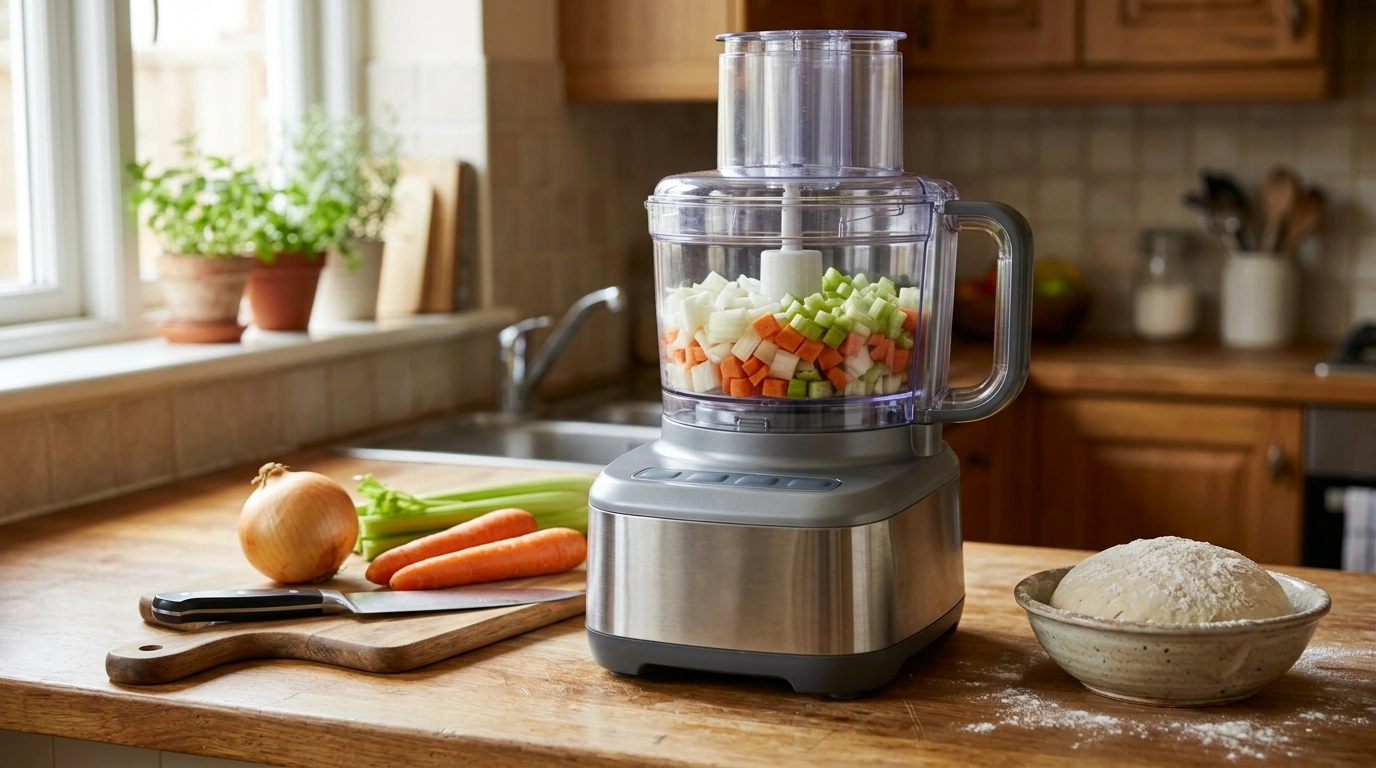
9-Cup Food Processor, 600W Power: Faster Prep for Chopping, Slicing, and Dough Days
A good food processor earns its counter space by saving time on the tasks that slow cooking down: chopping onions evenly, slicing vegetables quickly, and pulling dough together without overworking it by hand. This 9-cup food processor with a 600W motor is built for everyday prep and weekend baking alike—one bowl size that fits family portions, with the power to handle both delicate cuts and heavier mixes.
Why a 9-cup bowl is a sweet spot for everyday cooking
A 9-cup capacity hits that practical middle ground: big enough to be useful, not so big that it feels like a special-occasion appliance.
- Room to prep multiple ingredients at once (like onions, carrots, and celery) without constant emptying and reloading.
- Large enough for party dips, shredded salads, and batch meal prep, without feeling oversized for regular weeknights.
- Helps keep workflow clean: fewer cutting boards, fewer bowls, fewer steps between prep and stove.
If you’re upgrading from hand chopping, the biggest “aha” moment is how quickly you can build a full prep base for soups, sauces, and stir-fries without turning your kitchen into a pile of bowls.
What 600W power changes in real kitchen tasks
Power isn’t about “fancy”—it’s about consistency. A stronger motor helps the processor keep momentum when ingredients get dense or sticky.
- More consistent results when processing dense ingredients (nuts, firm cheese, root vegetables) where weaker motors can stall.
- Better momentum for dough work: the processor can bring ingredients together quickly so dough spends less time being handled.
- Faster cycles mean better texture control—short pulses for chunky salsa, longer runs for smoother purees.
Common tasks and how to get the texture you want
| Task | Best approach | Stop when you see… |
|---|---|---|
| Salsa or pico de gallo | Short pulses; scrape bowl once | Pieces are even but still distinct |
| Hummus or bean dip | Longer runs; drizzle liquid slowly | Surface looks glossy and mostly smooth |
| Coleslaw-style slicing/shredding | Steady feed; avoid overfilling | Strips look uniform and airy, not wet |
| Pie dough | Pulse to pea-size; then brief runs | Dough clumps form; no warm, greasy look |
| Pizza or bread dough (small batches) | Run just until a cohesive ball forms | Dough cleans the sides and moves as one mass |
Chopping without the guesswork
The simplest way to get reliable chops is to let pulsing do the work. Continuous processing is how you accidentally go from “diced” to “mushy.”
- Use pulsing to control size: fewer pulses for rustic soups and stews, more pulses for fine mirepoix-style prep.
- For even chops, start with similarly sized pieces (quarters or chunks) before processing.
- Scrape the bowl midway for consistent results, especially with sticky items like garlic or fresh herbs.
Our team’s everyday tip: when you want a cleaner chop (especially onions), chill the peeled onion for 10–15 minutes first—firmer texture tends to cut more cleanly and smear less.
Slicing and shredding for salads, prep, and quick dinners
Uniform slices aren’t just “pretty”—they cook at the same speed. That matters for sheet-pan meals, gratins, quick sautés, and slaws where you want crunch without random soggy bits.
- Slice vegetables for sheet-pan dinners, stir-fries, and gratins with uniform thickness for even cooking.
- Shred ingredients for slaws, taco toppings, and casseroles without hand fatigue.
- Best results come from firm, chilled produce (and firm cheese) to reduce crumbling and sticking.
If you’re shredding cheese, firm blocks straight from the fridge typically shred cleaner than room-temp cheese (which can clump). For cabbage and carrots, don’t overfill—lighter, steadier feeding helps keep strands fluffy instead of compressed and wet.
Dough kneading: when it helps, and how to avoid overworking
A food processor can be a real advantage for doughs because it works fast—so gluten development starts without a long knead, and butter or oil distributes efficiently. The key is to stop early rather than “prove” it can keep going.
- Great for quick doughs: pizza dough, flatbreads, and certain enriched doughs when kept to modest batch sizes.
- Keep an eye on heat: stop as soon as the dough becomes cohesive; extended processing can warm dough and affect texture.
- A simple rhythm helps: combine dry ingredients first, add liquids gradually, then process only until a smooth mass forms.
For technique ideas, King Arthur Baking has helpful dough guidance you can adapt to your preferred recipe style: https://www.kingarthurbaking.com/blog.
Cleaning and care that keeps performance steady
For kitchen hygiene best practices, the USDA’s “Clean” guidance is a solid reference: https://www.fsis.usda.gov/food-safety/safe-food-handling-and-preparation/food-safety-basics/clean.
A quick setup checklist for smoother results
Shop our in-stock picks
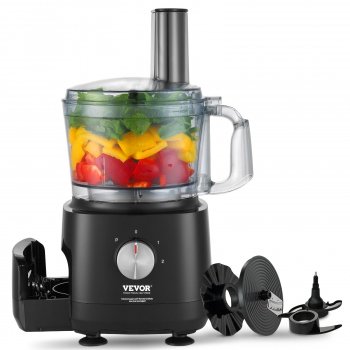
- 9-Cup Food Processor with 600W Motor for Chopping, Slicing & Dough Kneading
- Instant Wall-Mounted Electric Water Heater with LCD Display
- Heart Shaped Crystal Ceiling Light
FAQ
Can a 600W food processor knead dough reliably?
Yes—600W is well-suited for bringing dough together and kneading small-to-moderate batches. Stop once you see a cohesive ball forming and the dough starts moving as one mass, since extended processing can warm the dough and affect texture.
How do you keep chopped vegetables from turning watery?
Use short pulses instead of running continuously, work in smaller batches, and stop sooner than you think you need to. Chilling watery produce can help, and for very juicy items, draining briefly after chopping can improve the final texture.
What’s the best way to get even slices?
Start with firm, trimmed pieces that fit the feed area well, then use steady pressure while feeding—avoid overloading so slices don’t bunch up. Chilling softer produce for a few minutes can also improve clean, even cuts.














Leave a comment