-
Shop
- Adidas
- Advanced Technologies
- AI Skills Mastery 2026 Collection
- Best-Sellers
- Calvin Klein
- Car Accessories
- Confidence
- Dating & Social Skills
- Digital Resources
- AI & Technology
- AI Skills
- Beauty
- Budgeting & Saving
- Car Buying & Ownership
- Cozy Feast Collection
- Electronics & Technology
- Entrepreneurship & Business Growth
- Financial Education
- Financial Independence
- Financial Mindset & Psychology
- Goal Setting
- Hobbies
- Home Styling & Organization
- Kitchen & Recipes
- Leadership
- Mindset
- Online Business
- Parenting & Child Development
- Personal Style & Fashion
- Pet Lifestyle & Wellness
- Positive Thinking
- Sleep Improvement
- Stress Management & Relaxation
- Travel Planning
- Yoga & Fitness
- Yoga & Mind-Body Practices
- Education & Learning
- Family & Parenting
- Fashion
- Alexander McQueen
- Bags
- Bags & Wallets
- Balenciaga
- Belts
- Blazers
- Bottega Veneta
- Brunello Cucinelli
- Burberry
- Chanel
- Chloé
- Dior
- Dolce & Gabbana
- Dresses
- Etro
- Fendi
- Gucci
- Hats & Hair Accessories
- Hoodies & Sweatshirts
- Jacquemus
- Jewelry
- Jil Sander
- Keychains
- Kiton
- Luggage
- Miu Miu
- Off-White
- Prada
- Rick Owens
- Saint Laurent
- Socks & Tights
- Sweaters & Cardigans
- The Row
- Tom Ford
- Tops & Shirts
- Valentino
- Valentino Garavani
- Versace
- Vivienne Westwood
- Watches
- Furniture
- Gadgets
- Health & Beauty
- Health & Wellness
- Home & Garden
- Kids & Babies
- Kitchen
- Lighting
- Patio, Lawn & Garden
- Personal Growth
- Pet Care
- Pet Supplies
- Pets
- Shoes
- Smart Home Living Guides
- Sport & Outdoors
- Stress Relief & Relaxation
- TikTok Growth & Monetization Mastery
- Travel
- Travel & Adventure
- Wealth
- Wellness
- YouTube Shorts Best-Sellers
- Popular
- Best deals
AI for Event Recap Videos: Faster Edits, Better Highlights
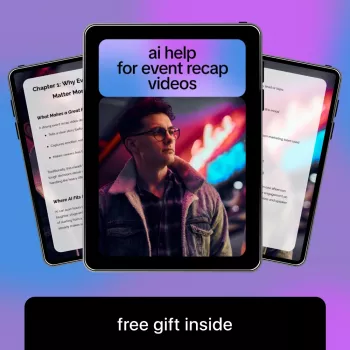
AI Help for Event Recap Videos: Faster Editing, Smarter Highlights, Better Results
Event recap videos succeed when they feel intentional: the right moments, a clear story, clean audio, and pacing that matches the energy in the room. AI can speed up the parts that usually drag—logging footage, finding usable bites, building selects, generating captions, and creating multiple cutdowns—while leaving creative decisions in human hands. The workflow below keeps quality high while reducing time spent hunting for highlights.
What a strong recap needs before any AI step
Before you run a single transcription or auto-highlight tool, lock the fundamentals. AI works best when you already know what “good” looks like.
- Define the goal: hype reel, sponsor proof, community recap, or ticket sales for next year. Each goal changes which moments matter most.
- Pick a simple structure: hook (3–5 seconds), quick context (title/location), rising energy (crowd + activity), key moments (speakers/awards), human reactions, and a closing CTA (date, website, next steps).
- Set deliverables early: 16:9 master, 9:16 social cutdowns, 1:1 option, plus a 6–10 second teaser.
- Decide the must-capture list: crowd cheers, signage/branding, wide establishing shots, 2–3 strong soundbites, sponsor activations, and one signature moment.
Fast setup: organize footage so AI can work accurately
AI-assisted editing gets dramatically better when footage is labeled consistently and audio is synced. A little discipline upfront prevents messy transcripts, mislabeled speakers, and missed highlights later.
- Ingest and label consistently: CameraA/CameraB, stage, crowd, b-roll, interviews, sponsor area, and “gold moments.”
- Sync multi-cam and external audio first: highlight extraction and transcription improve when audio is clean and aligned.
- Use a naming scheme: YYYYMMDD_Event_Segment_Cam_Take keeps exports, transcripts, and versions easy to track.
- Start editing while filming continues: an end-of-day backup routine plus rolling proxies lets you assemble immediately.
AI-assisted logging: turn hours of clips into searchable moments
The biggest time sink in recap edits is “finding the thing.” Transcripts and smart tags turn raw footage into something you can search like a document.
- Generate transcripts for interviews, panels, and emcee audio, then search for names, topics, and quotable lines.
- Auto-detect speakers and label roles (host, keynote, attendee, sponsor rep) to speed up story-building.
- Create summaries and tags such as “energy,” “laughter,” “applause,” “product demo,” “networking,” “award,” and “close-up reaction.”
- Flag risks early: mispronunciations, off-brand remarks, copyrighted music bleed, or sensitive audience moments.
Quick tags that make recap edits faster
| Tag | What to mark | Where it helps most |
|---|---|---|
| Hook | Big cheer, surprising moment, strong one-liner | First 3–8 seconds and teaser cut |
| Context | Event name signage, location, date, wide venue shot | Opening clarity and sponsor versioning |
| Hero bite | Clean quote that states purpose/impact | Narrative spine and VO-less edits |
| Energy | Movement, dancing, applause, busy expo floor | Pacing and music-driven sequences |
| Brand | Logos, step-and-repeat, sponsor booths | Deliverables for partners and post-event decks |
| Human | Reactions, hugs, candid laughs, attendee testimonials | Emotional lift and retention |
Smarter highlight selection: keep the story, not just the loudest moments
Peak detection is useful, but a recap that’s only “big moments” often feels random. Use AI to surface candidates, then shape the narrative intentionally.
- Build a selects timeline first: combine AI-found peaks with manual picks; avoid jumping straight into fine editing.
- Balance story beats: arrival → activity → signature moments → community → close. A recap feels fuller when it covers the arc.
- Choose 2–4 anchor soundbites: these carry the edit; everything else supports those lines with visuals.
- Apply human judgment: uniqueness, clarity, brand safety, and whether it plays well without context.
Faster editing workflow: assembly to polish in a repeatable sequence
A repeatable order prevents “forever edits” and makes it easier to produce multiple versions without breaking your timeline.
For transcription and caption workflows, tools like Adobe’s Speech to Text in Premiere Pro can speed up the first pass—especially when your audio is clean and synced.
Captions, cutdowns, and versions: multiply outputs without multiplying effort
- Generate captions from transcripts: then do a fast correction pass for names, jargon, and sponsor brands. (YouTube’s caption workflow is outlined here: Add subtitles & captions.)
- Auto-reframe for vertical: prioritize faces, podiums, and action zones; review fast-motion scenes to prevent awkward crops.
- Create version presets: 60–90s recap, 30s highlight, 15s teaser, and a sponsor-focused variant with more branding shots.
- Export with platform-friendly specs: include loudness targets and keep a master template so each new event starts ready.
Captions aren’t just convenient—they support accessibility expectations across platforms and audiences. The WCAG overview is a helpful reference when building an accessible video publishing routine.
Quality control checklist before publishing
Helpful tools and resources (in stock)
- AI Help for Event Recap Videos – Practical Guide for Faster Editing, Smarter Highlights & High-Impact Event Videos (digital guide for building a repeatable, high-output recap workflow)
- Elegant Casual Leather Tote Bag for Everyday Style (a polished carry option for on-site essentials like mic packs, SSDs, and media cards)
FAQ
Can AI fully edit an event recap video automatically?
AI can handle time-saving tasks like transcription, rough selects, auto-reframing, and captions, but it won’t reliably nail story, brand tone, or the exact pacing that makes a recap feel intentional. The best results come from using AI as an assistant while a human makes the final creative calls.
How long should an event recap video be?
Common ranges are 15 seconds (teaser), 30 seconds (social highlight), 60–90 seconds (standard recap), and 2–3 minutes (full story version). A strong approach is to produce one solid master cut first, then derive shorter cutdowns for each platform.
What footage should be prioritized for better highlights?
Prioritize clean-audio soundbites, wide establishing shots, reaction shots, key moments (speakers, awards, reveals), sponsor/branding shots, and a clear closing CTA. Audio quality often determines whether a “great moment” is actually usable in the final edit.














Leave a comment