-
Shop
- Adidas
- Advanced Technologies
- AI Skills Mastery 2026 Collection
- Best-Sellers
- Calvin Klein
- Car Accessories
- Confidence
- Dating & Social Skills
- Digital Resources
- AI & Technology
- AI Skills
- Beauty
- Budgeting & Saving
- Car Buying & Ownership
- Cozy Feast Collection
- Electronics & Technology
- Entrepreneurship & Business Growth
- Financial Education
- Financial Independence
- Financial Mindset & Psychology
- Goal Setting
- Hobbies
- Home Styling & Organization
- Kitchen & Recipes
- Leadership
- Mindset
- Online Business
- Parenting & Child Development
- Personal Style & Fashion
- Pet Lifestyle & Wellness
- Positive Thinking
- Sleep Improvement
- Stress Management & Relaxation
- Travel Planning
- Yoga & Fitness
- Yoga & Mind-Body Practices
- Education & Learning
- Family & Parenting
- Fashion
- Alexander McQueen
- Bags
- Bags & Wallets
- Balenciaga
- Belts
- Blazers
- Bottega Veneta
- Brunello Cucinelli
- Burberry
- Chanel
- Chloé
- Dior
- Dolce & Gabbana
- Dresses
- Etro
- Fendi
- Gucci
- Hats & Hair Accessories
- Hoodies & Sweatshirts
- Jacquemus
- Jewelry
- Jil Sander
- Keychains
- Kiton
- Luggage
- Miu Miu
- Off-White
- Prada
- Rick Owens
- Saint Laurent
- Socks & Tights
- Sweaters & Cardigans
- The Row
- Tom Ford
- Tops & Shirts
- Valentino
- Valentino Garavani
- Versace
- Vivienne Westwood
- Watches
- Furniture
- Gadgets
- Health & Beauty
- Health & Wellness
- Home & Garden
- Kids & Babies
- Kitchen
- Lighting
- Patio, Lawn & Garden
- Personal Growth
- Pet Care
- Pet Supplies
- Pets
- Shoes
- Smart Home Living Guides
- Sport & Outdoors
- Stress Relief & Relaxation
- TikTok Growth & Monetization Mastery
- Travel
- Travel & Adventure
- Wealth
- Wellness
- YouTube Shorts Best-Sellers
- Popular
- Best deals
Eat for Calm: Simple Meals to Steady Stressful Days
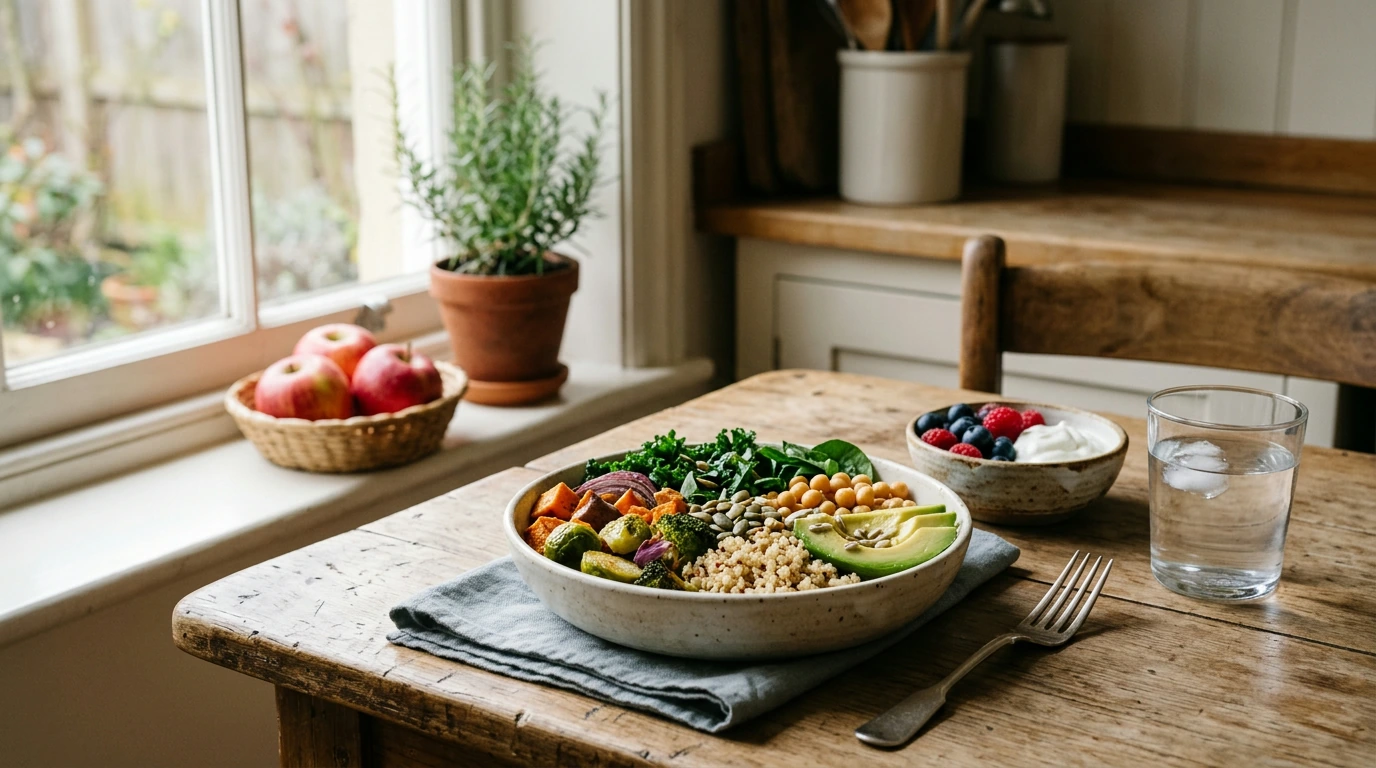
Nourish Your Calm with Every Bite: A Food-Forward Routine for Stressful Days
When stress runs high, food can either add to the noise or help soften it. “Nourish Your Calm with Every Bite” is designed for real life—busy mornings, wired afternoons, restless evenings—when steadier mood starts with steadier nourishment. Our team built this approach around nutrition basics, approachable recipes, and a simple rhythm for eating in a way that supports calmer energy and more grounded focus.
If you want a practical, low-overwhelm reset you can reuse anytime your week feels jagged, our Nourish Your Calm with Every Bite | Stress Relief eBook puts the templates, recipes, and routines in one place—so you’re not reinventing meals when you’re already tired.
What “calm-supportive eating” looks like in everyday life
Calm-supportive eating isn’t about eating perfectly; it’s about eating in a way that reduces avoidable spikes and crashes so your day feels less reactive. In practice, that usually means:
- Prioritizing blood-sugar steadiness: meals and snacks built around protein, fiber, and healthy fats to smooth energy dips.
- Leaning on key micronutrients: food-first choices that naturally provide nutrients often discussed in stress response and mood support (like magnesium, omega-3s, and B vitamins).
- Using gentle structure, not restriction: repeatable meal templates with mix-and-match options.
- Building a calmer kitchen pattern: fewer last-minute decisions, more “grab-and-go” staples.
A simple “calm plate” template to repeat
| Plate piece | Why it helps on stressful days | Easy examples |
|---|---|---|
| Protein | Supports satiety and steadier energy | Eggs, Greek yogurt, beans, lentils, chicken, tofu |
| Fiber-rich carbs | Helps slow digestion and smooth glucose response | Oats, quinoa, brown rice, sweet potato, berries |
| Healthy fats | Supports longer-lasting fullness and flavor satisfaction | Olive oil, avocado, nuts, seeds, tahini |
| Color + crunch | Adds micronutrients and a satisfying sensory reset | Leafy greens, peppers, cucumbers, carrots, citrus |
Why stress can make cravings louder (and how to respond without guilt)
Stress can affect appetite, energy, and impulse control—so cravings often skew toward quick fuel. That’s not a character flaw; it’s biology meeting a busy schedule. The goal isn’t perfection, it’s a steadier landing you can repeat.
- Use balanced snacks as a pressure-release valve: pair carbs with protein or fat (fruit + nut butter, crackers + cheese, yogurt + berries).
- Watch timing: long gaps between meals can make evening cravings feel urgent and harder to navigate calmly.
- Hydration helps, too: mild dehydration can feel like low energy and can nudge you toward quick fixes.
- Make supportive convenience visible: pre-portioned nuts, washed fruit, ready-to-eat protein, freezer staples.
For a deeper (but still readable) look at how food patterns can influence mood and brain function, Harvard Health’s overview of nutritional psychiatry is a helpful reference: https://www.health.harvard.edu/blog/nutritional-psychiatry-your-brain-on-food-201511168626.
Inside the guide: what to expect from “Nourish Your Calm with Every Bite”
This isn’t a rigid plan that collapses the moment your calendar changes. It’s a practical system you can scale up or down depending on your bandwidth.
- Nutrition guidance you can actually use: what to emphasize on high-stress days without turning meals into a science project.
- Recipe support for overstimulated moments: simple, comforting options for breakfast, lunch, dinner, and snacks.
- A repeatable weekly approach: plan once, eat many times—so calm becomes a pattern.
- Ingredients that play well together: staples that become multiple meals to reduce cost and overwhelm.
If you want a single resource you can return to when life ramps up, you can start with our Nourish Your Calm with Every Bite | Stress Relief eBook and build from one breakfast and one snack at a time.
A gentle 1-day calm-support plan (use as a starting point)
Quick swaps when stress is driving the menu
| If this is happening… | Try this instead… | Why it’s easier on the nervous system |
|---|---|---|
| Skipping meals then overeating late | Set a midday “anchor” meal + planned snack | Reduces rebound hunger and irritability |
| Reaching for sweets to push through | Pair a sweet with protein (chocolate + nuts, fruit + yogurt) | Smoother energy and fewer crashes |
| Too tired to cook | Use a meal template with shortcuts (frozen veg, canned beans, rotisserie chicken) | Lower effort, still balanced |
Kitchen shortcuts that make calm easier to repeat
Stress can affect your whole body, not just your mood; the American Psychological Association’s overview is a solid refresher on those effects: https://www.apa.org/topics/stress/body. And if you’re curious about magnesium specifically, NIH’s fact sheet is a clear, food-first-friendly resource: https://ods.od.nih.gov/factsheets/Magnesium-Consumer/.
Bring it home: a calmer week starts with one supportive choice
One small practicality that helps many people follow through: keep your “calm kit” foods with you when you’re out. Our team likes an everyday carryall that fits errands, a water bottle, and a snack container without fuss—like our Elegant Casual Leather Tote Bag for Everyday Style.
FAQ
Is this guide a meal plan or a collection of recipes?
It’s a practical guide that blends nutrition guidance with recipes and flexible routines. You’ll use repeatable templates and low-overwhelm planning rather than rigid rules.
Do the recipes require hard-to-find ingredients?
No—this approach is built around familiar grocery items and simple staples. It’s designed to work well with swaps and shortcuts like frozen produce, canned beans, and pre-cooked proteins.
Can this help if stress affects appetite in opposite ways (skipping meals or constant snacking)?
Yes—balanced “anchor meals” and planned snacks help create steadier energy in either direction. The focus is gentle structure with protein/fiber/fat pairings and timing that supports consistency.













Leave a comment