-
Shop
- Adidas
- Advanced Technologies
- AI Skills Mastery 2026 Collection
- Best-Sellers
- Calvin Klein
- Car Accessories
- Confidence
- Dating & Social Skills
- Digital Resources
- AI & Technology
- AI Skills
- Beauty
- Budgeting & Saving
- Car Buying & Ownership
- Cozy Feast Collection
- Electronics & Technology
- Entrepreneurship & Business Growth
- Financial Education
- Financial Independence
- Financial Mindset & Psychology
- Goal Setting
- Hobbies
- Home Styling & Organization
- Kitchen & Recipes
- Leadership
- Mindset
- Online Business
- Parenting & Child Development
- Personal Style & Fashion
- Pet Lifestyle & Wellness
- Positive Thinking
- Sleep Improvement
- Stress Management & Relaxation
- Travel Planning
- Yoga & Fitness
- Yoga & Mind-Body Practices
- Education & Learning
- Family & Parenting
- Fashion
- Alexander McQueen
- Bags
- Bags & Wallets
- Balenciaga
- Belts
- Blazers
- Bottega Veneta
- Brunello Cucinelli
- Burberry
- Chanel
- Chloé
- Dior
- Dolce & Gabbana
- Dresses
- Etro
- Fendi
- Gucci
- Hats & Hair Accessories
- Hoodies & Sweatshirts
- Jacquemus
- Jewelry
- Jil Sander
- Keychains
- Kiton
- Luggage
- Miu Miu
- Off-White
- Prada
- Rick Owens
- Saint Laurent
- Socks & Tights
- Sweaters & Cardigans
- The Row
- Tom Ford
- Tops & Shirts
- Valentino
- Valentino Garavani
- Versace
- Vivienne Westwood
- Watches
- Furniture
- Gadgets
- Health & Beauty
- Health & Wellness
- Home & Garden
- Kids & Babies
- Kitchen
- Lighting
- Patio, Lawn & Garden
- Personal Growth
- Pet Care
- Pet Supplies
- Pets
- Shoes
- Smart Home Living Guides
- Sport & Outdoors
- Stress Relief & Relaxation
- TikTok Growth & Monetization Mastery
- Travel
- Travel & Adventure
- Wealth
- Wellness
- YouTube Shorts Best-Sellers
- Popular
- Best deals
Electric Baby Nasal Aspirator: Choose the Right Suction
Electric Baby Nasal Aspirator with Suction Levels: Clear Noses, Calmer Nights
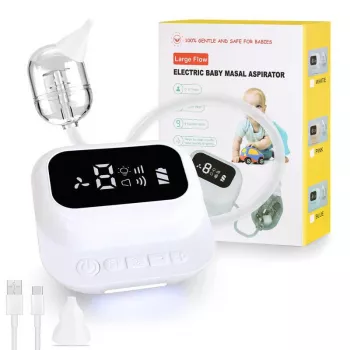
When a baby can’t breathe easily through the nose, everything feels harder—feeding, sleeping, settling, and soothing. An electric baby nasal aspirator with suction levels helps remove mucus in a controlled way so you can start gentle and increase only as needed. Our team put together this guide to explain how adjustable suction fits into real-life routines, what to look for in day-to-day use, and how to use our Electric Baby Nasal Aspirator with 9 Suction Levels safely and comfortably at home.
Why adjustable suction matters for babies
Babies’ nasal passages are tiny, and congestion can change quickly—one moment it’s mild stuffiness, the next it’s thicker mucus that disrupts feeding or sleep. That’s why suction levels matter: instead of a “one-power” approach that can feel ineffective or too intense, you can match the strength to the moment.
- Start gentler for comfort. A lower setting is typically the best starting point for light congestion or when your baby is fussy and needs a slower, calmer approach.
- Increase only when needed. Higher settings can be useful when mucus is thicker, but the goal is still the minimum suction that gets the job done.
- Keep routines consistent. Once you find a comfortable level for your baby, you can repeat it during nighttime wakeups without guesswork.
- Make caregiving easier to share. A level-based device helps everyone follow the same routine—especially helpful when you’re handing off baby care.
Simple way to match suction level to the moment
| Situation | Starting point | What to do next |
|---|---|---|
| Mild stuffiness, baby calm | Low suction level | Use brief pulls; stop once breathing sounds clearer |
| Mucus seems thicker, baby still feeding/sleeping poorly | Low to medium level | Try saline first, then increase one level at a time if needed |
| One side blocked more than the other | Low level on each nostril | Work nostril-by-nostril; avoid “max power” as a first step |
| Nighttime congestion and baby is overtired | Lowest comfortable level | Keep it quick; aim for comfort and just enough relief to settle |
What to expect from the Electric Baby Nasal Aspirator with 9 Suction Levels
Our Electric Baby Nasal Aspirator with 9 Suction Levels is built around a gradual approach: start gentle, then increase only if you truly need more pull to clear what’s causing the blockage.
- Nine suction levels help you move in small steps instead of jumping from “too little” to “too much.”
- Electric suction stays consistent compared with manual options that can vary with hand pressure, fatigue, and how rushed the moment feels.
- Fits real routines like quick checks before feeds, a short bedtime clean-up, or brief sessions when congestion flares.
- Easy to keep close by in your nursery, diaper bag, or travel kit, so you’re not improvising when congestion hits.
It’s currently in stock for $38.97 (USD) at our product page.
A gentle, repeatable routine (especially when baby is squirmy)
When your baby is already uncomfortable, the best routine is one that stays calm and brief. You’re aiming for comfort and relief, not “perfectly clean.”
- Set the scene first. Choose a steady, comfortable spot and keep tissues nearby. Having a quick plan helps you move efficiently.
- Start at the lowest suction level. Use short pulls rather than long continuous suction. Short bursts are often better tolerated.
- Loosen first if mucus is sticky. If mucus feels dry or stubborn, consider saline drops or spray first (following your pediatrician’s guidance). Loosening mucus can reduce the need for stronger suction.
- Work one nostril at a time. Pause if your baby becomes distressed. A brief reset (a cuddle, a breath, a moment) can work better than pushing through.
- Stop once breathing sounds clearer. Over-cleaning can irritate delicate nasal tissue. Relief and comfort are the priority.
If you’d like broader guidance on baby colds and congestion patterns, you can also review resources from HealthyChildren.org (American Academy of Pediatrics) and the CDC’s common cold overview.
Hygiene and maintenance that keeps suction performing well
Strong suction performance depends on clean, dry parts. Mucus residue can reduce airflow and make sessions longer than they need to be.
Helpful add-ons our team keeps nearby
- Electric Baby Nasal Aspirator with 9 Suction Levels — adjustable suction for controlled, step-by-step clearing.
- Elegant Casual Leather Tote Bag for Everyday Style — a structured carryall that can double as an everyday “grab-and-go” bag for wipes, tissues, and small baby essentials.
- Heart Shaped Crystal Ceiling Light — a nursery-friendly décor upgrade if you’re refreshing the room where bedtime routines happen.
When to pause and get medical guidance
For additional general guidance on colds in young children, the NHS overview on coughs and colds in children is another helpful reference.
FAQ
Which suction level should be used first on an electric baby nasal aspirator?
Start at the lowest suction level and use short pulls, then increase gradually only if needed. Prioritize your baby’s comfort and stop as soon as breathing sounds clearer.
Is it better to use saline before using a nasal aspirator?
Saline can help loosen thick or sticky mucus so a lower suction level may work effectively. Follow your pediatrician’s guidance on saline use and keep the session brief.
How often can a baby nasal aspirator be used?
Use it only when needed, such as before feeds or sleep, and avoid frequent suctioning that may irritate the nose. If your baby is very young or you feel you need it often, check with your pediatrician for personalized guidance.
Recommended for you
Electric Baby Nasal Aspirator with Suction Levels: Clear Noses, Calmer Nights
When a baby can’t breathe easily through the nose, everything feels harder—feeding, sleeping, settling, and soothing. An electric baby nasal aspirator with suction levels helps remove mucus in a controlled way so you can start gentle and increase only as needed. Our team put together this guide to explain how adjustable suction fits into real-life routines, what to look for in day-to-day use, and how to use our Electric Baby Nasal Aspirator with 9 Suction Levels safely and comfortably at home.
Why adjustable suction matters for babies
Babies’ nasal passages are tiny, and congestion can change quickly—one moment it’s mild stuffiness, the next it’s thicker mucus that disrupts feeding or sleep. That’s why suction levels matter: instead of a “one-power” approach that can feel ineffective or too intense, you can match the strength to the moment.
- Start gentler for comfort. A lower setting is typically the best starting point for light congestion or when your baby is fussy and needs a slower, calmer approach.
- Increase only when needed. Higher settings can be useful when mucus is thicker, but the goal is still the minimum suction that gets the job done.
- Keep routines consistent. Once you find a comfortable level for your baby, you can repeat it during nighttime wakeups without guesswork.
- Make caregiving easier to share. A level-based device helps everyone follow the same routine—especially helpful when you’re handing off baby care.
Simple way to match suction level to the moment
| Situation | Starting point | What to do next |
|---|---|---|
| Mild stuffiness, baby calm | Low suction level | Use brief pulls; stop once breathing sounds clearer |
| Mucus seems thicker, baby still feeding/sleeping poorly | Low to medium level | Try saline first, then increase one level at a time if needed |
| One side blocked more than the other | Low level on each nostril | Work nostril-by-nostril; avoid “max power” as a first step |
| Nighttime congestion and baby is overtired | Lowest comfortable level | Keep it quick; aim for comfort and just enough relief to settle |
What to expect from the Electric Baby Nasal Aspirator with 9 Suction Levels
Our Electric Baby Nasal Aspirator with 9 Suction Levels is built around a gradual approach: start gentle, then increase only if you truly need more pull to clear what’s causing the blockage.
- Nine suction levels help you move in small steps instead of jumping from “too little” to “too much.”
- Electric suction stays consistent compared with manual options that can vary with hand pressure, fatigue, and how rushed the moment feels.
- Fits real routines like quick checks before feeds, a short bedtime clean-up, or brief sessions when congestion flares.
- Easy to keep close by in your nursery, diaper bag, or travel kit, so you’re not improvising when congestion hits.
It’s currently in stock for $38.97 (USD) at our product page.
A gentle, repeatable routine (especially when baby is squirmy)
When your baby is already uncomfortable, the best routine is one that stays calm and brief. You’re aiming for comfort and relief, not “perfectly clean.”
- Set the scene first. Choose a steady, comfortable spot and keep tissues nearby. Having a quick plan helps you move efficiently.
- Start at the lowest suction level. Use short pulls rather than long continuous suction. Short bursts are often better tolerated.
- Loosen first if mucus is sticky. If mucus feels dry or stubborn, consider saline drops or spray first (following your pediatrician’s guidance). Loosening mucus can reduce the need for stronger suction.
- Work one nostril at a time. Pause if your baby becomes distressed. A brief reset (a cuddle, a breath, a moment) can work better than pushing through.
- Stop once breathing sounds clearer. Over-cleaning can irritate delicate nasal tissue. Relief and comfort are the priority.
If you’d like broader guidance on baby colds and congestion patterns, you can also review resources from HealthyChildren.org (American Academy of Pediatrics) and the CDC’s common cold overview.
Hygiene and maintenance that keeps suction performing well
Strong suction performance depends on clean, dry parts. Mucus residue can reduce airflow and make sessions longer than they need to be.
Helpful add-ons our team keeps nearby
- Electric Baby Nasal Aspirator with 9 Suction Levels — adjustable suction for controlled, step-by-step clearing.
- Elegant Casual Leather Tote Bag for Everyday Style — a structured carryall that can double as an everyday “grab-and-go” bag for wipes, tissues, and small baby essentials.
- Heart Shaped Crystal Ceiling Light — a nursery-friendly décor upgrade if you’re refreshing the room where bedtime routines happen.
When to pause and get medical guidance
For additional general guidance on colds in young children, the NHS overview on coughs and colds in children is another helpful reference.
FAQ
Which suction level should be used first on an electric baby nasal aspirator?
Start at the lowest suction level and use short pulls, then increase gradually only if needed. Prioritize your baby’s comfort and stop as soon as breathing sounds clearer.
Is it better to use saline before using a nasal aspirator?
Saline can help loosen thick or sticky mucus so a lower suction level may work effectively. Follow your pediatrician’s guidance on saline use and keep the session brief.
How often can a baby nasal aspirator be used?
Use it only when needed, such as before feeds or sleep, and avoid frequent suctioning that may irritate the nose. If your baby is very young or you feel you need it often, check with your pediatrician for personalized guidance.
Recommended for you
How to Find Dolce & Gabbana Chunky Sneakers Fast
Oct 20, 2026













Leave a comment