-
Shop
- Adidas
- Advanced Technologies
- AI Skills Mastery 2026 Collection
- Best-Sellers
- Calvin Klein
- Car Accessories
- Confidence
- Dating & Social Skills
- Digital Resources
- AI & Technology
- AI Skills
- Beauty
- Budgeting & Saving
- Car Buying & Ownership
- Cozy Feast Collection
- Electronics & Technology
- Entrepreneurship & Business Growth
- Financial Education
- Financial Independence
- Financial Mindset & Psychology
- Goal Setting
- Hobbies
- Home Styling & Organization
- Kitchen & Recipes
- Leadership
- Mindset
- Online Business
- Parenting & Child Development
- Personal Style & Fashion
- Pet Lifestyle & Wellness
- Positive Thinking
- Sleep Improvement
- Stress Management & Relaxation
- Travel Planning
- Yoga & Fitness
- Yoga & Mind-Body Practices
- Education & Learning
- Family & Parenting
- Fashion
- Alexander McQueen
- Bags
- Bags & Wallets
- Balenciaga
- Belts
- Blazers
- Bottega Veneta
- Brunello Cucinelli
- Burberry
- Chanel
- Chloé
- Dior
- Dolce & Gabbana
- Dresses
- Etro
- Fendi
- Gucci
- Hats & Hair Accessories
- Hoodies & Sweatshirts
- Jacquemus
- Jewelry
- Jil Sander
- Keychains
- Kiton
- Luggage
- Miu Miu
- Off-White
- Prada
- Rick Owens
- Saint Laurent
- Socks & Tights
- Sweaters & Cardigans
- The Row
- Tom Ford
- Tops & Shirts
- Valentino
- Valentino Garavani
- Versace
- Vivienne Westwood
- Watches
- Furniture
- Gadgets
- Health & Beauty
- Health & Wellness
- Home & Garden
- Kids & Babies
- Kitchen
- Lighting
- Patio, Lawn & Garden
- Personal Growth
- Pet Care
- Pet Supplies
- Pets
- Shoes
- Smart Home Living Guides
- Sport & Outdoors
- Stress Relief & Relaxation
- TikTok Growth & Monetization Mastery
- Travel
- Travel & Adventure
- Wealth
- Wellness
- YouTube Shorts Best-Sellers
- Popular
- Best deals
Floor Mirror with Stand: Placement, Stability & Style
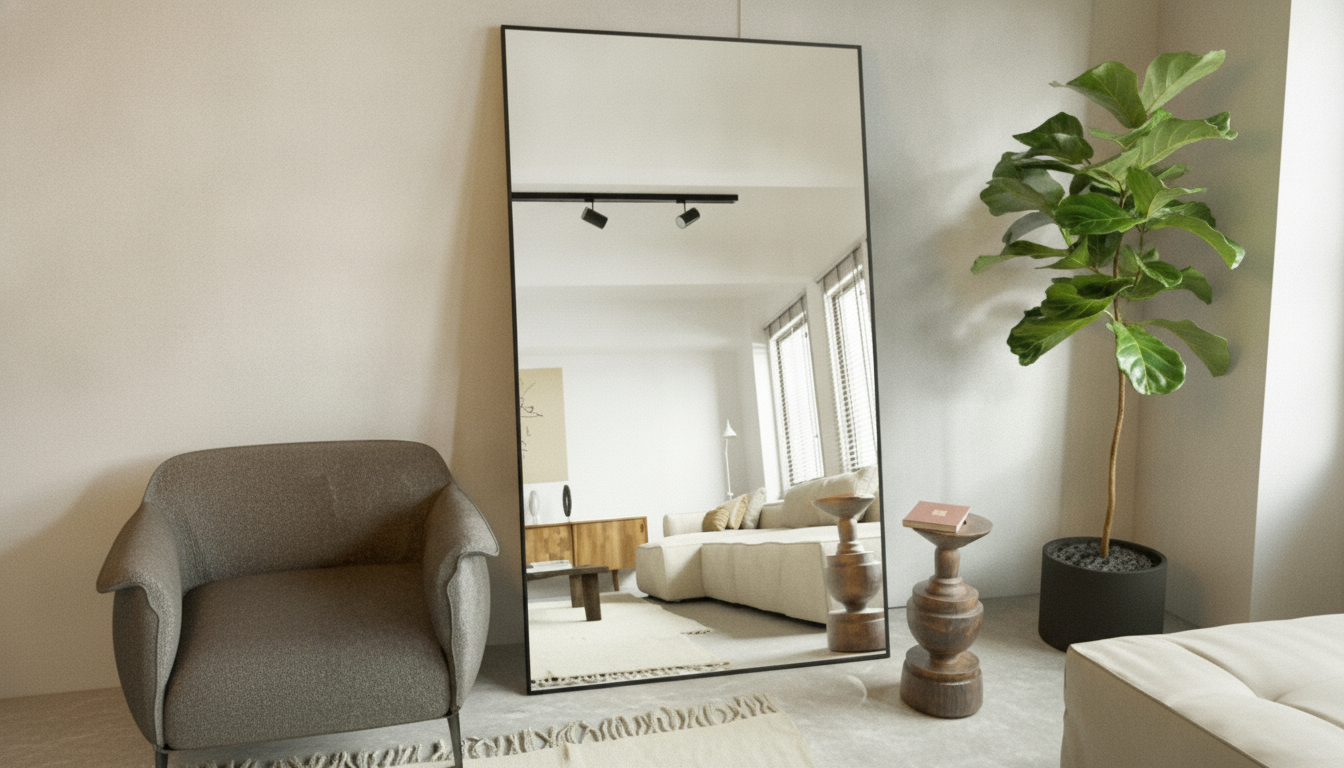
Full-Length Floor Mirror with Stand: Everyday Function, Room-Brightening Style
A full-length floor mirror with a stand adds instant utility to bedrooms, closets, and entryways—no drilling required. Beyond outfit checks, it can open up tight spaces, bounce light into darker corners, and serve as a simple design anchor when placed thoughtfully and used safely.
What a Full-Length Floor Mirror with Stand Adds to a Space
A freestanding full-length mirror earns its keep fast. It delivers a true head-to-toe view for getting dressed, checking fitness form, and smoothing out quick grooming routines without leaning over a vanity. Because it reflects depth and available daylight, it can make a room feel larger than its footprint suggests—especially in apartments or smaller bedrooms where wall space is limited.
Unlike wall-mounted mirrors, a floor mirror with a stand moves with you. Slide it closer to the closet during busy mornings, angle it toward a window in the afternoon, or relocate it when furniture layouts change. In minimal rooms, a tall mirror can also act as a visual focal point, balancing blank walls or taller pieces like wardrobes and bookcases.
Where to Place It (and Why It Works There)
Bedroom
Place the mirror near a window to amplify daylight, but avoid setting it directly opposite the brightest glare if the room gets harsh afternoon sun. A slightly offset angle tends to feel softer while still brightening the space.
Closet or dressing area
Position the mirror beside clothing storage so stepping back feels natural. When possible, keep a clear 2–3 feet of viewing distance in front; that space helps you see the full outfit without constantly readjusting the angle.
Entryway
Set the mirror along a side wall to prevent bottlenecks near door swings. It’s ideal for a last look before leaving—and it can make narrow entry corridors feel wider when it reflects light from nearby rooms.
Small apartments
Leaning-style placement can visually widen tight rooms, but it’s worth being intentional about what the mirror reflects. Aim it toward a window, artwork, or a clean wall rather than open storage or busy countertops for a calmer, more finished look.
Stand Styles and Stability Basics
Flooring matters more than most people expect. Rugs can add friction and prevent creeping on tile or laminate, while felt pads help protect hardwood and reduce drift during daily nudges. As a quick check, confirm the base sits fully flat and the top doesn’t tip forward when lightly bumped. For households with kids or pets, consider additional tip-over precautions; the U.S. Consumer Product Safety Commission offers practical guidance on anchoring tall household items at CPSC — Tip-Over Prevention (Anchor It!).
How to Choose the Right Size, Shape, and Frame Look
| Room/Use | Recommended approach | Placement tip |
|---|---|---|
| Compact bedroom | Slim profile + adjustable angle | Set slightly off the corner to avoid cramped reflections |
| Closet/dressing nook | Wider view if space allows | Keep a clear step-back zone in front |
| Entryway | Sturdy footprint and easy-to-clean surface | Place along a side wall, away from doors |
| Low-light room | Larger reflective surface | Aim toward a light source to bounce brightness |
Safety and Care for Everyday Use
For cleaning, a microfiber cloth is your best friend. Avoid abrasive pads that can scratch the reflective coating. Glass cleaner is generally fine, but spray it onto the cloth rather than along mirror edges to reduce seepage into frame joints; the Mayo Clinic’s household cleaner guidance is a helpful reference for safe use and ventilation: Mayo Clinic — Glass Cleaner Safety (Household cleaning basics). When moving the mirror, lift from the frame rather than pulling on the stand hinge, and avoid twisting pressure on corners.
Featured Pick: Full-Length Floor Mirror with Stand
If wall drilling isn’t ideal, a freestanding option keeps things flexible while still looking polished. The Full-Length Floor Mirror with Stand is a practical choice for bedrooms, closets, and entryways, and it can be repositioned easily as layouts change.
| Item | Price | Availability | Product page |
|---|---|---|---|
| Full-Length Floor Mirror with Stand | 222.97 USD | In stock | View |
Styling Ideas That Make It Look Intentional
To keep the mirror from feeling isolated, balance it with another tall element on the opposite side: a floor lamp, a plant, or a narrow shelving unit. For living spaces, pairing warm wood tones nearby can help the mirror feel grounded; consider anchoring the room with a statement piece like the Solid Wood Coffee Table with Storage Drawers while the mirror brightens and opens the perimeter.
If the mirror sits near a child’s space or play corner, a soft floor layer can make the area feel more welcoming and help dampen noise—something like the Earth Design Kids Rug can add color while keeping the overall look cohesive. Finally, aim the mirror at something worth doubling: a window, artwork, or a textured wall—not open storage or laundry piles.
FAQ
Can a freestanding full-length mirror be used on carpet?
Yes, but stability depends on the carpet pile. Check that the stand sits evenly; if the carpet is plush, placing a firmer mat under the base can reduce wobble and keep the mirror level.
How do you keep a floor mirror from tipping over?
Place it away from door swings and busy walkways, and confirm the stand is fully opened and stable. Anti-slip pads help on smooth floors, and anchoring straps are a strong option in homes with kids or pets.
What’s the best way to clean a full-length mirror without streaks?
Use a microfiber cloth and spray cleaner onto the cloth rather than the mirror edges. Wipe in an S-pattern, then finish with a dry pass to remove residue and prevent streaking.
Recommended for you

How to Clean an Ostrich Feather Lamp Without Damage
Jun 22, 2026










Leave a comment