-
Shop
- Adidas
- Advanced Technologies
- AI Skills Mastery 2026 Collection
- Best-Sellers
- Calvin Klein
- Car Accessories
- Confidence
- Dating & Social Skills
- Digital Resources
- AI & Technology
- AI Skills
- Beauty
- Budgeting & Saving
- Car Buying & Ownership
- Cozy Feast Collection
- Electronics & Technology
- Entrepreneurship & Business Growth
- Financial Education
- Financial Independence
- Financial Mindset & Psychology
- Goal Setting
- Hobbies
- Home Styling & Organization
- Kitchen & Recipes
- Leadership
- Mindset
- Online Business
- Parenting & Child Development
- Personal Style & Fashion
- Pet Lifestyle & Wellness
- Positive Thinking
- Sleep Improvement
- Stress Management & Relaxation
- Travel Planning
- Yoga & Fitness
- Yoga & Mind-Body Practices
- Education & Learning
- Family & Parenting
- Fashion
- Alexander McQueen
- Bags
- Bags & Wallets
- Balenciaga
- Belts
- Blazers
- Bottega Veneta
- Brunello Cucinelli
- Burberry
- Chanel
- Chloé
- Dior
- Dolce & Gabbana
- Dresses
- Etro
- Fendi
- Gucci
- Hats & Hair Accessories
- Hoodies & Sweatshirts
- Jacquemus
- Jewelry
- Jil Sander
- Keychains
- Kiton
- Luggage
- Miu Miu
- Off-White
- Prada
- Rick Owens
- Saint Laurent
- Socks & Tights
- Sweaters & Cardigans
- The Row
- Tom Ford
- Tops & Shirts
- Valentino
- Valentino Garavani
- Versace
- Vivienne Westwood
- Watches
- Furniture
- Gadgets
- Health & Beauty
- Health & Wellness
- Home & Garden
- Kids & Babies
- Kitchen
- Lighting
- Patio, Lawn & Garden
- Personal Growth
- Pet Care
- Pet Supplies
- Pets
- Shoes
- Smart Home Living Guides
- Sport & Outdoors
- Stress Relief & Relaxation
- TikTok Growth & Monetization Mastery
- Travel
- Travel & Adventure
- Wealth
- Wellness
- YouTube Shorts Best-Sellers
- Popular
- Best deals
Read Skincare Labels Fast: Ingredients, Actives, Fragrance

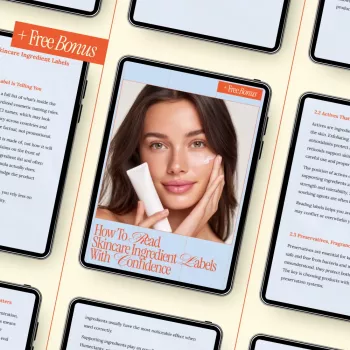
How to Read Skincare Ingredient Labels With Confidence
Skincare labels can look like a wall of unfamiliar words, but they follow clear rules. With a few fast checks—ingredient order, “active” vs. “inactive,” common names, and concentration clues—label reading becomes a reliable way to predict how a product will feel and perform for a specific skin need. For more guidance, see 10 Steps to Understanding Skincare Labels and Ingredients.
Start With the Big Picture: What the Label Can (and Can’t) Tell You
An ingredient list is a practical filter, not a full formula blueprint. It shows what’s inside and gives a rough sense of amounts because higher-listed ingredients are typically present in higher concentrations—especially near the top. What it usually does not reveal is the exact percentage of most cosmetic ingredients (with some important exceptions). For further reading, see Decoding Skincare Labels: A Guide to Understanding Active ….
Front-of-box language like “clean,” “natural,” or “dermatologist tested” isn’t a standardized guarantee of performance or gentleness. A quick scan of the INCI list (the standardized ingredient naming system) is a better way to verify whether a product matches your preferences and sensitivities.
Labels are also useful for avoiding routine conflicts—like layering multiple strong exfoliants—or for spotting common irritants and allergens. And don’t ignore packaging: unstable ingredients (such as certain forms of vitamin C) tend to hold up better in opaque, air-restrictive containers than in clear jars that are opened daily.
Know the Parts of a Skincare Label
Most skincare packaging includes a few consistent sections that work together:
- Product type and intended use: Cleanser, moisturizer, sunscreen, serum, spot treatment—this sets expectations for what the formula should prioritize.
- INCI ingredient list: The global naming standard for cosmetic ingredients. Learning a handful of common INCI names makes shopping much faster.
- Drug Facts (when applicable): In the U.S., sunscreens and some acne treatments list “active ingredients” separately with specific concentrations. The FDA sunscreen labeling overview explains why those actives are regulated differently.
- Directions and warnings: These often include frequency guidance, sun sensitivity notes (common with exfoliants/retinoids), and eye-area or age restrictions.
If you want a deeper reference for INCI naming conventions, the INCI overview from the Personal Care Products Council is a helpful starting point.
Ingredient Order: The Fastest Way to Read a Formula
In many regions, ingredients present above about 1% are generally listed in descending order. Below that threshold, ingredients may appear in any order, which is why the “bottom third” of a label can be less informative for estimating levels.
For quick decision-making, focus on the first 5–10 ingredients. This top section often determines the product’s texture (gel, cream, balm), finish (dewy, matte), and baseline function (hydrating, cleansing, occlusive). If a “star” ingredient is near the end, it might still contribute—especially if it’s potent—but it usually isn’t carrying the whole formula.
Also watch for “stacking”: long lists of similar botanical extracts at the end can look impressive without adding much impact compared to a few proven, well-placed ingredients.
Quick ingredient-order cues
| If you see… | Likely meaning | What to do next |
|---|---|---|
| Water/Aqua first + humectants early (Glycerin, Propanediol, Butylene Glycol) | Hydrating base | Check for occlusives/emollients if dryness is a concern |
| Multiple oils/butters in the top 10 (Squalane, Shea Butter, Jojoba Oil) | Richer, more emollient feel | If acne-prone, consider texture tolerance and patch test |
| Actives listed in Drug Facts (e.g., Benzoyl Peroxide %, Zinc Oxide %) | Regulated active with stated concentration | Compare % to tolerance and follow labeled directions |
| Fragrance/Parfum and essential oils mid-to-high on the list | Higher scent load | If sensitive/rosacea-prone, choose fragrance-free alternatives |
Identify the Functional “Families” (So You Don’t Get Lost in Latin Names)
Instead of trying to memorize everything, group ingredients by what they do:
- Humectants (hydrate): glycerin, hyaluronic acid/sodium hyaluronate, panthenol, urea. These pull water into the skin.
- Emollients (soften/smooth): squalane, fatty alcohols (cetyl/stearyl alcohol), triglycerides. These improve slip and a comfortable barrier feel.
- Occlusives (seal): petrolatum, dimethicone, beeswax. These reduce water loss and help when skin feels tight or over-exfoliated.
- Surfactants (cleanse): cocamidopropyl betaine, sodium cocoyl isethionate. “Mild” depends on the blend and concentration.
- Preservatives (safety): phenoxyethanol, sodium benzoate, potassium sorbate. For most water-based products, preservatives are necessary to prevent microbial growth.
Spot the Actives That Match Common Goals
Fragrance, Allergens, and Irritation Triggers: A Practical Screening Pass
A 60-Second Label-Reading Routine for Smart Shopping
A Simple Way to Build Your Personal “Safe List”
Helpful Resources From Our Store
- How to Read Skincare Ingredient Labels With Confidence | Easy Skincare Ingredients Guide eBook for Beginners & Smart Beauty Shoppers
- Elegant Casual Leather Tote Bag for Everyday Style
FAQ
Does the first ingredient mean it’s the main ingredient?
Usually, yes: ingredients above about 1% are commonly listed from highest to lowest, so the first few ingredients tend to make up most of the formula and drive texture and performance. Exact percentages typically aren’t shown for cosmetics, so the list is best used for relative comparison rather than precise amounts.
How can fragrance be listed if the product says it’s “unscented”?
“Unscented” can still include masking fragrance used to cover the smell of other ingredients. Scan the list for Fragrance/Parfum, essential oils, or aroma components like limonene and linalool; if you’re sensitive, choosing “fragrance-free” is usually the safer bet.
How do you tell if an active ingredient is strong enough to work?
If the product has Drug Facts (like sunscreen or certain acne treatments), the active percentage is listed, making strength easier to compare. For many cosmetic actives without disclosed percentages, look at where the active appears in the list, whether the formula includes supportive ingredients, and how the directions recommend using it; patch testing is a smart step for stronger actives.















Leave a comment