-
Shop
- Adidas
- Advanced Technologies
- AI Skills Mastery 2026 Collection
- Best-Sellers
- Calvin Klein
- Car Accessories
- Confidence
- Dating & Social Skills
- Digital Resources
- AI & Technology
- AI Skills
- Beauty
- Budgeting & Saving
- Car Buying & Ownership
- Cozy Feast Collection
- Electronics & Technology
- Entrepreneurship & Business Growth
- Financial Education
- Financial Independence
- Financial Mindset & Psychology
- Goal Setting
- Hobbies
- Home Styling & Organization
- Kitchen & Recipes
- Leadership
- Mindset
- Online Business
- Parenting & Child Development
- Personal Style & Fashion
- Pet Lifestyle & Wellness
- Positive Thinking
- Sleep Improvement
- Stress Management & Relaxation
- Travel Planning
- Yoga & Fitness
- Yoga & Mind-Body Practices
- Education & Learning
- Family & Parenting
- Fashion
- Alexander McQueen
- Bags
- Bags & Wallets
- Balenciaga
- Belts
- Blazers
- Bottega Veneta
- Brunello Cucinelli
- Burberry
- Chanel
- Chloé
- Dior
- Dolce & Gabbana
- Dresses
- Etro
- Fendi
- Gucci
- Hats & Hair Accessories
- Hoodies & Sweatshirts
- Jacquemus
- Jewelry
- Jil Sander
- Keychains
- Kiton
- Luggage
- Miu Miu
- Off-White
- Prada
- Rick Owens
- Saint Laurent
- Socks & Tights
- Sweaters & Cardigans
- The Row
- Tom Ford
- Tops & Shirts
- Valentino
- Valentino Garavani
- Versace
- Vivienne Westwood
- Watches
- Furniture
- Gadgets
- Health & Beauty
- Health & Wellness
- Home & Garden
- Kids & Babies
- Kitchen
- Lighting
- Patio, Lawn & Garden
- Personal Growth
- Pet Care
- Pet Supplies
- Pets
- Shoes
- Smart Home Living Guides
- Sport & Outdoors
- Stress Relief & Relaxation
- TikTok Growth & Monetization Mastery
- Travel
- Travel & Adventure
- Wealth
- Wellness
- YouTube Shorts Best-Sellers
- Popular
- Best deals
Minimalist Storage Made Simple: A Printable Checklist
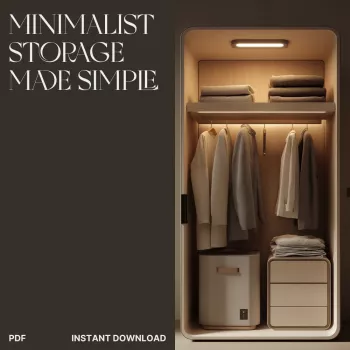
A calmer home starts with storage that fits the things you actually use. You don’t need matching containers or an empty shelf to make a space feel simpler. You need a clear idea of what belongs there and a practical place to put it.
Our printable checklist offers a straightforward way to make those decisions, organize essentials, and maintain a system that works in everyday life. Start small, use what you have, and give yourself room to adjust as your household’s needs change.
Start With What You Need
Choose one manageable area before you tackle an entire room. A kitchen drawer, bathroom shelf, or section of your desk can give you a useful starting point without scattering belongings throughout your home.
Take everything out of that area and sort items by purpose. You might gather writing supplies in one group, charging cords in another, and unrelated items in a third. As you sort, set aside anything that no longer serves your household. You can decide whether to donate, recycle, or dispose of those items once the space is organized.
Before putting anything back, decide what the space needs to do. A drawer beside the stove may be most useful for utensils you reach for while cooking, while occasional baking tools can live elsewhere. This decision comes before shopping for dividers: a container can hold a group of items, but it can’t determine whether those items belong in the drawer.
If you have usable items to pass along, the EPA’s donating guidance can help you consider options for keeping them in use.
Create a Simple Storage System
Once you know what belongs in the area, group similar items and give each group a consistent home. The aim is to make putting things away as natural as finding them. A small tray for keys or a single drawer for work supplies can be enough.
Place frequently used belongings within easy reach. Items you use less often can go on a higher shelf, toward the back of a cabinet, or in another less accessible spot. Keep categories distinct enough that you can find what you need without unpacking several unrelated things.
Reuse suitable containers you already own, such as a small box or a clean basket. If you need an organizer, measure the available space first, including the height of the items it will hold. Leave enough clearance for drawers to close and shelves to remain easy to use.
| Area | Group together | Practical storage approach |
|---|---|---|
| Kitchen | Everyday utensils | Keep near the main preparation area |
| Entryway | Keys and daily essentials | Give each item a designated spot |
| Bathroom | Regularly used toiletries | Keep accessible and separate from backups |
| Desk | Writing and work supplies | Store together in a drawer or container |
These examples are starting points, not rules. If you prepare food at a kitchen island, your most-used utensils may belong there rather than beside the stove. Choose locations based on where you naturally use and return things.
Put the Printable Checklist to Work
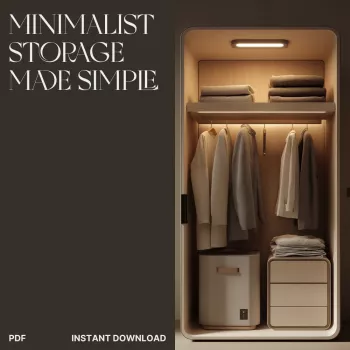
Our Minimalist Storage Made Simple printable checklist is a digital download guide for creating a minimalist home storage system. Priced at $5.99, it gives you a practical reference to keep nearby as you work through your home.
Use the checklist alongside a room-by-room organizing session. Pick one area, sort what is there, and decide where the remaining items will live before moving on. A checklist can help you stay focused when a small project turns up belongings that need attention elsewhere.
You can also adapt your routine to how you move through the day. For example, if you carry keys, a notebook, and other essentials between home and work, our Elegant Casual Leather Tote Bag for Everyday Style is an option for keeping those items together on the go. At home, assign the bag and its frequently removed contents a regular spot so they don’t collect on a counter.
Keep Your System Easy to Maintain
A useful system should be easy to reset, even on a busy day. Return items to their designated places after use, and avoid filling every container to capacity. A little open space makes it easier to put things away and accommodate the occasional extra item.
Plan short, regular resets instead of waiting for clutter to accumulate. You might clear the entryway once a week, return stray pens to your desk drawer, or check whether bathroom backups are still separate from everyday toiletries. A few minutes can keep a small disruption from becoming a larger project.
When a spot repeatedly becomes crowded or difficult to access, treat that as a cue to revisit it. A category may have outgrown its space, or its home may be too far from where you use it. Sort the contents again and adjust the location or container as needed. Our team recommends making the smallest change that solves the problem before adding more storage.
Keeping purchases intentional can also help a system last. The EPA’s guidance on reducing waste offers ideas for reusing what you have and making thoughtful choices about new items.
FAQ
How do I start organizing when I feel overwhelmed?
Begin with one small area, such as a drawer or shelf, and sort its contents by use. Give the items you keep a home before moving to the next space.
Do I need to buy new storage containers?
No. Sort your belongings and measure the space first, then reuse suitable containers or add storage only where you need it.
What is Minimalist Storage Made Simple?
It is a digital download guide with a printable checklist for creating a minimalist home storage system.
Recommended for you

AI Checklist for Dog-Friendly Beaches and Parks
Nov 15, 2026











Leave a comment