-
Shop
- Adidas
- Advanced Technologies
- AI Skills Mastery 2026 Collection
- Best-Sellers
- Calvin Klein
- Car Accessories
- Confidence
- Dating & Social Skills
- Digital Resources
- AI & Technology
- AI Skills
- Beauty
- Budgeting & Saving
- Car Buying & Ownership
- Cozy Feast Collection
- Electronics & Technology
- Entrepreneurship & Business Growth
- Financial Education
- Financial Independence
- Financial Mindset & Psychology
- Goal Setting
- Hobbies
- Home Styling & Organization
- Kitchen & Recipes
- Leadership
- Mindset
- Online Business
- Parenting & Child Development
- Personal Style & Fashion
- Pet Lifestyle & Wellness
- Positive Thinking
- Sleep Improvement
- Stress Management & Relaxation
- Travel Planning
- Yoga & Fitness
- Yoga & Mind-Body Practices
- Education & Learning
- Family & Parenting
- Fashion
- Alexander McQueen
- Bags
- Bags & Wallets
- Balenciaga
- Belts
- Blazers
- Bottega Veneta
- Brunello Cucinelli
- Burberry
- Chanel
- Chloé
- Dior
- Dolce & Gabbana
- Dresses
- Etro
- Fendi
- Gucci
- Hats & Hair Accessories
- Hoodies & Sweatshirts
- Jacquemus
- Jewelry
- Jil Sander
- Keychains
- Kiton
- Luggage
- Miu Miu
- Off-White
- Prada
- Rick Owens
- Saint Laurent
- Socks & Tights
- Sweaters & Cardigans
- The Row
- Tom Ford
- Tops & Shirts
- Valentino
- Valentino Garavani
- Versace
- Vivienne Westwood
- Watches
- Furniture
- Gadgets
- Health & Beauty
- Health & Wellness
- Home & Garden
- Kids & Babies
- Kitchen
- Lighting
- Patio, Lawn & Garden
- Personal Growth
- Pet Care
- Pet Supplies
- Pets
- Shoes
- Smart Home Living Guides
- Sport & Outdoors
- Stress Relief & Relaxation
- TikTok Growth & Monetization Mastery
- Travel
- Travel & Adventure
- Wealth
- Wellness
- YouTube Shorts Best-Sellers
- Popular
- Best deals
Silicone Teether Glove Guide: Fit, Safety & Cleaning
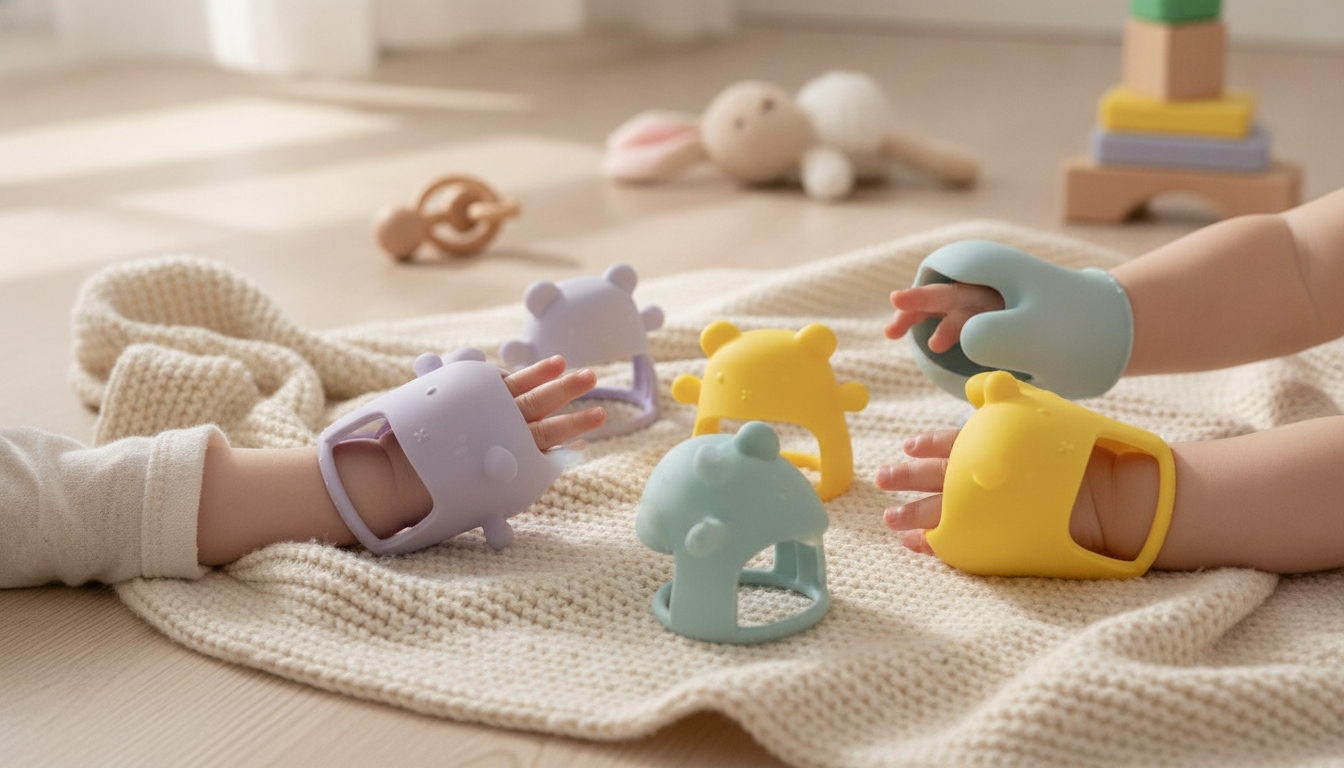
Teething can make feeding, naps, and playtime harder for babies and caregivers alike. A teether glove is designed to stay on little hands so babies can self-soothe by chewing, reducing drops and keeping comfort close during those fussy stages.
What a Teether Glove Does
A teether glove combines a soft, wearable mitt with a chewable surface so babies can bring relief to their own gums. Instead of constantly chasing a dropped teether, caregivers can use the glove as a simple “stay-put” option during the day.
- Creates a chewable surface that helps massage tender gums during teething periods.
- Stays on the baby’s hand to reduce throwing, dropping, and constant pickup/cleaning cycles.
- Encourages self-soothing and hand-to-mouth coordination that naturally increases as babies grow.
- Can act as a distraction during short fussy windows (car seat, stroller, diaper changes).
Teething symptoms vary by child, but reputable guidance notes that drooling, gum tenderness, and extra chewing are common; if symptoms feel severe or unusual, it’s worth checking in with a pediatrician. Helpful background reading is available from the American Academy of Pediatrics.
Why Silicone Is a Popular Choice for Teethers
Silicone is a go-to material for many baby products because it holds up to frequent use and offers a consistent, satisfying bite. For babies who ignore fabric-only mitts, silicone can provide a firmer chewing surface while still feeling gentle on gums.
- Silicone is commonly used for baby feeding and soothing items because it is durable and can provide a firm-but-gentle chewing surface.
- Helps deliver consistent pressure to gums, which some babies find more satisfying than fabric-only mitts.
- Typically easy to rinse and wipe clean between deeper washes (always follow the specific care directions for the item).
- Often designed with textured areas to vary sensation across different parts of the gumline.
For general teething tips (including soothing ideas beyond teethers), the NHS teething guide offers practical, caregiver-friendly pointers.
Features to Look For in a Teether Glove
Not all teether gloves feel the same in daily use. Comfort, fit, and easy upkeep tend to matter just as much as the chewing texture—especially when the glove is used during errands, transitions, and busy parts of the day.
- Secure closure: A gentle adjustable strap helps keep the glove on without feeling tight.
- Textured chewing side: Raised bumps or ridges can help massage gums and keep baby engaged.
- Breathable fabric backing: Helps reduce sweaty hands and improves comfort for longer wear.
- Quiet design: Softer fabrics and less crinkly materials can be helpful for naps and calmer moments.
- Easy cleaning: Look for materials and construction that tolerate frequent washing without losing shape.
Quick checklist for evaluating a teether glove
| Feature | Why it matters | What to check before use |
|---|---|---|
| Closure/strap | Reduces dropping and keeps the glove properly positioned | Two-finger snug test; no red marks after short wear |
| Chewing texture | Adds gum-massaging variety and improves soothing | Textured area is intact; no sharp edges or peeling |
| Sizing/fit | Comfort and safety depend on a stable fit | Glove stays on during play but doesn’t restrict movement |
| Cleaning method | Teethers need frequent cleaning due to saliva and floor contact | Care label is clear; materials withstand repeated washes |
| Construction quality | Prevents fraying, loose seams, or detachments over time | Seams are tight; no loose threads; silicone part feels secure |
Safe Use: Practical Tips for Everyday Teething
A teether glove is meant to make daytime soothing easier, but safe routines still matter. A few small habits—like quick inspections and supervised use—help keep the experience comfortable and low-stress.
- Adult supervision: Use during awake time and remove for sleep unless a pediatrician explicitly advises otherwise.
- Inspect frequently: Check for tears, loose stitching, cracking, or any part that looks like it could detach.
- Keep it clean: Wash after drops on public surfaces and after illness; saliva buildup can trap lint and debris.
- Rotate soothing methods: Pair the glove with other comfort measures (cool washcloth, gentle gum massage) to reduce overreliance on one tool.
- Watch for frustration signals: If the glove seems to annoy the baby, try shorter sessions or a different texture/soothing option.
Cleaning and Care Routine
For broader hygiene guidance on baby items, the CDC’s cleaning and sanitizing recommendations can help you shape a routine that fits real-life caregiving.
When a Teether Glove Is Most Helpful
Product Spotlight: Silicone Baby Teether Glove
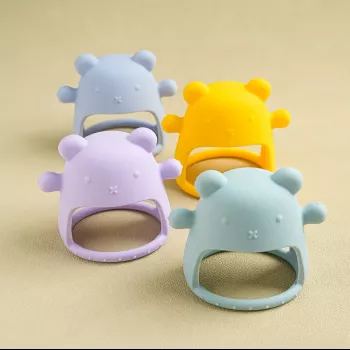
The Silicone Baby Teether Glove is designed to give babies a chewable silicone surface while keeping the teether on the hand for easier self-soothing. It’s a budget-friendly helper that can also work well as a backup in a diaper bag or stroller caddy—ready when teething discomfort pops up unexpectedly.
For caregivers who want a roomy carry option for baby essentials, the Elegant Casual Leather Tote Bag for Everyday Style can double as an everyday tote that fits wipes, spare pacifiers, and a clean pouch for teethers during errands.
FAQ
What age can a baby use a teether glove?
Many babies start teething around 4–7 months, and a teether glove can be useful once your baby is consistently bringing hands to mouth and can tolerate wearing the glove during supervised awake time. Always check the specific product guidance, and ask your pediatrician if your baby was premature or has special medical considerations.
Can a baby sleep with a teether glove on?
No—remove teether gloves for sleep because they’re intended for supervised awake use. For bedtime, focus on calming routines like a cool washcloth before the sleep space, gentle gum massage, and comfort measures recommended by your pediatrician.
How often should a teether glove be cleaned?
Wipe or rinse the silicone surface daily (and anytime after meals), wash regularly according to the care label, and clean immediately after illness or if it drops on public surfaces. Let it dry completely before storing to help prevent odors and material wear.
Recommended for you

Purposeful Goal Setting with Kaizen and Ikigai
Jul 27, 2026













Leave a comment