-
Shop
- Adidas
- Advanced Technologies
- AI Skills Mastery 2026 Collection
- Best-Sellers
- Calvin Klein
- Car Accessories
- Confidence
- Dating & Social Skills
- Digital Resources
- AI & Technology
- AI Skills
- Beauty
- Budgeting & Saving
- Car Buying & Ownership
- Cozy Feast Collection
- Electronics & Technology
- Entrepreneurship & Business Growth
- Financial Education
- Financial Independence
- Financial Mindset & Psychology
- Goal Setting
- Hobbies
- Home Styling & Organization
- Kitchen & Recipes
- Leadership
- Mindset
- Online Business
- Parenting & Child Development
- Personal Style & Fashion
- Pet Lifestyle & Wellness
- Positive Thinking
- Sleep Improvement
- Stress Management & Relaxation
- Travel Planning
- Yoga & Fitness
- Yoga & Mind-Body Practices
- Education & Learning
- Family & Parenting
- Fashion
- Alexander McQueen
- Bags
- Bags & Wallets
- Balenciaga
- Belts
- Blazers
- Bottega Veneta
- Brunello Cucinelli
- Burberry
- Chanel
- Chloé
- Dior
- Dolce & Gabbana
- Dresses
- Etro
- Fendi
- Gucci
- Hats & Hair Accessories
- Hoodies & Sweatshirts
- Jacquemus
- Jewelry
- Jil Sander
- Keychains
- Kiton
- Luggage
- Miu Miu
- Off-White
- Prada
- Rick Owens
- Saint Laurent
- Socks & Tights
- Sweaters & Cardigans
- The Row
- Tom Ford
- Tops & Shirts
- Valentino
- Valentino Garavani
- Versace
- Vivienne Westwood
- Watches
- Furniture
- Gadgets
- Health & Beauty
- Health & Wellness
- Home & Garden
- Kids & Babies
- Kitchen
- Lighting
- Patio, Lawn & Garden
- Personal Growth
- Pet Care
- Pet Supplies
- Pets
- Shoes
- Smart Home Living Guides
- Sport & Outdoors
- Stress Relief & Relaxation
- TikTok Growth & Monetization Mastery
- Travel
- Travel & Adventure
- Wealth
- Wellness
- YouTube Shorts Best-Sellers
- Popular
- Best deals
Global Etiquette Guide for Smarter Travel

Preparing for an international trip involves more than checking your passport and making reservations. Everyday moments—greeting a host, ordering a meal, or visiting a cultural site—can feel easier when you have spent some time learning about local expectations.
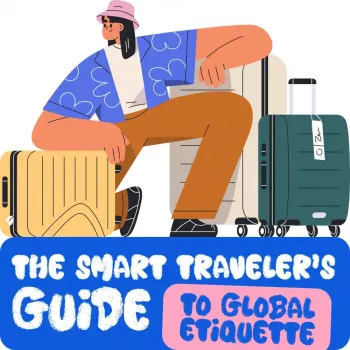
Our digital guide, The Smart Traveler’s Guide to Global Etiquette, is a travel-planning companion for anyone interested in cultural tips, travel etiquette, and international manners. It is not a shortcut to mastering every custom. Instead, we encourage you to travel with curiosity, pay attention to context, and approach unfamiliar situations with respect.
Why Etiquette Matters When You Travel
Knowing a little about local customs can help you navigate everyday interactions with greater confidence. Understanding how people commonly greet one another or what is expected at a shared meal can also show that you have made an effort to be considerate.
Etiquette is not a universal set of rules, though. Practices can differ between regions, communities, and individual households. A gesture that feels natural at home may have another meaning elsewhere, while a custom you read about may not apply in every setting.
When you are unsure, observe the people around you and ask a polite question when appropriate. If you make a mistake, a sincere apology and a willingness to adjust can go a long way.
Meet The Smart Traveler’s Guide to Global Etiquette
The Smart Traveler’s Guide to Global Etiquette is a digital download eBook focused on cultural tips, travel etiquette, and international manners. You can use it as part of your preparation alongside information specific to your destination.
The guide is listed at $43.99. Visit the product page for current pricing and purchase details. Because it is a digital guide, it may appeal to you if you prefer to keep your travel-planning reading in an electronic form rather than add another physical book to your packing list.
Our team recommends treating general etiquette guidance as a starting point. Before you leave, take time to learn about the places and situations you expect to encounter, from a restaurant reservation to a visit with local hosts.
Make Cultural Awareness Part of Your Trip Planning
A little research before departure can help you identify questions to ask and decisions to make. Look into greetings, dining customs, dress expectations, and local laws. Then consider how those details might affect your itinerary: a place of worship may have visitor requirements, for example, or a meal with hosts may call for different behavior than a casual café visit.
Use this checklist to organize your own research. It is a practical planning tool, not a list of the eBook’s contents.
A Pre-Trip Etiquette Checklist
| Situation | What to Check | Respectful Approach |
|---|---|---|
| Greetings | Common forms of address and greetings | Follow the lead of local hosts |
| Dining | Table customs and tipping practices | Observe before acting and ask politely when unsure |
| Religious or cultural sites | Dress and visitor requirements | Follow posted guidance and treat the space with care |
| Photography | Local rules and expectations around consent | Ask permission before photographing people |
For greetings, consider whether a formal title is appropriate when meeting someone for the first time. At a meal, notice how your hosts begin eating and whether shared dishes are handled in a particular way. If tipping practices are unfamiliar, look for reliable local guidance rather than assuming your usual approach applies.
For cultural sites, check visitor information before choosing what to wear or bringing a camera. Rules may differ from one site to another, and permission to enter does not necessarily mean permission to photograph. When taking pictures of people, ask first and respect a refusal.
Who Might Enjoy a Digital Etiquette Guide?
If this is your first international trip, an etiquette guide can prompt you to consider details that might otherwise get lost among flights, lodging, and sightseeing plans. It can also help you prepare questions for a host or tour provider before you arrive.
If you travel often, you may still find it useful to pause before visiting an unfamiliar destination. Previous experience is valuable, but customs can vary by region, setting, and person. Staying observant lets you respond to the situation in front of you instead of relying on assumptions from another trip.
For everyday outings, you may also want a bag that suits the way you carry your essentials. Our Elegant Casual Leather Tote Bag for Everyday Style is another option to explore. Consider what you plan to carry and the needs of your itinerary when choosing a bag.
Travel With Curiosity and Respect
Pair general etiquette preparation with current official advice. The U.S. Department of State’s international travel resources and UK foreign travel advice can help you find destination-specific information before you leave. Review relevant local laws and entry requirements as well as practical guidance for your plans.
Once you arrive, stay attentive to signs, instructions, and the people around you. You do not need to know everything to be a considerate guest; being willing to listen and adapt matters. Before your next trip, explore our global etiquette guide and make cultural awareness part of your preparation.
FAQ
Is The Smart Traveler’s Guide to Global Etiquette a physical book?
No. It is listed as a digital download eBook.
Can one etiquette guide cover every local custom?
No. Customs vary by region, setting, and person, so supplement general guidance with current destination-specific information and observe local context.
How much does the guide cost?
The listed price is $43.99. Check the product page for current pricing.
Recommended for you


TikTok Hooks: Grab Attention in the First Seconds
Nov 17, 2026













Leave a comment