-
Shop
- Adidas
- Advanced Technologies
- AI Skills Mastery 2026 Collection
- Best-Sellers
- Calvin Klein
- Car Accessories
- Confidence
- Dating & Social Skills
- Digital Resources
- AI & Technology
- AI Skills
- Beauty
- Budgeting & Saving
- Car Buying & Ownership
- Cozy Feast Collection
- Electronics & Technology
- Entrepreneurship & Business Growth
- Financial Education
- Financial Independence
- Financial Mindset & Psychology
- Goal Setting
- Hobbies
- Home Styling & Organization
- Kitchen & Recipes
- Leadership
- Mindset
- Online Business
- Parenting & Child Development
- Personal Style & Fashion
- Pet Lifestyle & Wellness
- Positive Thinking
- Sleep Improvement
- Stress Management & Relaxation
- Travel Planning
- Yoga & Fitness
- Yoga & Mind-Body Practices
- Education & Learning
- Family & Parenting
- Fashion
- Alexander McQueen
- Bags
- Bags & Wallets
- Balenciaga
- Belts
- Blazers
- Bottega Veneta
- Brunello Cucinelli
- Burberry
- Chanel
- Chloé
- Dior
- Dolce & Gabbana
- Dresses
- Etro
- Fendi
- Gucci
- Hats & Hair Accessories
- Hoodies & Sweatshirts
- Jacquemus
- Jewelry
- Jil Sander
- Keychains
- Kiton
- Luggage
- Miu Miu
- Off-White
- Prada
- Rick Owens
- Saint Laurent
- Socks & Tights
- Sweaters & Cardigans
- The Row
- Tom Ford
- Tops & Shirts
- Valentino
- Valentino Garavani
- Versace
- Vivienne Westwood
- Watches
- Furniture
- Gadgets
- Health & Beauty
- Health & Wellness
- Home & Garden
- Kids & Babies
- Kitchen
- Lighting
- Patio, Lawn & Garden
- Personal Growth
- Pet Care
- Pet Supplies
- Pets
- Shoes
- Smart Home Living Guides
- Sport & Outdoors
- Stress Relief & Relaxation
- TikTok Growth & Monetization Mastery
- Travel
- Travel & Adventure
- Wealth
- Wellness
- YouTube Shorts Best-Sellers
- Popular
- Best deals
Stay Motivated on Low Energy: Simple Focus Moves

Fuel Your Focus: Staying Motivated When Energy Is Low
Low energy can make even simple tasks feel heavy, but motivation doesn’t have to disappear with it. When the goal is to stay on track without relying on willpower, the most effective approach is to reduce friction, shrink the task, and choose the right kind of effort for the moment. With a few small, repeatable moves, focus can return in reliable steps—without forcing a “high-performance day” out of a low-fuel body.
Why motivation drops when energy is low
Motivation and energy move together because fatigue changes how effort feels. When you’re tired, the brain labels even normal tasks as “expensive,” so starting feels harder than it logically should.
- Fatigue inflates effort cost: the same task can feel twice as difficult when alertness is down.
- Decision overload drains you faster: too many choices (where to start, what to prioritize, how to do it) can stall action.
- All-or-nothing thinking increases resistance: “If it can’t be perfect, it’s not worth starting” blocks small wins that build momentum.
- Stress can mimic low energy: it narrows attention, reduces working memory, and increases avoidance behaviors. For practical stress fundamentals, see the American Psychological Association’s guidance on stress.
The low-energy focus rule: match the task to the fuel
When energy is low, the winning strategy is not “do more.” It’s “do the smallest meaningful version” so your brain gets proof that progress is possible today.
- Pick a minimum viable step: choose the smallest action that moves the task forward (even slightly).
- Prioritize by energy demand, not importance alone: high-impact work can often be split into low-effort components (outline first, polish later).
- Use short time boxes: 5–15 minutes lowers dread and makes starting feel safe.
- Choose consistency over intensity: repeated small actions compound into real progress.
Low-Energy Focus Menu (Pick One)
| Energy level | What to do | Examples | Stop when |
|---|---|---|---|
| Very low | Stabilize and reduce friction | Drink water, eat something simple, open the document/app, write one sentence | Body feels calmer or one tiny step is complete |
| Low | Do a short “setup” sprint | Gather materials, outline 3 bullet points, schedule the next step, reply to one email | 10 minutes are up |
| Medium | Progress sprint | Draft a section, complete one key task, batch a small set of admin actions | Task reaches a clear checkpoint |
| High | Deep work block | 45–90 minutes focused work with breaks, high-cognitive tasks first | Focus drops or the block ends |
Quick resets that protect focus (without a full routine overhaul)
When motivation is missing, it’s often because the body is under-fueled, under-hydrated, overstimulated, or stuck in a stress loop. Quick resets don’t solve everything, but they can restore enough capacity to take a first step.
- Hydration + a small snack: reduce “false fatigue” caused by dehydration or low blood sugar.
- Light movement (2–5 minutes): a short walk around the room, gentle stretches, or a few flights of stairs can raise alertness. The CDC’s physical activity basics explain why even small movement bouts matter.
- Bright light or a step outside: daylight can nudge circadian alertness, especially during afternoon slumps. The NIH overview of sleep and circadian rhythms is a helpful reference.
- 60-second brain dump: list everything pulling attention, then circle one next action you can do right now.
Make starting easier: reduce friction in the environment
Low energy demands “easy mode” environments. The goal is to make the next action obvious and remove the triggers that yank your attention away before you begin.
- Create ready states: keep the current project open, tools visible, and the next step written in plain language.
- Remove high-distraction triggers for one work window: notifications off, phone in another room, and a single-tab rule.
- Use templates and checklists: avoid re-deciding the same steps when you’re tired.
- Build a low-energy workspace option: comfortable chair, water nearby, minimal clutter, and a single “task card” (one action only).
If your focus improves with better lighting, a statement piece that increases brightness and makes the space feel “finished” can help you return to your desk more willingly. A decorative option like the Heart Shaped Crystal Ceiling Light can support a more inviting work area when your motivation needs environmental support.
Micro-momentum tactics for days that feel heavy
To make “mobile progress” easier—especially for students, caregivers, or commuters—carry only what you need for the next action. A roomy everyday carry option like the Elegant Casual Leather Tote Bag for Everyday Style can help keep essentials together so you spend less energy searching and more energy starting.
When low energy keeps coming back: build a sustainable plan
A structured guide for low-energy days
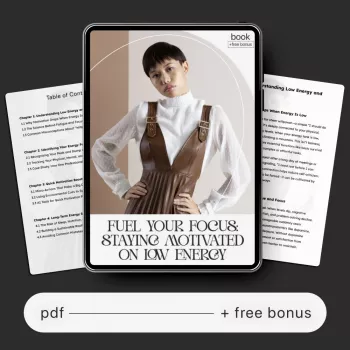
Some days, choosing the right strategy is the hardest part. Fuel Your Focus: Staying Motivated on Low Energy (Digital eBook) is designed as a pick-and-choose toolkit for turning low-energy moments into manageable action steps—especially when big plans feel out of reach.
Simple way to use the strategies day-to-day
FAQ
How can motivation be maintained when energy is low?
Match the task size to your current energy, use a short time box, and define a minimum viable step (like opening the file and writing one sentence). Reducing friction in your environment makes that first step far more likely to happen.
What should be done when focus is impossible due to fatigue?
Try a quick reset—water, a small snack, a minute of daylight, or gentle movement—then switch to a low-cognitive task and stop at a small checkpoint. If your body still feels depleted, prioritize recovery so tomorrow isn’t harder.
Is it better to rest or push through when energy is low?
If basic needs are unmet (sleep, food, hydration) or symptoms feel strong, rest first. Otherwise, try a two-minute bridge, reassess, and continue only if your focus improves.















Leave a comment