-
Shop
- Adidas
- Advanced Technologies
- AI Skills Mastery 2026 Collection
- Best-Sellers
- Calvin Klein
- Car Accessories
- Confidence
- Dating & Social Skills
- Digital Resources
- AI & Technology
- AI Skills
- Beauty
- Budgeting & Saving
- Car Buying & Ownership
- Cozy Feast Collection
- Electronics & Technology
- Entrepreneurship & Business Growth
- Financial Education
- Financial Independence
- Financial Mindset & Psychology
- Goal Setting
- Hobbies
- Home Styling & Organization
- Kitchen & Recipes
- Leadership
- Mindset
- Online Business
- Parenting & Child Development
- Personal Style & Fashion
- Pet Lifestyle & Wellness
- Positive Thinking
- Sleep Improvement
- Stress Management & Relaxation
- Travel Planning
- Yoga & Fitness
- Yoga & Mind-Body Practices
- Education & Learning
- Family & Parenting
- Fashion
- Alexander McQueen
- Bags
- Bags & Wallets
- Balenciaga
- Belts
- Blazers
- Bottega Veneta
- Brunello Cucinelli
- Burberry
- Chanel
- Chloé
- Dior
- Dolce & Gabbana
- Dresses
- Etro
- Fendi
- Gucci
- Hats & Hair Accessories
- Hoodies & Sweatshirts
- Jacquemus
- Jewelry
- Jil Sander
- Keychains
- Kiton
- Luggage
- Miu Miu
- Off-White
- Prada
- Rick Owens
- Saint Laurent
- Socks & Tights
- Sweaters & Cardigans
- The Row
- Tom Ford
- Tops & Shirts
- Valentino
- Valentino Garavani
- Versace
- Vivienne Westwood
- Watches
- Furniture
- Gadgets
- Health & Beauty
- Health & Wellness
- Home & Garden
- Kids & Babies
- Kitchen
- Lighting
- Patio, Lawn & Garden
- Personal Growth
- Pet Care
- Pet Supplies
- Pets
- Shoes
- Smart Home Living Guides
- Sport & Outdoors
- Stress Relief & Relaxation
- TikTok Growth & Monetization Mastery
- Travel
- Travel & Adventure
- Wealth
- Wellness
- YouTube Shorts Best-Sellers
- Popular
- Best deals
11-Pot Multi-Tier Plant Stand to Save Indoor Floor Space
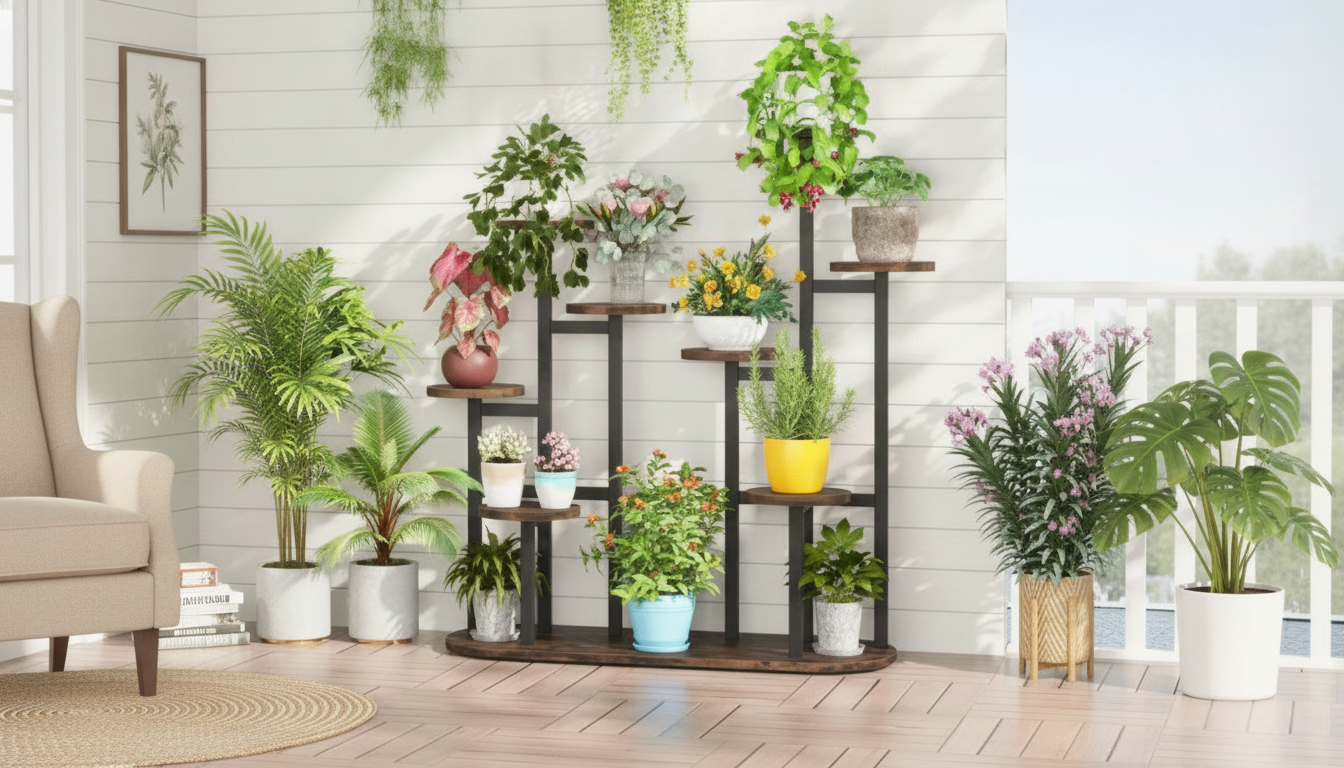
Multi-Tiered Plant Stand for a Fuller Indoor Garden—Without Taking Over Your Floor
A tall, multi-level plant stand makes it easier to grow a fuller indoor collection without sacrificing floor space. With a mix of metal structure and wood-style shelves, this 11-pot rack is designed to organize plants by height, light needs, and watering routines while keeping a clean, furniture-like look in living rooms, bedrooms, entryways, and bright corners.
If you’re aiming for an intentional “green corner” rather than a scatter of pots on windowsills, a vertical plant shelf helps your plants (and your room) feel more put together—while staying practical for daily care.
What this plant stand adds to an indoor space
- Creates vertical display space for multiple pots while keeping a small footprint on the floor.
- Helps separate plants by height so leaves get less overlap and better airflow.
- Turns a blank corner into a focal point for greenery, planters, and small decor accents.
- Reduces clutter on windowsills and side tables by consolidating pots into one organized shelf.
Because plants are elevated and staggered, it’s easier to enjoy variety—upright foliage, trailing vines, and small blooms—without the “crowded jungle” effect that can happen when pots all sit at the same height.
Design highlights: tall frame with metal support and wood-style tiers
- Tall, tiered layout supports an 11-pot arrangement for mixed plant sizes.
- Metal frame improves stability and keeps the rack rigid when moved carefully for cleaning or light changes.
- Wood-style shelves add warmth and blend easily with modern, rustic, or Scandinavian-style interiors.
- Open-tier structure makes it easier to spot dry soil, catch dropped leaves, and rotate plants for even growth.
The mixed-material look reads more like a piece of furniture than a utilitarian greenhouse rack, which is ideal for apartments, shared living rooms, and multipurpose spaces where plants need to “fit in” with the rest of the decor.
Where it works best (room-by-room placement ideas)
- Living room: place near a bright window to create a green “plant wall” effect without hanging hardware.
- Bedroom: use as a vertical accent in a corner; keep strongly scented blooms away from sleep areas if sensitive.
- Home office: position behind or beside a desk to soften the background and keep plants out of the work zone.
- Entryway: use for hardy plants that tolerate brief drafts; keep the lowest shelf easy to clean if shoes track in debris.
- Balcony or enclosed sunroom: ideal for grouped watering and easy plant rotation; avoid direct weather exposure unless protected.
For most houseplants, bright indirect light is the sweet spot. If you’re dialing in placement and care basics, the Royal Horticultural Society’s houseplant guides and the University of Minnesota Extension’s indoor plant advice are reliable references.
Choosing pots and plants for an 11-tier layout
- Match pot size to shelf space: keep heavier, wider pots on lower tiers to lower the center of gravity.
- Group by watering needs: place thirsty plants together so care routines stay consistent across tiers.
- Plan for light: sun-loving plants on upper tiers; medium-light plants in the middle; shade-tolerant plants below.
- Avoid drip conflicts: use saucers or cachepots to protect shelves and prevent runoff onto plants below.
- Balance the silhouette: mix trailing plants (pothos, philodendron) with upright types (snake plant, dracaena) for a layered look.
Example tier plan for an 11-pot indoor stand
| Tier position | Best for | Notes |
|---|---|---|
| Top tiers | Small, bright-light plants | Rotate weekly to keep growth even; avoid top-heavy pots. |
| Middle tiers | Medium-light foliage plants | Great for pothos, peperomia, fittonia; keep saucers consistent. |
| Lower tiers | Heavier pots and low-light tolerant plants | Use for snake plant, ZZ plant, larger soil volumes; easier to steady the stand. |
Care, safety, and daily use tips
- Stability first: place on a level surface; keep the heaviest pots on the lowest shelves.
- Watering routine: water at a sink or use a tray system to prevent runoff; wipe shelves dry after spills.
- Protect floors: add felt pads under the base if placing on hardwood or tile.
- Light management: rotate the entire arrangement rather than individual pots when possible to keep spacing consistent.
- Child and pet considerations: keep toxic plants out of reach; avoid trailing vines at face level in narrow walkways.
Set-up checklist for a neat, balanced display
Product snapshot
- Product: Multi-Tiered Plant Stand – 11 Pot Indoor Flower Shelf, Tall Metal & Wood Rack
- Best for: apartment corners, living rooms, offices, and plant collectors who want vertical organization.
- Look and feel: a mixed-material rack that reads more like furniture than a utility stand.
- Availability: in stock.
Complete the corner: a few complementary pieces
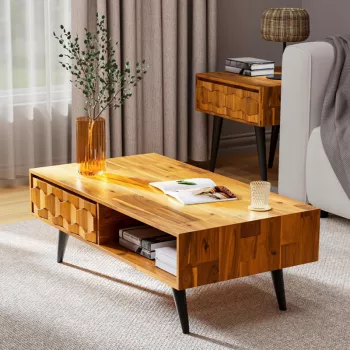
- Solid Wood Coffee Table with Storage Drawers for a warm, substantial anchor in the living room (plus hidden storage for care tools).
- Earth Design Kids Rug for a softer landing zone in family spaces—helpful near plant corners that double as reading or play areas.
FAQ
How many plants can this stand hold comfortably?
It’s designed for up to 11 pots, but comfort depends on pot diameter, leaf spread, and whether you use saucers. For the easiest fit, keep smaller pots on upper tiers and reserve wider, heavier pots for the bottom.
Will watering one shelf drip onto the plants below?
It can if pots drain freely. Use saucers or cachepots, or water plants at a sink and return them once dripping stops; wiping shelves after spills helps protect the finish.
Where should a tall plant shelf be placed for best growth?
Near a bright window with indirect light works well for most houseplants. Place higher-light plants on the top tiers, keep medium-light plants in the middle, and rotate the stand or pots weekly for even exposure.
Recommended for you
90-Day Goal Checklist: Set Clear Milestones Fast
Jun 25, 2026









Leave a comment