-
Shop
- Adidas
- Advanced Technologies
- AI Skills Mastery 2026 Collection
- Best-Sellers
- Calvin Klein
- Car Accessories
- Confidence
- Dating & Social Skills
- Digital Resources
- AI & Technology
- AI Skills
- Beauty
- Budgeting & Saving
- Car Buying & Ownership
- Cozy Feast Collection
- Electronics & Technology
- Entrepreneurship & Business Growth
- Financial Education
- Financial Independence
- Financial Mindset & Psychology
- Goal Setting
- Hobbies
- Home Styling & Organization
- Kitchen & Recipes
- Leadership
- Mindset
- Online Business
- Parenting & Child Development
- Personal Style & Fashion
- Pet Lifestyle & Wellness
- Positive Thinking
- Sleep Improvement
- Stress Management & Relaxation
- Travel Planning
- Yoga & Fitness
- Yoga & Mind-Body Practices
- Education & Learning
- Family & Parenting
- Fashion
- Alexander McQueen
- Bags
- Bags & Wallets
- Balenciaga
- Belts
- Blazers
- Bottega Veneta
- Brunello Cucinelli
- Burberry
- Chanel
- Chloé
- Dior
- Dolce & Gabbana
- Dresses
- Etro
- Fendi
- Gucci
- Hats & Hair Accessories
- Hoodies & Sweatshirts
- Jacquemus
- Jewelry
- Jil Sander
- Keychains
- Kiton
- Luggage
- Miu Miu
- Off-White
- Prada
- Rick Owens
- Saint Laurent
- Socks & Tights
- Sweaters & Cardigans
- The Row
- Tom Ford
- Tops & Shirts
- Valentino
- Valentino Garavani
- Versace
- Vivienne Westwood
- Watches
- Furniture
- Gadgets
- Health & Beauty
- Health & Wellness
- Home & Garden
- Kids & Babies
- Kitchen
- Lighting
- Patio, Lawn & Garden
- Personal Growth
- Pet Care
- Pet Supplies
- Pets
- Shoes
- Smart Home Living Guides
- Sport & Outdoors
- Stress Relief & Relaxation
- TikTok Growth & Monetization Mastery
- Travel
- Travel & Adventure
- Wealth
- Wellness
- YouTube Shorts Best-Sellers
- Popular
- Best deals
Best Hobby Ideas After 40: Purpose, Joy & Momentum

Hobby Ideas for People Over 40 to Rediscover Passion, Purpose & Joy
Life after 40 often comes with fuller calendars, shifting priorities, and a clearer sense of what matters. The right hobby can add energy to everyday routines, support wellbeing, and create a satisfying sense of progress—without needing a major lifestyle overhaul. Below are practical ways to choose a hobby that fits time, budget, and personality, plus a curated list of ideas to help spark motivation and momentum.
Why hobbies feel different (and more meaningful) after 40
After 40, interests often start aligning less with “what sounds impressive” and more with what actually feels nourishing—creativity, health, relationships, service, and lifelong learning. That shift is powerful because it helps hobbies become a steady source of meaning instead of another task to optimize.
Small, consistent practice matters more than raw talent. Fifteen minutes a day can be enough to feel growth, especially with hobbies that show progress quickly (a finished sketch, a completed recipe, a stronger walk). A hobby can also restore identity beyond work and caregiving roles by creating real “just for you” time. The best fit tends to match current energy levels, schedule realities, and physical comfort, so enjoyment stays high and friction stays low.
A quick way to pick a hobby that actually sticks
Start by choosing an outcome: relaxation, social connection, skill-building, fitness, creativity, or giving back. Then set constraints up front—how much time you can realistically spare each week, your spending limit, and where you want to do it (home, outdoors, or in the community).
Next, run a two-week trial before investing in gear: one simple project or one beginner class is enough to learn what you like. Make starting easy by keeping supplies visible, scheduling a recurring time, and lowering “start-up friction.” Finally, track the right metric: consistency and enjoyment, not speed or perfection.
Match your goal to hobby types (fast selection guide)
| If you want more… | Try hobbies like… | Why it works | Easy first step |
|---|---|---|---|
| Calm and stress relief | Journaling, watercolor, gentle yoga, knitting | Repetitive motions and focused attention can quiet mental noise | Pick one 10-minute routine and do it 3x this week |
| Energy and fitness | Walking groups, strength basics, cycling, dance | Builds stamina and mood while supporting long-term health | Schedule two short sessions and track how you feel after |
| Creativity and flow | Photography, pottery, writing, music lessons | Creates a sense of progress and personal expression | Complete one small “finished” piece (photo set, page, song) |
| Social connection | Book club, pickleball, volunteering, community classes | Regular shared experiences make friendships easier to maintain | Attend one meetup or class before buying any equipment |
| Purpose and contribution | Mentoring, gardening for neighbors, fundraising walks, local boards | Connects skills and compassion to real outcomes | Commit to a one-time volunteer shift |
40+ hobby ideas by personality and lifestyle
For the curious learner: language apps, local history walks, astronomy nights, online short courses, DIY electronics kits.
For the maker: woodworking basics, simple sewing/hemming, home organization projects, upcycling furniture, candle-making.
For the creative: sketching, watercolor, adult coloring with shading practice, creative writing prompts, songwriting, digital design basics.
For the nature lover: birdwatching, container gardening, native plant gardening, hiking, foraging walks (with local guidance), landscape photography.
For the social connector: trivia nights, cooking classes, dance classes, recreational leagues, neighborhood volunteering.
For the wellness-focused: walking challenges, mobility routines, swimming, breathwork, beginner strength training, meditation.
Hobbies that support mental wellbeing and confidence
Social hobbies reduce isolation by creating recurring connection without the pressure of constant planning. A standing book club or a weekly class can do more for mood than occasional big outings. For a health foundation that supports any hobby, steady movement helps; resources like the National Institute on Aging’s exercise guidance and the CDC’s overview of physical activity benefits are practical starting points.
Mind-body practices also help regulate stress over time. Since stress has real physical effects, understanding the basics can be motivating; the American Psychological Association’s summary of stress effects on the body is a helpful overview.
Getting started without overbuying: a practical 30-day plan
A guided option for fresh ideas and follow-through
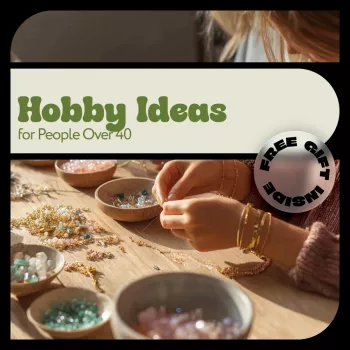
If a structured spark would help, Hobby Ideas for People Over 40 – Inspiring Ebook with Practical Ideas for People Over 40 to Rediscover Passion, Purpose & Joy offers ready-to-use directions and prompts to narrow choices and take action. It’s especially useful when options feel overwhelming or when starting something new feels intimidating.
Comfort upgrades that make hobbies easier to maintain at home
For a living room setup that keeps supplies tidy (sketch pads, yarn, puzzle boxes, journals), a piece like the Solid Wood Coffee Table with Storage Drawers can help keep essentials close without visual noise.
Simple wellness routines can also support consistency by improving recovery, relaxation, and sleep quality. If a dedicated recovery ritual would make it easier to stick with movement-based hobbies, the Infrared Sauna for One Person is an at-home option designed for quiet, solo reset time.
FAQ
What are good hobbies to start after 40 if there’s very little free time?
Choose hobbies that work in 10–20 minute sessions, like journaling, sketching, language practice, short walks, or simple cooking projects. Schedule two recurring micro-sessions per week and keep supplies visible so starting feels effortless.
How can a new hobby help with stress and burnout?
An enjoyable, absorbing activity helps the nervous system shift out of “constant output” mode and into recovery. Keep the focus on consistency over intensity with calming options (crafts, gentle movement, music, nature walks) or low-pressure social activities that reduce isolation.
How do you choose a hobby you won’t quit?
Pick the feeling or outcome you want, set constraints (time, budget, location), and run a two-week trial before buying gear. Track enjoyment and how easy it is to restart; if you’re using it consistently, then it’s worth investing more.
Recommended for you

Timberland Men’s Leather Boots: Fit, Grip & Care
Jun 20, 2026












Leave a comment