-
Shop
- Adidas
- Advanced Technologies
- AI Skills Mastery 2026 Collection
- Best-Sellers
- Calvin Klein
- Car Accessories
- Confidence
- Dating & Social Skills
- Digital Resources
- AI & Technology
- AI Skills
- Beauty
- Budgeting & Saving
- Car Buying & Ownership
- Cozy Feast Collection
- Electronics & Technology
- Entrepreneurship & Business Growth
- Financial Education
- Financial Independence
- Financial Mindset & Psychology
- Goal Setting
- Hobbies
- Home Styling & Organization
- Kitchen & Recipes
- Leadership
- Mindset
- Online Business
- Parenting & Child Development
- Personal Style & Fashion
- Pet Lifestyle & Wellness
- Positive Thinking
- Sleep Improvement
- Stress Management & Relaxation
- Travel Planning
- Yoga & Fitness
- Yoga & Mind-Body Practices
- Education & Learning
- Family & Parenting
- Fashion
- Alexander McQueen
- Bags
- Bags & Wallets
- Balenciaga
- Belts
- Blazers
- Bottega Veneta
- Brunello Cucinelli
- Burberry
- Chanel
- Chloé
- Dior
- Dolce & Gabbana
- Dresses
- Etro
- Fendi
- Gucci
- Hats & Hair Accessories
- Hoodies & Sweatshirts
- Jacquemus
- Jewelry
- Jil Sander
- Keychains
- Kiton
- Luggage
- Miu Miu
- Off-White
- Prada
- Rick Owens
- Saint Laurent
- Socks & Tights
- Sweaters & Cardigans
- The Row
- Tom Ford
- Tops & Shirts
- Valentino
- Valentino Garavani
- Versace
- Vivienne Westwood
- Watches
- Furniture
- Gadgets
- Health & Beauty
- Health & Wellness
- Home & Garden
- Kids & Babies
- Kitchen
- Lighting
- Patio, Lawn & Garden
- Personal Growth
- Pet Care
- Pet Supplies
- Pets
- Shoes
- Smart Home Living Guides
- Sport & Outdoors
- Stress Relief & Relaxation
- TikTok Growth & Monetization Mastery
- Travel
- Travel & Adventure
- Wealth
- Wellness
- YouTube Shorts Best-Sellers
- Popular
- Best deals
Stop Self-Sabotage: Simple Habits to Break the Cycle

Self-sabotage rarely looks like a dramatic decision. More often it shows up as procrastination, overthinking, quitting right before progress, or setting standards so high that starting feels unsafe. The goal is to spot the patterns early, understand what they protect, and replace them with practical habits that support motivation and steady personal growth—especially when momentum is low or confidence dips.
When self-sabotage is running the show
Self-sabotage can be subtle because it often disguises itself as being “responsible” (more planning), “productive” (more busywork), or “realistic” (lowering the bar right before a breakthrough). A helpful approach is to look for repeatable patterns rather than judging willpower.
- Common patterns: procrastination, avoidance, “busywork,” and starting strong then disappearing.
- Emotional signs: shame spirals, fear of being seen, feeling undeserving, or dread right before a milestone.
- Mental loops: perfectionism, all-or-nothing thinking, catastrophizing, and constant comparison.
- Behavioral red flags: overcommitting, picking fights, numbing with screens/food/alcohol, or quitting to “reset.”
- A simple check: if a choice brings short-term relief but long-term regret, it may be sabotage in disguise.
Many of these behaviors overlap with what psychology calls self-handicapping—creating obstacles (intentionally or not) that protect self-esteem in the moment but limit performance over time. For a clearer definition, see the American Psychological Association (APA) entry on self-handicapping.
Why it happens: protection, not weakness
Self-sabotage is often a protection strategy that got overused. If your brain expects pain—rejection, disappointment, criticism—then avoiding the situation can feel like safety, even when it costs you progress.
- It can function as self-protection: avoiding failure, rejection, or the discomfort of growth.
- Fear of success is real: success can bring visibility, higher expectations, or identity shifts.
- Old beliefs steer new behavior: “I don’t finish,” “I always mess up,” or “If it’s not perfect, it doesn’t count.”
- Stress narrows time-horizons: quick relief becomes more tempting than meaningful progress, especially when you’re depleted.
- Lasting change is need-based: patterns shift faster when the underlying need (safety, certainty, approval, control) is addressed.
Research on self-regulation consistently shows that behavior change improves when the environment and the plan support the goal (not just motivation). A broad overview can be found via the National Library of Medicine (PMC).
The interrupt-and-replace method (a practical loop)
Instead of trying to “stop sabotaging” in a vacuum, use an interrupt-and-replace loop. The aim is to catch the moment early, then swap in an action so small your resistance can’t argue with it.
- Name the pattern: label it plainly (“I’m avoiding starting,” “I’m perfectionizing,” “I’m picking a fight to escape pressure”).
- Identify the trigger: time of day, a specific person, a task type, feedback, uncertainty, or being close to finishing.
- Find the payoff: short-term relief, avoiding judgment, staying in control, or staying comfortable.
- Choose a replacement action: smaller than your resistance—5 minutes, one message, one paragraph, one decision.
- Reward immediately: quick break, checklist tick, or a supportive note to reinforce follow-through.
Progress rule: reduce friction for good actions and increase friction for sabotage. Environment beats willpower.
Trigger → Sabotage → Upgrade
| Trigger | Typical sabotage response | Replacement action (5–15 minutes) |
|---|---|---|
| Task feels too big | Procrastinate or research endlessly | Write the first three steps; complete step one only |
| Fear of judgment | Delay sending or sharing | Send a “rough draft” version to one safe person |
| Perfection pressure | Restart, reformat, redo | Set a “version 1” timer and stop when it ends |
| Low energy | Skip entirely | Do the minimum viable action (MVA): 10 minutes or one page |
| After a mistake | Quit to avoid feeling worse | Do one repair step: apologize, revise, or try again once |
Mindset and motivation tools that create lasting change
Tools work best when they’re specific, repeatable, and kind enough that you’ll actually use them on messy days.
- Implementation intentions: “If X happens, then I will do Y.” (Example: “If I want to scroll, then I’ll do 5 minutes first.”)
- Reduce decision fatigue: set defaults for mornings, work blocks, and self-care so the day runs on rails.
- Micro-commitments: consistency before intensity—small actions done often beat rare big pushes.
- Reframe setbacks: mistakes are feedback, not identity evidence; focus on the next controllable move.
- Self-compassion improves follow-through: harsh self-talk fuels avoidance; supportive language keeps action possible. See the APA overview of self-compassion.
- Track one metric: minutes practiced, days consistent, or tasks completed—simple tracking prevents emotional guessing.
Using the digital eBook to break the cycle faster
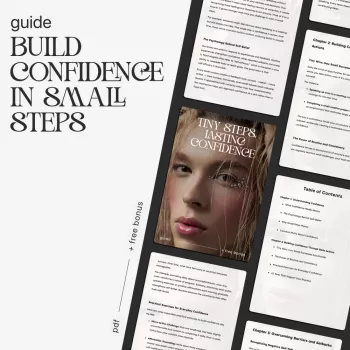
If self-sabotage keeps repeating, structure helps. Break Free: Stop Self-Sabotage Today (Digital eBook) is built for mindset shifts plus practical steps, so insight turns into a repeatable plan.
To support follow-through, make your environment “easy to start.” A dedicated, clutter-light workspace can reduce resistance; a practical option is a stable surface with storage like the Solid Wood Coffee Table with Storage Drawers. And if stress is the fuel behind avoidance, recovery time matters; the Infrared Sauna for One Person can support a consistent wind-down routine that makes next-day discipline more realistic.
Keeping progress from slipping back
FAQ
What is included with the instant download?
It’s a digital eBook you can access right away, typically organized into structured guidance, exercises, and actionable steps to reduce self-sabotage and build steady motivation.
Who is this eBook best for?
It’s best for anyone dealing with procrastination, perfectionism, inconsistency, fear of failure or success, and confidence dips—especially if practical tools work better than vague inspiration.
How quickly can changes be noticed?
Small improvements can show up immediately when you use micro-actions and reduce friction. More lasting change usually takes consistent practice over weeks, ideally with a short daily routine.















Leave a comment