-
Shop
- Adidas
- Advanced Technologies
- AI Skills Mastery 2026 Collection
- Best-Sellers
- Calvin Klein
- Car Accessories
- Confidence
- Dating & Social Skills
- Digital Resources
- AI & Technology
- AI Skills
- Beauty
- Budgeting & Saving
- Car Buying & Ownership
- Cozy Feast Collection
- Electronics & Technology
- Entrepreneurship & Business Growth
- Financial Education
- Financial Independence
- Financial Mindset & Psychology
- Goal Setting
- Hobbies
- Home Styling & Organization
- Kitchen & Recipes
- Leadership
- Mindset
- Online Business
- Parenting & Child Development
- Personal Style & Fashion
- Pet Lifestyle & Wellness
- Positive Thinking
- Sleep Improvement
- Stress Management & Relaxation
- Travel Planning
- Yoga & Fitness
- Yoga & Mind-Body Practices
- Education & Learning
- Family & Parenting
- Fashion
- Alexander McQueen
- Bags
- Bags & Wallets
- Balenciaga
- Belts
- Blazers
- Bottega Veneta
- Brunello Cucinelli
- Burberry
- Chanel
- Chloé
- Dior
- Dolce & Gabbana
- Dresses
- Etro
- Fendi
- Gucci
- Hats & Hair Accessories
- Hoodies & Sweatshirts
- Jacquemus
- Jewelry
- Jil Sander
- Keychains
- Kiton
- Luggage
- Miu Miu
- Off-White
- Prada
- Rick Owens
- Saint Laurent
- Socks & Tights
- Sweaters & Cardigans
- The Row
- Tom Ford
- Tops & Shirts
- Valentino
- Valentino Garavani
- Versace
- Vivienne Westwood
- Watches
- Furniture
- Gadgets
- Health & Beauty
- Health & Wellness
- Home & Garden
- Kids & Babies
- Kitchen
- Lighting
- Patio, Lawn & Garden
- Personal Growth
- Pet Care
- Pet Supplies
- Pets
- Shoes
- Smart Home Living Guides
- Sport & Outdoors
- Stress Relief & Relaxation
- TikTok Growth & Monetization Mastery
- Travel
- Travel & Adventure
- Wealth
- Wellness
- YouTube Shorts Best-Sellers
- Popular
- Best deals
Best Leather Backpacks for Women: Full, Top & Split
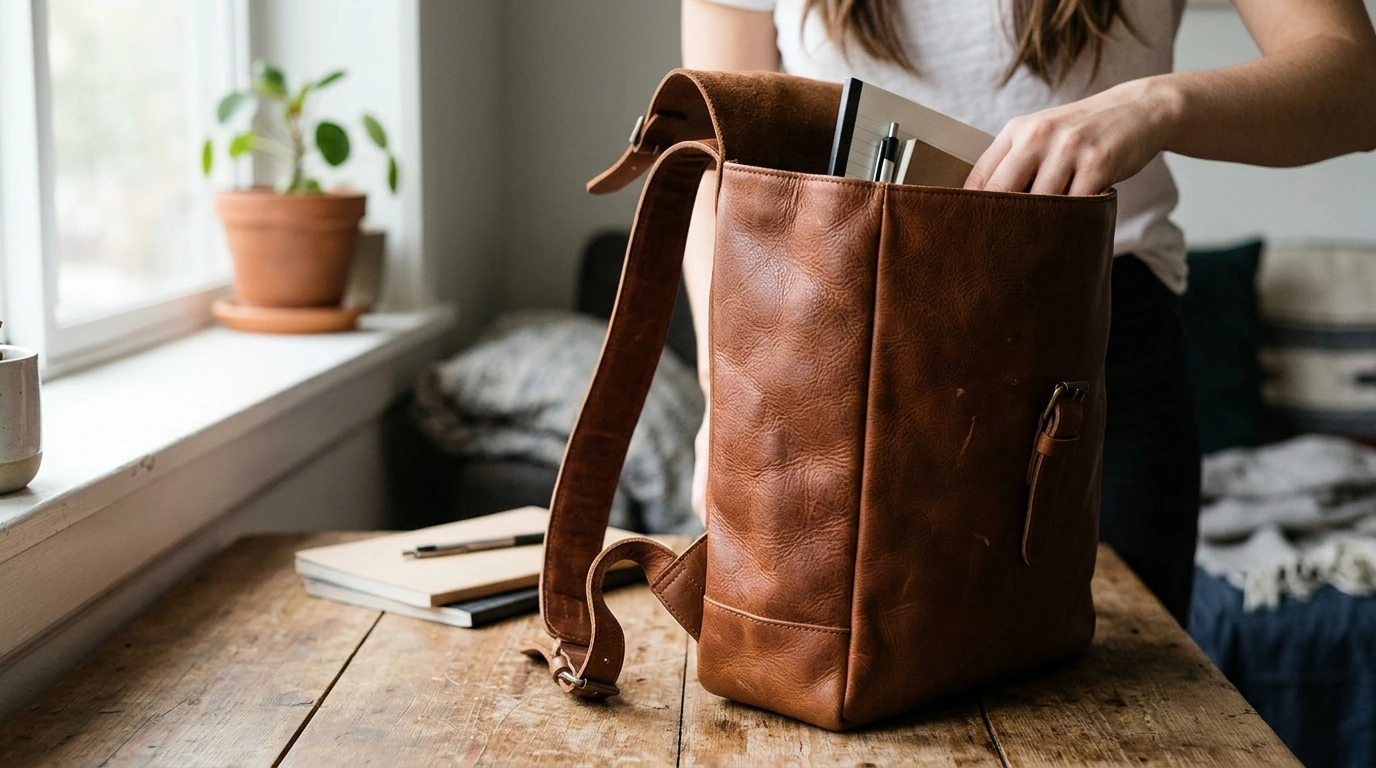
Q: What are some high-quality leather backpacks for women?
A high-quality leather backpack should feel like an everyday essential: comfortable on your shoulders, organized inside, and durable enough to keep its shape through commutes, trips, and weekend plans. Our team recommends starting with the right leather type, then choosing a silhouette that matches how you carry your day.
A: Leather backpacks that consistently deliver quality
1) Full-grain leather backpacks
If you want the most “buy-it-for-years” option, full-grain leather is the gold standard. It uses the strongest part of the hide, resists cracking, and develops a rich patina over time. Look for clean edge finishing, reinforced stress points where straps attach, and smooth-gliding zippers that don’t snag.
2) Top-grain leather backpacks
Top-grain is a refined, slightly more uniform leather that still wears beautifully while often feeling lighter and softer from day one. It’s a smart pick if you want a polished look for work or travel without the firmer structure of some full-grain builds.
3) Split leather daypacks and small hobo backpacks
For a softer, slouch-friendly vibe, split leather can be a great fit—especially in compact daypack shapes that sit comfortably against your back. A small hobo leather backpack is also a strong choice when you want hands-free ease without a boxy profile. To get the best performance from split leather, prioritize strong lining, sturdy hardware, and wide, adjustable straps for better weight distribution.
4) Structured mini and medium backpacks for city use
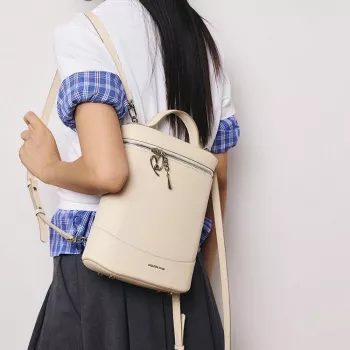
For daily errands or nights out, a structured mini backpack keeps essentials secure and close to your body. For commuting, a medium size with a dedicated interior slip pocket helps separate phone, keys, and small tech so you’re not digging.
If you’re comparing compact silhouettes, our team put together a deeper guide here: small hobo leather backpack & split leather daypack guide.
FAQ
How do you care for a leather backpack in rainy weather?
Wipe off moisture promptly with a soft cloth, let it air-dry away from heat, and condition lightly once it’s fully dry. Using a leather protector before the season starts helps reduce water spotting.












Leave a comment